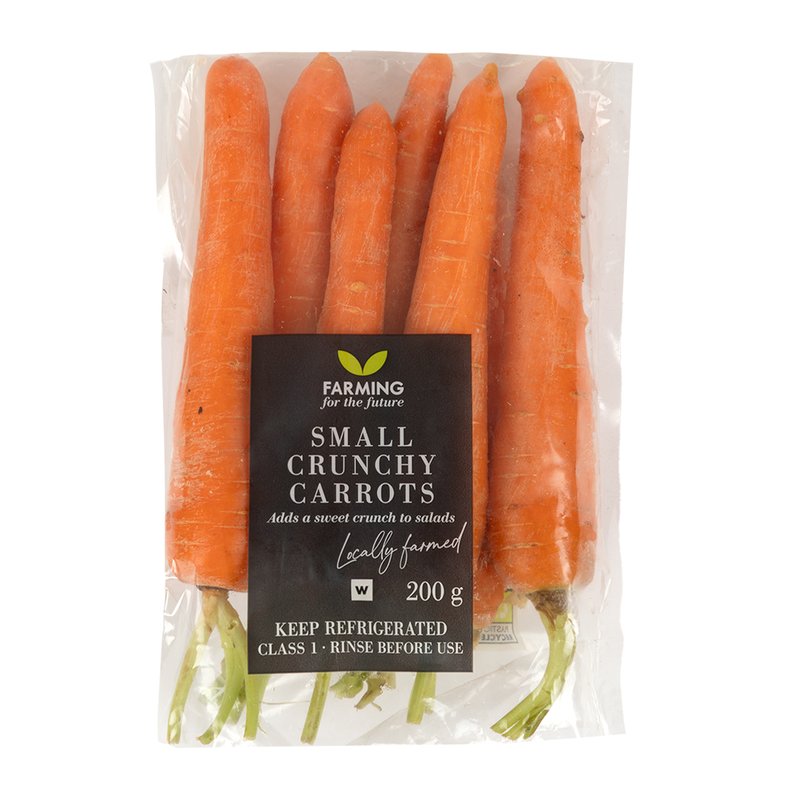
Woolworths Small Crunchy Carrots
- Whole food
- Checked
- Grade C
Small Crunchy Carrots by Woolworths has 41 kcal, 6 g carbs, 0.9 g protein and 0 g fat per serving (100g).
Woolworths Small Crunchy Carrots are a simple, low-calorie snack option, providing 32.5 kcal per serving (100 g). With 5 g of carbohydrates per serving, including 4.8 g of sugars, they offer a modest energy boost. The 2.2 g of dietary fiber aids digestion, while the low sodium content (19 mg per serving) makes them a suitable option for athletes managing electrolyte balance. These carrots are best consumed as a light snack before or after low-intensity sessions, rather than during high-intensity endurance activities, due to their low carbohydrate density and solid form. They can complement a hydration strategy, given their natural water content, but should not be relied upon for significant energy needs during prolonged endurance events.
- Low-calorie, high-fiber snack
- Natural hydration support
- Minimal sodium content
On the label per serving, 100g
| Energy | 170 kJ |
|---|---|
| Calories | 41 kcal |
| Carbs | 6.0 g |
| Sugar | 6.0 g |
| Fibre | 2.7 g |
| Protein | 0.9 g |
| Fat | 0.0 g |
| Saturated fat | 0.0 g |
| Cholesterol | 0 mg |
| Sodium | 24 mg |
The numbers that matter on a training day
For endurance who it suits
While Woolworths Small Crunchy Carrots offer a healthy, low-calorie snack option, they are not suitable for high-intensity endurance activities due to their low carbohydrate content and solid form. They can be part of a balanced diet for athletes seeking fiber and hydration support but should not replace more energy-dense foods during training or competition.
These carrots are ideal for endurance athletes looking for a light, low-calorie snack option. They suit those who require a quick, natural source of hydration and fiber without the need for high carbohydrate intake. Athletes managing sodium intake or those in need of a digestive aid during low-intensity training sessions may find them beneficial.
Best suited for easy runs or recovery days where energy demands are low. They can also be included in meals before or after sessions where the primary focus is not on high carbohydrate replenishment.
- Low-calorie snack option for weight management
- High in fiber, aiding digestion
- Natural source of hydration
- Minimal sodium content for low-sodium diets
- Low carbohydrate content for energy needs
- Impractical for mid-race fueling
- Solid form may slow digestion during exercise
- Potential for GI distress if consumed in excess during exercise
- Low energy contribution unsuitable for high-intensity sessions
Fuelling science in short
Not recommended during workouts due to low carbohydrate density and solid form, which may be impractical and slow to digest during exercise.
With 5 g of carbs per serving, these carrots have a low glycemic impact, providing a slow release of energy. The presence of fiber aids in moderating blood sugar response.
Contains 19 mg of sodium per serving, which is minimal compared to the 300-600 mg/hr sweat loss typical in endurance athletes. Potassium content is unspecified but may contribute to hydration.
- Total carbs
- 5 g
- Hourly capacity
- 60
Race day before, during and after
- BeforeDO NOT USE
- DuringDO NOT USE
- AfterDO NOT USE
- Carb loadDO NOT USE
- Every dayUSE
Carrots are not suitable for pre-race or during-race fueling due to their low carbohydrate density and solid form, which can slow gastric emptying and fail to meet energy needs. They also lack protein, making them unsuitable for recovery. However, they can be used as a low-calorie snack during everyday training for fiber and hydration support.
NOT RECOMMENDED for pre-race use because of low carbohydrate density and solid form, which may slow gastric emptying and fail to provide sufficient energy.
NOT RECOMMENDED during racing because they provide insufficient carbohydrates and may cause digestive issues due to their solid form.
NOT RECOMMENDED for recovery because they lack the necessary carbohydrates and protein for effective glycogen resynthesis and muscle repair.
- Pair with a protein source post-training for recovery
- Combine with a high-carb food for pre-race energy
- Include in a meal with healthy fats for sustained energy
For practitioners the evidence
Evidence grade: C — Limited evidence supports the use of carrots in endurance contexts, primarily based on general nutritional properties.
With 6 g of carbs per 100 g, Woolworths Small Crunchy Carrots have a low carbohydrate density, making them unsuitable for carb loading. A serving contributes only 5 g of carbs, far below the 600-840 g/day target for a 70 kg athlete. The athlete would need to consume an impractical amount of carrots to meet carb-loading needs, leading to excessive fiber intake and potential GI distress.
Carrots are primarily digested in the small intestine, where their carbohydrates are broken down into glucose and absorbed via SGLT1 transporters. The fiber content slows gastric emptying and modulates the glycemic response. The solid form and fiber may slow the time-to-bloodstream for carbohydrates, making them less suitable for rapid energy needs. Unabsorbed fiber is fermented in the colon, potentially causing gas if consumed in excess.
Carrots provide minimal carbohydrates (5 g per serving) and negligible protein (0.7 g per serving), making them inadequate for recovery. Effective recovery requires 1.0-1.2 g/kg/h of carbohydrates and ~0.3-0.4 g/kg of protein to support glycogen resynthesis and muscle repair. Carrots lack the necessary macronutrient profile to contribute meaningfully to these processes.
The high fiber content may cause GI distress if consumed in large quantities during exercise. Carrots' low carbohydrate density and solid form can slow gastric emptying, making them unsuitable for pre-race or during-race fueling. The sugar content, although natural, can contribute to dental erosion with prolonged exposure. Athletes with IBS or FODMAP sensitivity may experience discomfort from high carrot intake.
- Do not use for carb loading due to low carbohydrate density.
- Do not consume in large quantities during exercise due to potential GI distress.
- Do not rely on for recovery due to inadequate macronutrient content.
- High fiber content may cause GI distress during intense exercise.
- Low carbohydrate content fails to meet energy demands for endurance events.
- Solid form may slow gastric emptying if consumed pre-race.
- Natural sugars can contribute to dental erosion with prolonged exposure.
Questions about Small Crunchy Carrots
How many carbs are in Small Crunchy Carrots by Woolworths?
6 g of carbs per serving (100g), with 41 kcal and 0.9 g protein.
Can I eat these carrots before a race?
Not recommended before a race due to low carbohydrate content and potential to slow gastric emptying.
Are these carrots suitable for mid-race fueling?
No, they are not practical for mid-race fueling due to low energy content and solid form.
How do these carrots support recovery?
They do not significantly support recovery due to inadequate carbohydrate and protein content.
Are there any allergens in these carrots?
No specific allergens are noted, but always check for cross-contamination if sensitive.
How should I store these carrots?
Store in a cool, dry place, preferably refrigerated to maintain freshness.
Can these carrots be used for carb loading?
No, they are not suitable for carb loading due to low carbohydrate density.
Eating this today? Log it in one tap.
Say "Small Crunchy Carrots" and it lands in your diary, counted against today's carbs and protein.
