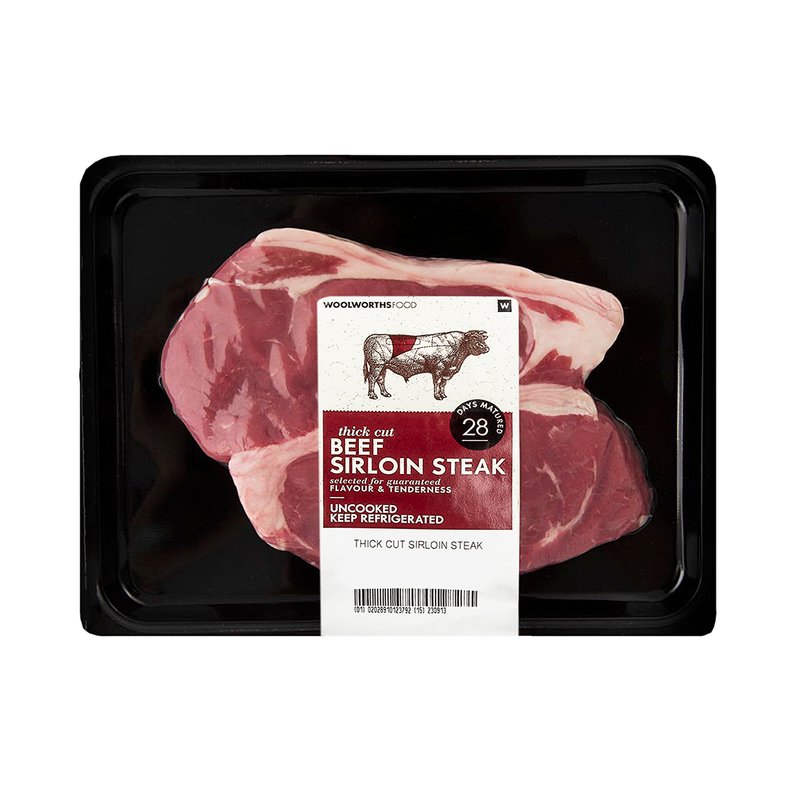
Woolworths Matured Thick Cut Beef Sirloin Steak
- Whole food
- Checked
- Grade C
Matured Thick Cut Beef Sirloin Steak by Woolworths has 1122 kcal, 0 g carbs, 105.6 g protein and 78.1 g fat per serving (1 steak (average 550g)).
Woolworths' Matured Thick Cut Beef Sirloin Steak is a high-protein, low-carb option matured for 28 days to enhance tenderness and flavor. Each serving (550g) provides substantial protein, making it ideal for post-exercise muscle repair. While not suitable for pre-race or during-race fueling due to its high fat content and slow digestion, it serves as a robust recovery meal when paired with carbohydrates to replenish glycogen stores. Its high protein content supports muscle protein synthesis, essential for athletes focusing on strength and recovery phases.
- High protein for muscle repair
- Low carbohydrate content
- Rich in iron and zinc
On the label per serving, 1 steak (average 550g)
| Calories | 1122 kcal |
|---|---|
| Carbs | 0.0 g |
| Protein | 105.6 g |
| Fat | 78.1 g |
| Saturated fat | 32.5 g |
| Cholesterol | 418 mg |
| Sodium | 0 mg |
The numbers that matter on a training day
For endurance who it suits
For endurance athletes, this steak is a robust recovery option due to its high protein content, supporting muscle repair and growth. However, it lacks carbohydrates and electrolytes, making it unsuitable for pre-race or during-race fueling. Pair with carbohydrate-rich foods post-exercise for optimal recovery.
This steak is ideal for endurance athletes focusing on muscle recovery and strength building. It's particularly suitable for those in a recovery phase post-exercise, where protein intake is crucial for muscle repair. Athletes who require high protein without added carbohydrates will benefit from this product.
Best consumed after strength training or endurance sessions where muscle recovery is a priority. Not suitable for pre-race or during race due to slow digestion and high fat content.
- High protein content supports muscle repair
- Matured for enhanced tenderness
- Low carbohydrate content
- High fat content slows digestion
- Not suitable for pre-race or during-race fueling
- Lacks carbohydrates for glycogen replenishment
- Potential for slow gastric emptying due to high fat
- Not suitable for rapid energy needs during exercise
Fuelling science in short
No, not practical during workouts due to high fat content and slow digestion, unsuitable for quick energy needs.
With 0g carbs per 100g, it has no glycemic impact. Slow gastric emptying due to high fat content.
Contains negligible sodium per serving, insufficient to replace sweat losses. Potassium content not provided.
- Total carbs
- 0 g
- Hourly capacity
- 0
Race day before, during and after
- BeforeDO NOT USE
- DuringDO NOT USE
- AfterUSE
- Carb loadDO NOT USE
- Every dayUSE
The steak is high in protein, making it suitable for recovery but not for pre-race or during-race fueling due to its high fat content and lack of carbohydrates. It does not support glycogen loading or quick energy needs, making it unsuitable for carb-loading phases.
NOT RECOMMENDED for pre-race use because of high fat content and slow gastric emptying, which can cause gastrointestinal discomfort and delay energy availability.
NOT RECOMMENDED during racing because it provides no carbohydrates and has a high fat content, which is unsuitable for quick energy needs.
USE as a recovery meal post-race when paired with carbohydrates to aid in glycogen replenishment and muscle repair.
- Pair with rice for glycogen replenishment
- Serve with vegetables for added micronutrients
- Include a carbohydrate drink for electrolyte balance
For practitioners the evidence
Evidence grade: C — The analysis is based on general nutritional knowledge and physiological principles rather than direct RCT evidence.
This steak is unsuitable for carb-loading due to its 0g carbohydrate content per 100g. Carb density is non-existent, making it ineffective for glycogen storage. For a 70 kg athlete targeting 600-840 g/day of carbs, this steak offers no contribution. Its high protein and fat content may also induce satiety, hindering further carb intake. Thus, it is not a viable option for athletes aiming to maximize glycogen stores before endurance events.
The digestion of beef steak begins with mastication and salivary enzymatic action, but primarily occurs in the stomach where gastric acids and enzymes break down proteins into peptides. The high fat content slows gastric emptying, potentially leading to delayed nutrient absorption. In the small intestine, peptides are further broken down by brush-border peptidases into amino acids, absorbed via active transport. The steak's fat content may also slow the overall digestive process, making it unsuitable for rapid energy needs.
Beef steak provides high-quality protein, supporting muscle protein synthesis post-exercise. However, it lacks carbohydrates, which are essential for glycogen resynthesis at a rate of 1.0-1.2 g/kg/h in the recovery window. The steak's protein content can aid in meeting the leucine threshold (~2.5-3g) for effective muscle repair, but should be paired with carbs for comprehensive recovery. Its fat content does not contribute to recovery and may slow gastric emptying.
The steak's high fat content can slow gastric emptying, potentially causing gastrointestinal discomfort if consumed close to exercise. It lacks carbohydrates, making it unsuitable for glycogen replenishment during or immediately post-exercise. The absence of sodium and electrolytes also limits its utility in replacing sweat losses, particularly in hot weather. High protein intake without adequate hydration can strain renal function, especially in susceptible individuals.
- Do not use within 90 minutes of race start due to high fat content and slow digestion.
- Avoid during intense training sessions requiring quick energy due to lack of carbohydrates.
- Do not rely on this steak for electrolyte replacement in hot weather.
- High fat content may cause gastrointestinal discomfort if consumed pre-exercise.
- Lack of carbohydrates makes it unsuitable for glycogen replenishment during recovery.
- High protein intake without adequate hydration can strain renal function.
- Absence of sodium and electrolytes limits its use for sweat loss replacement.
Questions about Matured Thick Cut Beef Sirloin Steak
How many carbs are in Matured Thick Cut Beef Sirloin Steak by Woolworths?
0 g of carbs per serving (1 steak (average 550g)), with 1122 kcal and 105.6 g protein.
Can I eat this steak before a race?
No, it's not recommended due to high fat content and slow digestion, which can cause gastrointestinal discomfort.
How should I incorporate this into recovery?
Pair with carbohydrate-rich foods post-exercise to aid glycogen replenishment and muscle repair.
Is this steak suitable for hot weather training?
Not ideal for hot weather as it lacks sodium and other electrolytes to replace sweat losses.
What are alternatives for during-race fueling?
Opt for carbohydrate gels or drinks that provide quick energy and electrolytes.
Does this steak contain allergens?
No specific allergens are stated, but always check packaging for updates.
Is gut training necessary for consuming this steak?
No, but ensure it's part of a balanced diet and not consumed immediately before exercise.


Eating this today? Log it in one tap.
Say "Matured Thick Cut Beef Sirloin Steak" and it lands in your diary, counted against today's carbs and protein.
