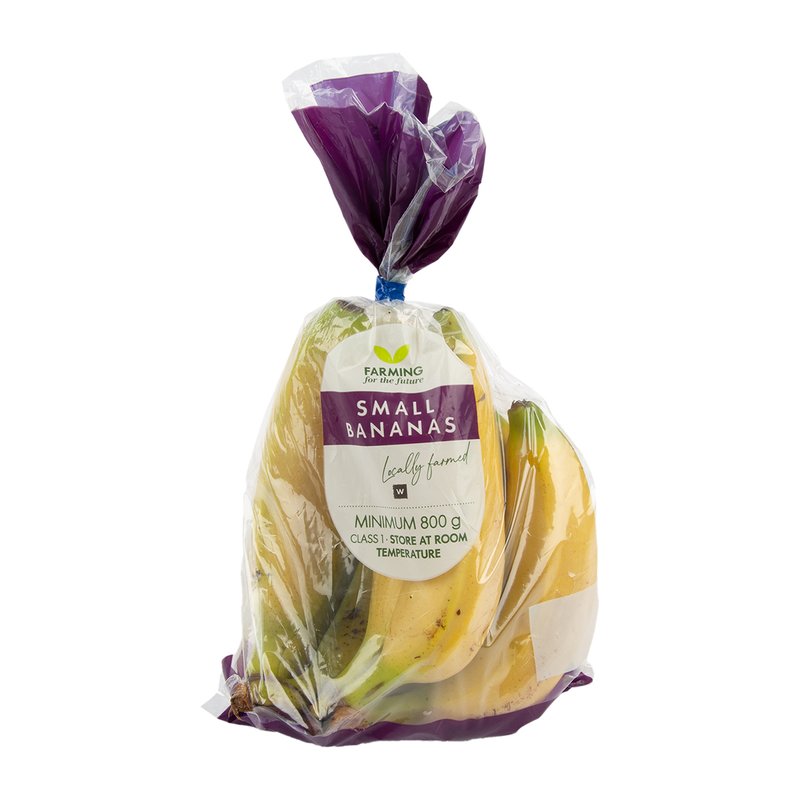
Woolworths Small Bananas Minimum 800 g
- Whole food
- Checked
- Grade B
Small Bananas Minimum 800 g by Woolworths has 73 kcal, 15 g carbs, 1 g protein and 0.2 g fat per serving (Per 80g Serving).
Woolworths Small Bananas are a convenient, easy-to-peel fruit option, providing a quick source of carbohydrates for endurance athletes. Each 80g serving delivers 15g of carbohydrates, primarily from natural sugars, making them suitable for quick energy replenishment during or after workouts. Ideal for athletes seeking a natural, whole-food option, these bananas can be consumed before or during training sessions to maintain energy levels. The natural sugars are rapidly absorbed, providing an immediate energy boost, while the fiber content aids in digestive health without significantly slowing gastric emptying. With a negligible fat content and a good amount of potassium, they support muscle function and hydration, especially in hot conditions.
- Quick energy source
- Supports hydration
- Easy to digest
On the label per serving, Per 80g Serving
| Energy | 306 kJ |
|---|---|
| Calories | 73 kcal |
| Carbs | 15.0 g |
| Sugar | 9.9 g |
| Fibre | 1.4 g |
| Protein | 1.0 g |
| Fat | 0.2 g |
| Saturated fat | 0.1 g |
| Cholesterol | 0 mg |
| Sodium | 1 mg |
| Potassium | 358 mg |
The numbers that matter on a training day
For endurance who it suits
Woolworths Small Bananas are a practical and natural option for endurance athletes needing quick energy. Their carbohydrate content supports glycogen replenishment, while potassium aids in muscle function. They are easy to transport and consume, making them a versatile choice for training and racing.
Woolworths Small Bananas are ideal for endurance athletes such as marathon runners, cyclists, and triathletes who need a quick carbohydrate source during training or competition. They are also suitable for athletes who prefer whole foods over processed gels and bars, and those who experience gastrointestinal distress with more complex foods.
Best suited for long endurance sessions like marathons or long-distance cycling where quick energy is needed. Also useful for short, high-intensity sessions as a pre-workout snack.
- Natural source of quick-digesting carbs
- High in potassium for muscle function
- Easy to carry and consume during activities
- Low fat content minimizes gastric distress
- Limited sodium content for high sweat loss
- Moderate glycemic index may not suit all athletes
- Requires carrying bulk for long events
- Potential for GI distress if consumed in excess
- High sugar content may affect dental health
Fuelling science in short
Yes, consume 1-2 bananas per hour during long sessions for sustained energy. Convenient and non-messy, but may require carrying in a pack.
Bananas have a moderate glycemic index, providing a steady rise in blood sugar levels. Their natural sugar content ensures quick absorption, making them ideal for immediate energy needs.
Each serving provides 358 mg of potassium, aiding in muscle function and hydration. Sodium content is negligible, so additional sources may be needed to meet sweat loss requirements.
- Total carbs
- 15 g
- Hourly capacity
- 60-90
Race day before, during and after
- BeforeUSE
- DuringUSE
- AfterCAUTION
- Carb loadCAUTION
- Every dayUSE
Bananas are suitable pre-race and during race due to their quick-digesting carbs and potassium content. For recovery, they should be paired with protein to meet muscle repair needs. While useful for everyday training, their moderate carb density limits their role in carb loading.
Consume 1-2 bananas 30-60 minutes before the race for quick energy. Their moderate glycemic index provides a steady energy release without causing a sugar crash.
Use during races as a quick energy source. Consume 1 banana every 30-45 minutes, depending on intensity and personal tolerance.
Pair with a protein source post-race for optimal recovery. Bananas alone do not provide sufficient protein for muscle repair.
- Pair with a sodium-rich drink for balanced electrolytes
- Combine with protein post-workout for recovery
- Use with low-GI foods to stabilize blood sugar
For practitioners the evidence
Evidence grade: B — While bananas are widely recognized for their carbohydrate content, their role in specific endurance contexts is supported by practical evidence rather than controlled trials.
Bananas have a moderate carb density of 19g per 100g, providing 15g of carbs per 80g serving. This makes them less efficient for carb loading due to the volume required to reach high daily carb targets (600-840g for a 70kg athlete). An athlete would need to consume approximately 40 servings to meet a 600g target, which is impractical due to satiety and volume considerations.
Bananas are primarily composed of simple sugars, which are rapidly digested. The gastric emptying rate is relatively fast due to low fat and fiber content. Carbohydrates are absorbed in the small intestine via SGLT1 and GLUT5 transporters, providing quick glucose availability. The fiber content is minimal, reducing the risk of fermentation and GI distress during exercise.
Bananas provide carbohydrates for glycogen resynthesis but lack sufficient protein to stimulate muscle protein synthesis (MPS). The potassium content supports rehydration and muscle function, yet without protein, they are inadequate as a standalone recovery food. Pairing with a protein source is necessary to meet recovery nutrition goals.
High fructose content can pose a risk of GI distress if consumed in large quantities. The natural sugars in bananas contribute to dental erosion if consumed frequently without proper oral hygiene. The moderate glycemic index may lead to blood sugar volatility in sensitive individuals. Athletes with fructose malabsorption or IBS should be cautious.
- Do not use if fructose malabsorption is present; may cause GI distress.
- Do not rely on bananas alone for recovery; insufficient protein content.
- Do not use for carb loading due to impractical volume requirements.
- High fructose load can exceed GLUT5 capacity, causing GI discomfort.
- Natural sugars may contribute to dental erosion with frequent use.
- Moderate GI may cause blood sugar spikes in sensitive individuals.
- Low sodium content may not meet needs during high sweat losses.
Questions about Small Bananas Minimum 800 g
How many carbs are in Small Bananas Minimum 800 g by Woolworths?
15 g of carbs per serving (Per 80g Serving), with 73 kcal and 1 g protein.
How should I time banana consumption before a workout?
Consume 30-60 minutes before exercise for optimal energy availability.
Can I use bananas for carb loading?
While bananas provide carbs, their moderate density means large volumes are needed, making them less practical for carb loading.
Are bananas suitable for gut training?
Yes, they are generally well-tolerated, but individual tolerance should be assessed during training.
What are alternatives to bananas for quick energy?
Other fruits like dates or energy gels offer similar quick-digesting carbohydrates.
Do bananas aid in recovery?
They provide carbs but lack protein; pair with a protein source for effective recovery.
How do bananas behave in hot weather?
They can ripen quickly in heat, so store in a cool place if possible.
Eating this today? Log it in one tap.
Say "Small Bananas Minimum 800 g" and it lands in your diary, counted against today's carbs and protein.
