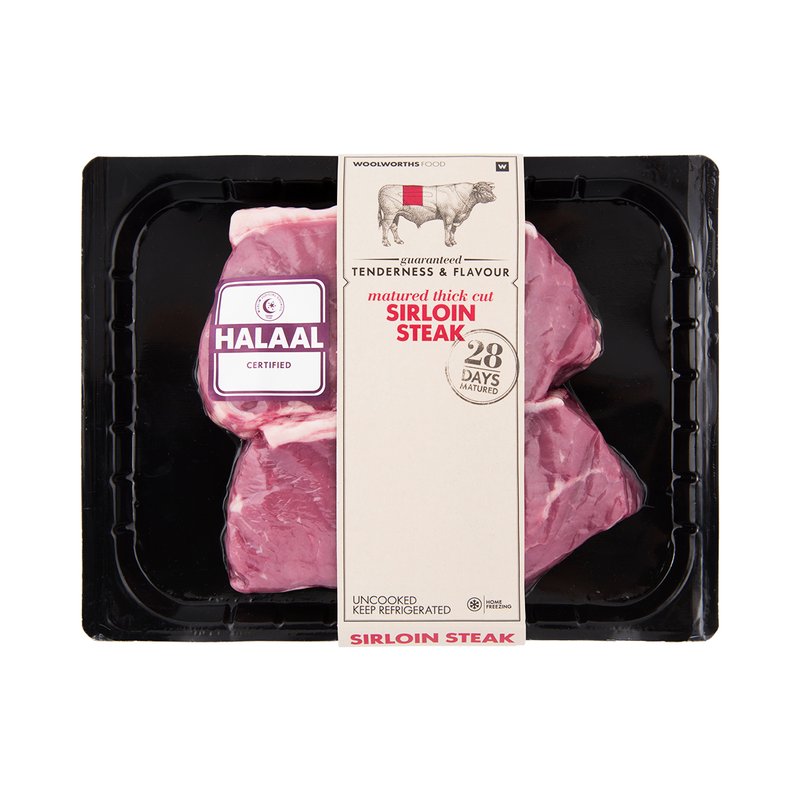
Woolworths Halaal Matured Thick-Cut Beef Sirloin Steak
- Whole food
- Checked
- Grade C
Halaal Matured Thick-Cut Beef Sirloin Steak by Woolworths has 195 kcal, 0 g carbs, 20 g protein and 13 g fat per serving (Serving (100g)).
Woolworths Halaal Matured Thick-Cut Beef Sirloin Steak is a high-protein, low-carb option for endurance athletes seeking muscle repair and maintenance. Each 100g serving provides 20g of protein and 13g of fat, with no carbohydrates, making it suitable for post-exercise recovery when paired with carbohydrate sources. The steak is matured for 28 days, enhancing tenderness and flavor. Best consumed post-training, it aids muscle protein synthesis, but should be combined with carbs to replenish glycogen stores. Ideal for athletes needing a protein boost without excess carbs or sugars.
- High protein for muscle repair
- Low carbohydrate content
- 28-day maturation enhances tenderness
On the label per serving, Serving (100g)
| Energy | 842 kJ |
|---|---|
| Calories | 195 kcal |
| Carbs | 0.0 g |
| Sugar | 0.0 g |
| Fibre | 0.0 g |
| Protein | 20.0 g |
| Fat | 13.0 g |
| Saturated fat | 5.0 g |
| Cholesterol | 75 mg |
| Sodium | 52 mg |
| Potassium | 315 mg |
| Caffeine | 0 mg |
The numbers that matter on a training day
For endurance who it suits
As a protein source, this steak is beneficial for muscle repair post-exercise but lacks carbohydrates for glycogen replenishment. Ideal for athletes focusing on protein intake, but should be consumed with carb-rich foods post-training.
This steak is ideal for endurance athletes who require a high-protein intake to support muscle repair and growth. It suits those on low-carb diets or athletes looking to increase protein without additional sugars. Suitable for post-exercise recovery when paired with carbohydrates.
Best for post-training meals, especially after long runs or rides where muscle repair is crucial. Pair with carbs for glycogen replenishment.
- High protein content supports muscle repair
- Low sodium content reduces dehydration risk
- 28-day maturation improves texture and flavor
- No carbohydrates, suitable for low-carb diets
- Lacks carbohydrates for glycogen replenishment
- Not suitable for during-exercise consumption
- High fat content may slow digestion
- Requires cooking, not a quick option
- High fat content may slow gastric emptying
- Solid form unsuitable for mid-exercise fueling
Fuelling science in short
No. The steak is not practical for during workouts due to its solid form and high fat content.
With 0g carbs per serving, it has no impact on blood sugar levels, making it unsuitable as a quick energy source during exercise.
Contains 52mg sodium and 315mg potassium per serving. Sodium content is low relative to 300-600mg/hr sweat losses.
- Total carbs
- 0 g
- Hourly capacity
- 0
Race day before, during and after
- BeforeDO NOT USE
- DuringDO NOT USE
- AfterUSE
- Carb loadDO NOT USE
- Every dayUSE
The steak's high protein content makes it useful for recovery but unsuitable for pre-race or during-race fueling due to its lack of carbohydrates and high fat content, which slows gastric emptying. It does not contribute to carb loading due to zero carb content.
NOT RECOMMENDED for pre-race use because of slow gastric emptying due to high fat content and lack of carbohydrates.
NOT RECOMMENDED during racing because it is a solid food with no fast-acting carbohydrates.
USE with caution. Provides protein for muscle repair but lacks carbohydrates. Pair with carb-rich foods.
- Pair with rice for glycogen replenishment
- Combine with vegetables for fiber and vitamins
- Serve with a sports drink for electrolyte balance
For practitioners the evidence
Evidence grade: C — Limited direct evidence supports its use for endurance athletes; primarily mechanistic reasoning.
This steak is not suitable for carb loading due to its zero carbohydrate content per 100g. The focus is on protein, with 20g per serving (100g), which does not contribute to the 600-840g/day carbohydrate target for a 70kg athlete. Athletes would need to consume carbohydrate-rich foods to meet loading requirements, making this steak impractical for such purposes.
The steak's digestion begins with protein breakdown in the stomach, slowed by its 13g fat content per serving, which delays gastric emptying. Proteins are further digested in the small intestine where amino acids are absorbed via various transporters. The absence of carbohydrates means no SGLT1 or GLUT5 involvement. The steak's high protein content may stimulate insulin release, but it lacks carbohydrates to support rapid glycogen replenishment.
The steak provides 20g of protein per serving, supporting muscle protein synthesis post-exercise. However, it lacks carbohydrates necessary for efficient glycogen resynthesis, which is crucial in the first 4 hours post-exercise. Pairing with a carbohydrate source is essential to meet the 1.0-1.2g/kg/h carb target. The steak's sodium content is low, so additional electrolytes may be needed for rehydration.
The steak's high fat content can slow gastric emptying, making it unsuitable for pre-exercise consumption. Its solid form and lack of carbohydrates render it impractical for during-exercise fueling. While it supports muscle repair, it lacks the carbohydrates necessary for glycogen replenishment. Athletes with high sweat rates may require additional sodium sources.
- Do not use within 90 minutes of race start due to high fat content slowing digestion.
- Do not use during races requiring rapid carbohydrate availability.
- Do not rely on this steak alone for recovery; pair with carbs for glycogen replenishment.
- High fat content may slow gastric emptying, delaying nutrient absorption.
- Zero carbohydrate content means no glycogen replenishment if consumed alone.
- Low sodium content may not meet electrolyte needs for high sweat loss athletes.
- Solid form unsuitable for athletes with chewing difficulties during exercise.
Questions about Halaal Matured Thick-Cut Beef Sirloin Steak
How many carbs are in Halaal Matured Thick-Cut Beef Sirloin Steak by Woolworths?
0 g of carbs per serving (Serving (100g)), with 195 kcal and 20 g protein.
Can I eat this steak before a race?
No, it's not recommended due to high fat content and lack of carbohydrates, which can slow digestion.
How should I incorporate this into my recovery meal?
Pair with carbohydrate-rich foods like rice or potatoes to replenish glycogen stores and support muscle repair.
Is this steak suitable for a low-carb diet?
Yes, it contains 0g of carbohydrates per serving, making it ideal for low-carb diets.
What are the potential allergens?
No specific allergens are listed, but always check for cross-contamination risks if sensitive.
How does this steak behave in hot weather?
Store in a cooler if transporting to prevent spoilage. Cook thoroughly to ensure safety.
Is this steak good for gut training?
No, it's not suitable for gut training due to its solid form and lack of carbohydrates.

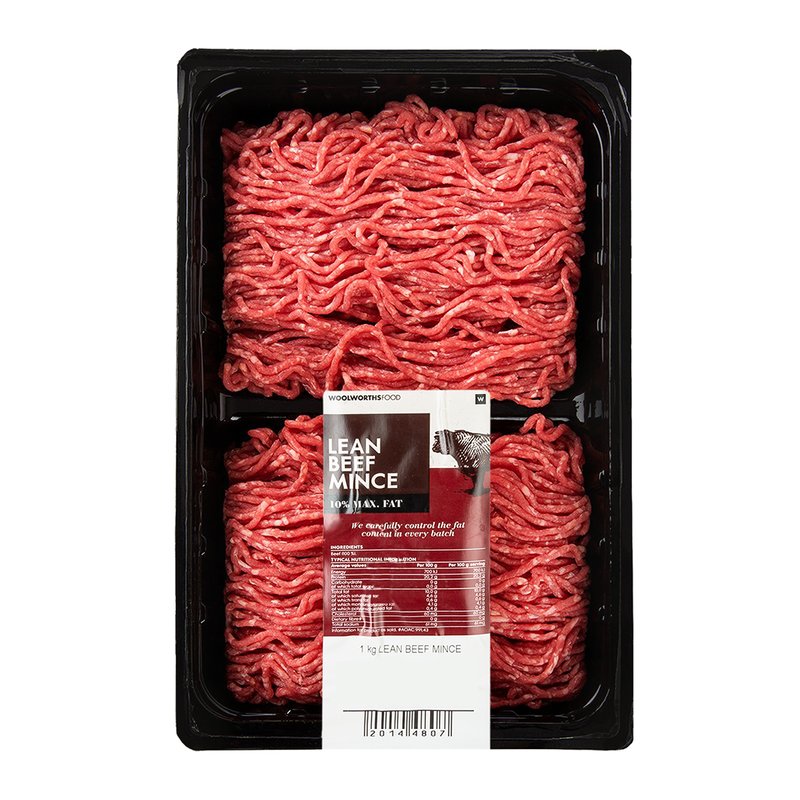
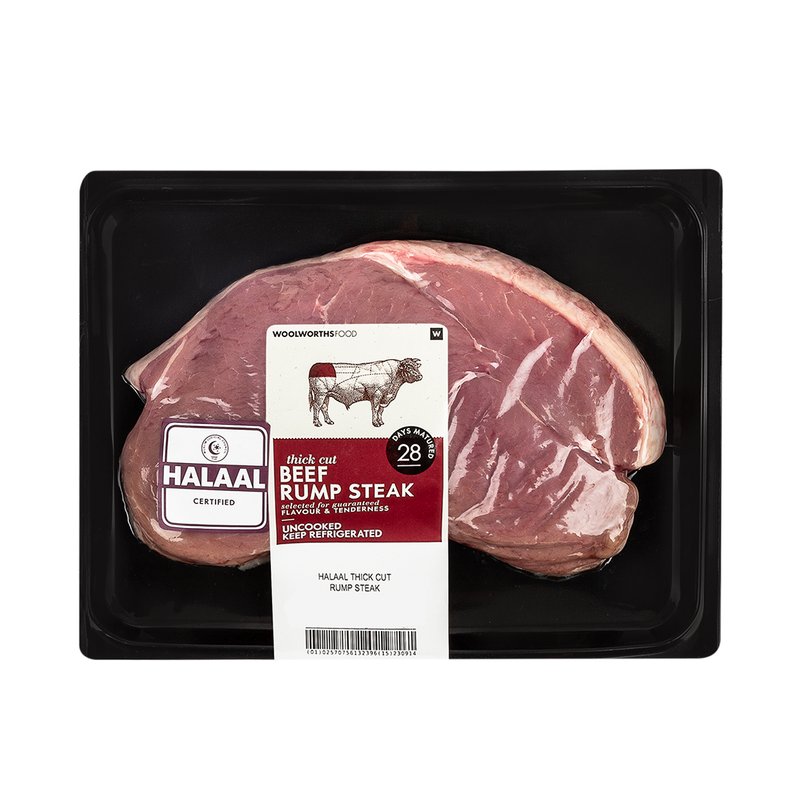
Eating this today? Log it in one tap.
Say "Halaal Matured Thick-Cut Beef Sirloin Steak" and it lands in your diary, counted against today's carbs and protein.
