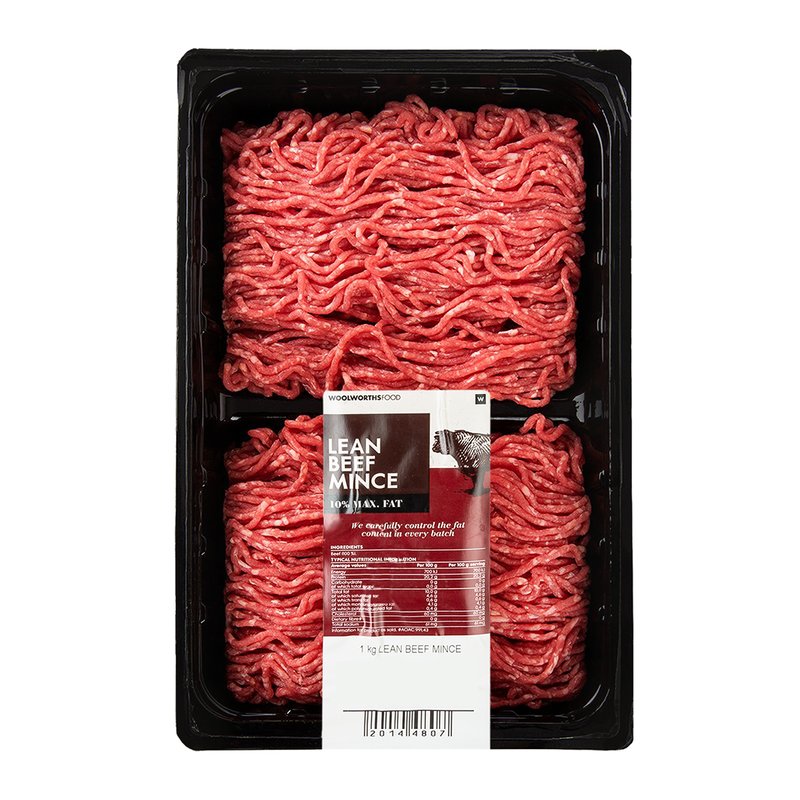
Woolworths Lean Beef Mince
- Whole food
- Checked
- Grade C
Lean Beef Mince by Woolworths has 167 kcal, 0 g carbs, 20.2 g protein and 10 g fat per serving (100g).
Woolworths Lean Beef Mince is a branded product known for its controlled fat content, capped at 10%, making it a leaner option compared to regular mince. With 20.2 g of protein per serving (100 g), it serves as a substantial protein source for endurance athletes focusing on muscle repair and recovery. This product is well-suited for post-training meals, particularly when combined with carbohydrates for glycogen replenishment. While it lacks carbohydrates, its high protein content makes it beneficial in the recovery phase, providing essential amino acids necessary for muscle protein synthesis. The product is not recommended as a primary energy source during endurance events due to its zero carbohydrate content and relatively high fat, which can slow gastric emptying.
- High protein content
- Low carbohydrate
- Controlled fat content
- Supports muscle repair
On the label per serving, 100g
| Energy | 700 kJ |
|---|---|
| Calories | 167 kcal |
| Carbs | 0.0 g |
| Sugar | 0.0 g |
| Fibre | 0.0 g |
| Protein | 20.2 g |
| Fat | 10.0 g |
| Saturated fat | 4.6 g |
| Cholesterol | 60 mg |
| Sodium | 61 mg |
The numbers that matter on a training day
For endurance who it suits
Woolworths Lean Beef Mince is a solid post-workout protein source but lacks carbohydrates, making it unsuitable for pre-race or during-race fueling. Its high protein content aids in muscle recovery, but athletes should pair it with carbohydrate-rich foods to meet energy needs. Not recommended for immediate pre-race consumption due to its fat content, which can slow digestion.
This product is ideal for endurance athletes who require a high-protein intake to support muscle repair and recovery after intense training sessions. It's particularly beneficial for those who are in the muscle-building phase or those who need to maintain muscle mass while reducing fat intake. It's not suitable for athletes looking for quick energy during endurance events due to its lack of carbohydrates.
Best used in post-training meals where muscle repair is prioritized. Not suitable for use during long runs or rides due to lack of carbohydrates.
- High protein content supports muscle repair
- Low in carbohydrates, suitable for low-carb diets
- Controlled fat content for leaner protein intake
- Versatile for various meal preparations
- Zero carbohydrates, not suitable for energy needs
- High fat content can slow gastric emptying
- Minimal sodium content for rehydration needs
- High fat content may slow digestion
- Zero carbohydrates can lead to energy deficits during endurance events
Fuelling science in short
No, not suitable during workouts due to zero carb content and high fat, which slows gastric emptying.
With zero carbohydrates, it has no impact on glycemic index or load. It does not contribute to blood sugar spikes or rapid energy availability.
Contains 61 mg of sodium per serving, which is minimal compared to the 300-600 mg/hr sweat loss typical in endurance sports. Potassium content is unspecified.
- Total carbs
- 0 g
- Hourly capacity
- 0
Race day before, during and after
- BeforeDO NOT USE
- DuringDO NOT USE
- AfterUSE
- Carb loadDO NOT USE
- Every dayUSE
Woolworths Lean Beef Mince is not suitable for pre-race or during-race use due to its high fat content and lack of carbohydrates, which are essential for quick energy. It is, however, beneficial for recovery due to its high protein content, aiding muscle repair. For carb loading, it lacks the necessary carbohydrate density. Suitable for everyday training meals when paired with carbohydrates.
NOT RECOMMENDED for pre-race use because of high fat content, which slows gastric emptying and lacks carbohydrates for immediate energy.
NOT RECOMMENDED during racing because it provides no carbohydrates for energy and contains fats that slow digestion.
Use within 30-60 minutes post-race for muscle repair. Pair with carbohydrates to aid glycogen replenishment.
- Pair with rice for glycogen replenishment
- Combine with vegetables for added micronutrients
- Serve with a carbohydrate-rich sauce for energy balance
For practitioners the evidence
Evidence grade: B — The protein benefits are well-supported by existing literature, but the lack of carbohydrates limits its application in endurance contexts.
Woolworths Lean Beef Mince has a carbohydrate density of 0 g/100 g, making it unsuitable for carb loading. For a 70 kg athlete aiming for 600-840 g/day, this product contributes nothing toward the target. The lack of carbohydrates and presence of fats make it impractical for large-scale consumption during carb loading phases, where high-carb, low-fat foods are preferred.
Lean Beef Mince undergoes protein digestion starting in the stomach with pepsin and continues in the small intestine via brush-border peptidases. The fat content slows gastric emptying, delaying nutrient absorption. Protein is absorbed as amino acids and peptides, stimulating insulin and glucagon release. The lack of carbohydrates means no direct glucose absorption or blood sugar spike.
Provides 20.2 g of protein per serving, aiding muscle protein synthesis post-exercise. However, it lacks carbohydrates, which are crucial for glycogen resynthesis. To optimize recovery, pair with carbohydrate-rich foods to meet the 1.0-1.2 g/kg/h carb target. The protein content supports muscle repair but does not fully address glycogen replenishment needs.
High fat content can slow gastric emptying, potentially causing discomfort if consumed before or during exercise. Zero carbohydrates mean it does not provide quick energy, risking energy deficits during endurance activities. Not suitable for athletes with high carbohydrate demands during events.
- Do not use within 90 minutes of race start due to high fat content.
- Avoid during endurance events as it provides no carbohydrates.
- Not suitable for carb loading phases due to zero carb content.
- High fat content can slow gastric emptying, affecting digestion speed.
- Zero carbohydrates can lead to energy deficits during endurance activities.
- Minimal sodium content may not support adequate rehydration post-exercise.
- Lack of carbohydrates can hinder glycogen replenishment post-exercise.
Questions about Lean Beef Mince
How many carbs are in Lean Beef Mince by Woolworths?
0 g of carbs per serving (100g), with 167 kcal and 20.2 g protein.
When should I consume this product?
Consume post-training for muscle repair. Not suitable for pre-race or during-race due to lack of carbs.
How much should I consume?
A typical serving is 100g, providing 20.2g of protein. Adjust based on protein needs.
Is it suitable for gut training?
Not applicable as it lacks carbohydrates. Focus on carbohydrate sources for gut training.
What are alternatives for energy needs?
For energy, consider carbohydrate-rich foods like pasta or rice, which provide quick energy.
Are there any allergens?
No specific allergens stated, but always check for cross-contamination risks.
How does it behave in hot weather?
Store in a cool environment to prevent spoilage. High temperatures can affect freshness.

Eating this today? Log it in one tap.
Say "Lean Beef Mince" and it lands in your diary, counted against today's carbs and protein.