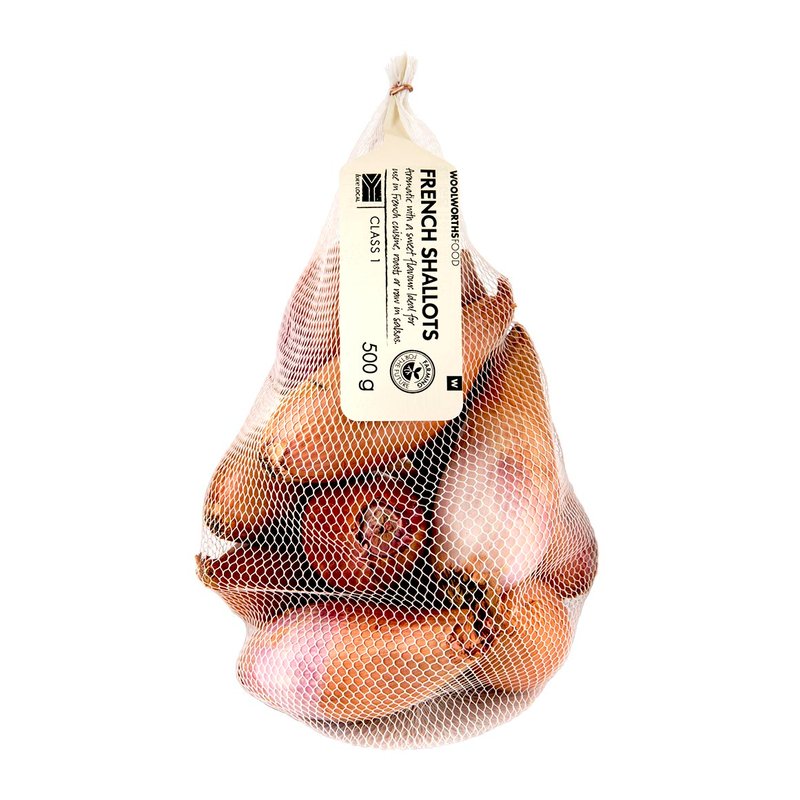
Woolworths French Shallots
- Whole food
- Checked
- Grade C
French Shallots by Woolworths has 31 kcal, 7 g carbs, 1 g protein and 0 g fat per serving (1 shallot (medium) of shallots (43g)).
French shallots, available from Woolworths, are a versatile ingredient often used in culinary applications for their mild, sweet flavor. While not a primary fuel source for endurance athletes, they can enhance the flavor profile of meals without overpowering other ingredients. Shallots are part of the allium family, similar to onions and garlic, and are often used in sauces, dressings, or raw in salsas. A single serving of shallots (43g) provides 7g of carbohydrates, making them a low-carb option. They are best consumed as part of a balanced meal rather than a standalone energy source. Their potassium content (142mg per serving) can support electrolyte balance, which is crucial for athletes, although the sodium content is minimal. While not a direct source of energy, shallots can contribute to the overall nutritional quality of meals consumed before or after training sessions.
- Enhances meal flavor naturally
- Low-calorie, low-carb option
- Contains potassium for electrolyte balance
On the label per serving, 1 shallot (medium) of shallots (43g)
| Energy | 130 kJ |
|---|---|
| Calories | 31 kcal |
| Carbs | 7.0 g |
| Sugar | 3.0 g |
| Fibre | 1.0 g |
| Protein | 1.0 g |
| Fat | 0.0 g |
| Saturated fat | 0.0 g |
| Cholesterol | 0 mg |
| Sodium | 5 mg |
| Potassium | 142 mg |
| Caffeine | 0 mg |
The numbers that matter on a training day
For endurance who it suits
While French shallots are not a direct source of energy for endurance activities, they can enhance the flavor of meals, making them more enjoyable and potentially aiding in overall dietary adherence. Their low calorie and carbohydrate content make them suitable for flavoring meals without impacting macronutrient targets significantly.
French shallots are ideal for endurance athletes who enjoy cooking and want to enhance the flavor of their meals without adding significant calories or carbohydrates. They are suitable for those looking to maintain a balanced diet while training and can be used in various dishes to provide a subtle sweetness and depth of flavor.
Shallots are best used as part of meals consumed during recovery or on rest days when flavor enhancement is desired without significant caloric intake.
- Low in calories and carbohydrates
- Enhances flavor without overpowering
- Contains potassium for electrolyte support
- Versatile in culinary applications
- Minimal carbohydrate contribution
- Not suitable for intra-workout fueling
- Low sodium content for electrolyte replacement
- Potential for mild GI distress if consumed in large quantities
- Minimal energy contribution for high-intensity sessions
Fuelling science in short
No, shallots are not practical for consumption during workouts due to their solid form and lack of rapid carbohydrate availability.
Shallots have a low glycemic impact due to their low carbohydrate content per serving, contributing minimally to blood sugar levels.
With 142mg of potassium per serving, shallots provide a modest contribution to electrolyte balance, although they lack significant sodium content.
- Total carbs
- 7 g
- Hourly capacity
- N/A
Race day before, during and after
- BeforeDO NOT USE
- DuringDO NOT USE
- AfterUSE
- Carb loadDO NOT USE
- Every dayUSE
Shallots are unsuitable for pre-race and during-race fueling due to their low carbohydrate content and solid form, which can slow gastric emptying. They do not contribute significantly to glycogen resynthesis or energy provision. However, they can be used in everyday meals and recovery settings to enhance flavor and provide minor electrolyte support.
NOT RECOMMENDED for pre-race use because shallots do not provide rapid carbohydrates or significant energy, and their fiber content may slow gastric emptying.
NOT RECOMMENDED during racing because shallots are a solid food with minimal carbohydrate availability, unsuitable for rapid energy needs.
USE as part of a balanced meal post-race to enhance flavor and provide minor potassium support, but pair with protein and carbs for recovery.
- Pair with lean proteins for a balanced meal
- Use in dressings to enhance salad flavors
- Combine with other alliums for a depth of flavor
For practitioners the evidence
Evidence grade: C — Limited direct evidence supports the use of shallots in endurance contexts, primarily based on nutritional composition.
Shallots have a low carb density of 16.3g per 100g, making them unsuitable for carb-loading. A 43g serving provides only 7g of carbohydrates, contributing minimally to the 600-840g daily target for a 70kg athlete. The low carbohydrate yield per serving and high volume required make them impractical for effective carb-loading.
Shallots undergo initial enzymatic breakdown in the mouth, followed by slow gastric emptying due to their solid form. In the small intestine, carbohydrates are absorbed via SGLT1 transporters, but the low carbohydrate content limits their impact on blood glucose. Any unabsorbed fiber may undergo fermentation in the colon, potentially causing mild GI distress.
Shallots provide minimal carbohydrates and no protein, making them inadequate for standalone recovery. However, their potassium content can support electrolyte balance. To optimize recovery, they should be paired with protein sources to meet muscle protein synthesis thresholds and additional carbohydrates to replenish glycogen stores.
Shallots may cause mild GI distress if consumed in large quantities due to fiber content. They offer minimal energy, making them unsuitable for pre-exercise consumption. Their low sodium content does not support significant electrolyte replacement, and their solid form can slow gastric emptying.
- Do not use during high-intensity sessions due to low energy contribution.
- Do not rely on shallots for electrolyte replacement in hot conditions.
- Do not consume in large quantities pre-race due to potential GI distress.
- High fiber content may cause GI distress if consumed in excess.
- Low sodium content may not meet electrolyte needs during heavy sweating.
- Minimal carbohydrate content limits energy availability for endurance events.
- Solid form may slow gastric emptying, unsuitable for rapid energy needs.
Questions about French Shallots
How many carbs are in French Shallots by Woolworths?
7 g of carbs per serving (1 shallot (medium) of shallots (43g)), with 31 kcal and 1 g protein.
Can shallots be used during training?
No, shallots are not suitable for consumption during training due to their solid form and lack of rapid carbohydrate availability.
Are shallots good for recovery meals?
Yes, shallots can enhance the flavor of recovery meals, but should be paired with protein and carbohydrates for effective recovery.
Do shallots contain allergens?
Shallots are generally not associated with common allergens, but individuals with allium sensitivities should exercise caution.
How should shallots be stored?
Store shallots in a cool, dry place to maintain freshness and prevent moisture accumulation.
Can shallots be used in carb-loading?
No, shallots are not suitable for carb-loading due to their low carbohydrate content per serving.
What are the benefits of using shallots in meals?
Shallots provide a mild, sweet flavor that enhances dishes without adding significant calories or carbohydrates.
Eating this today? Log it in one tap.
Say "French Shallots" and it lands in your diary, counted against today's carbs and protein.
