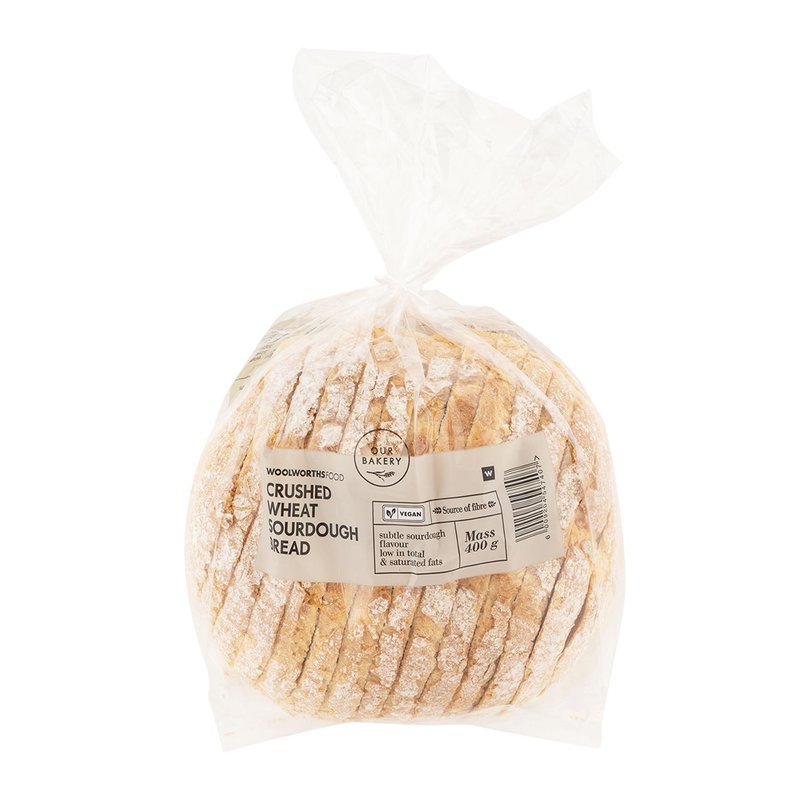
Woolworths Crushed Wheat Sourdough Bread
- Whole food
- Checked
- Grade B
Crushed Wheat Sourdough Bread by Woolworths has 76 kcal, 12.3 g carbs, 3.1 g protein and 0.4 g fat per serving (1 slice (30g)).
Woolworths Crushed Wheat Sourdough Bread is a vegan, low-fat bread option with a subtle sourdough flavor. Each 30g slice provides 21g of carbohydrates, making it a moderate source of energy for endurance athletes. The high fiber content (5.3g per serving) can aid in satiety but may slow gastric emptying if consumed in large amounts pre-exercise. This bread is suitable for athletes looking for a plant-based carbohydrate source that supports general training needs. It is best consumed as part of a balanced meal 2-3 hours before training to allow for digestion without risking gastrointestinal distress. Its low sodium content (158mg per serving) means additional electrolyte sources may be needed during long sessions.
- Moderate carbohydrate source
- High in dietary fiber
- Low in total and saturated fats
On the label per serving, 1 slice (30g)
| Energy | 320 kJ |
|---|---|
| Calories | 76 kcal |
| Carbs | 12.3 g |
| Sugar | 1.0 g |
| Fibre | 3.2 g |
| Protein | 3.1 g |
| Fat | 0.4 g |
| Saturated fat | 0.1 g |
| Sodium | 95 mg |
| Potassium | 143 mg |
The numbers that matter on a training day
For endurance who it suits
Woolworths Crushed Wheat Sourdough Bread can be a part of an endurance athlete's diet, providing moderate carbs and high fiber. However, its high fiber content makes it less suitable for pre-race or during-race consumption, where quick digestion is crucial. It's best used for general training meals or recovery.
This bread is ideal for endurance athletes who require a moderate carbohydrate intake as part of their daily diet. It's suitable for those following a vegan diet and looking for plant-based energy sources. Athletes who prefer whole foods over processed gels or bars may find this bread a useful addition to their meals.
Best suited for moderate-intensity training sessions or as part of a pre-training meal. Not ideal for high-intensity intervals or ultra-endurance events due to its fiber content.
- Vegan-friendly and plant-based
- High in fiber for satiety
- Low in total and saturated fats
- Moderate carbohydrate content
- High fiber may slow digestion
- Low sodium content for endurance needs
- Not suitable for during-race consumption
- High fiber may cause GI distress if consumed in excess pre-exercise
- Low sodium content may require supplementation during prolonged exercise
Fuelling science in short
Not recommended during workouts due to its solid form and high fiber content, which can slow gastric emptying and cause GI distress.
With 21g of carbohydrates per serving, this bread has a moderate glycemic impact. The high fiber content may slow glucose release, providing more sustained energy.
Contains 158mg of sodium per serving, which is below the typical endurance athlete's sweat loss rate of 300-600mg/hr. Additional sodium sources may be needed.
- Total carbs
- 21 g
- Hourly capacity
- 60
Race day before, during and after
- BeforeDO NOT USE
- DuringDO NOT USE
- AfterUSE
- Carb loadCAUTION
- Every dayUSE
The bread's high fiber content makes it unsuitable for pre-race and during-race consumption due to the risk of GI distress and slow gastric emptying. It can be used in recovery when paired with protein to support muscle repair and glycogen replenishment. For carb loading, the high fiber may limit intake volume, so caution is advised. It's suitable for everyday training meals where digestion time is not a constraint.
NOT RECOMMENDED for pre-race use because of high fiber content, which can slow gastric emptying and increase GI distress risk.
NOT RECOMMENDED during racing because it is a solid food with high fiber, which can slow digestion and lead to GI issues.
USE as part of a recovery meal when paired with a protein source to aid in muscle repair and glycogen replenishment.
- Pair with a protein source for recovery meals
- Combine with a low-fiber fruit for pre-training energy
- Add a sodium-rich spread for electrolyte balance
For practitioners the evidence
Evidence grade: B — Supported by general carbohydrate and fiber digestion studies, but lacking specific RCTs on this bread's impact.
This bread has a moderate carb density of 41g per 100g, making it a moderate source for carb loading. A 30g serving provides 21g of carbs, contributing to daily carb targets but requiring multiple servings to meet the 600-840g/day target for a 70kg athlete. The high fiber content may limit intake volume due to satiety, making it less efficient for high-volume carb loading.
The high fiber content of this bread can slow gastric emptying, delaying carbohydrate absorption. Carbohydrates are primarily absorbed in the small intestine via SGLT1 transporters for glucose. The presence of fiber may reduce the rate of glucose appearance in the bloodstream, providing a more sustained energy release but potentially delaying peak glucose availability.
This bread provides 21g of carbohydrates per serving, aiding in glycogen resynthesis post-exercise. However, it lacks sufficient protein to stimulate muscle protein synthesis, making it inadequate as a standalone recovery food. Pairing with a protein source is recommended to meet recovery nutrition targets.
The high fiber content may cause GI distress if consumed in large amounts pre-exercise. The bread's low sodium content may not meet the needs of athletes with high sweat rates, necessitating additional electrolyte intake. Its solid form makes it unsuitable for consumption during high-intensity or endurance events where quick digestion is essential.
- Do not use within 90 minutes of race start due to high fiber content.
- Avoid during high-intensity sessions where quick digestion is required.
- Not suitable for athletes with gluten intolerance.
- High fiber content may cause GI distress during exercise.
- Low sodium content may lead to hyponatremia in long-duration events.
- Solid form may cause choking hazard during intense exercise.
- High carbohydrate content unsuitable for low-carb diets.
Questions about Crushed Wheat Sourdough Bread
How many carbs are in Crushed Wheat Sourdough Bread by Woolworths?
12.3 g of carbs per serving (1 slice (30g)), with 76 kcal and 3.1 g protein.
When should I eat this bread?
Consume 2-3 hours before training as part of a balanced meal to allow for digestion without risking GI distress.
Is this bread suitable for carb loading?
Caution advised due to high fiber content, which may limit intake volume. Consider pairing with lower-fiber carb sources.
Can I eat this bread during a race?
Not recommended due to its solid form and high fiber content, which can slow digestion and cause GI distress.
Are there any allergens in this bread?
Contains wheat and gluten. Check for any specific allergies related to these ingredients.
How does this bread support recovery?
Provides carbohydrates for glycogen replenishment. Pair with a protein source for optimal muscle repair.
How does it behave in hot weather?
Store in a cool, dry place to prevent spoilage. High temperatures may affect freshness if not stored properly.

Eating this today? Log it in one tap.
Say "Crushed Wheat Sourdough Bread" and it lands in your diary, counted against today's carbs and protein.
