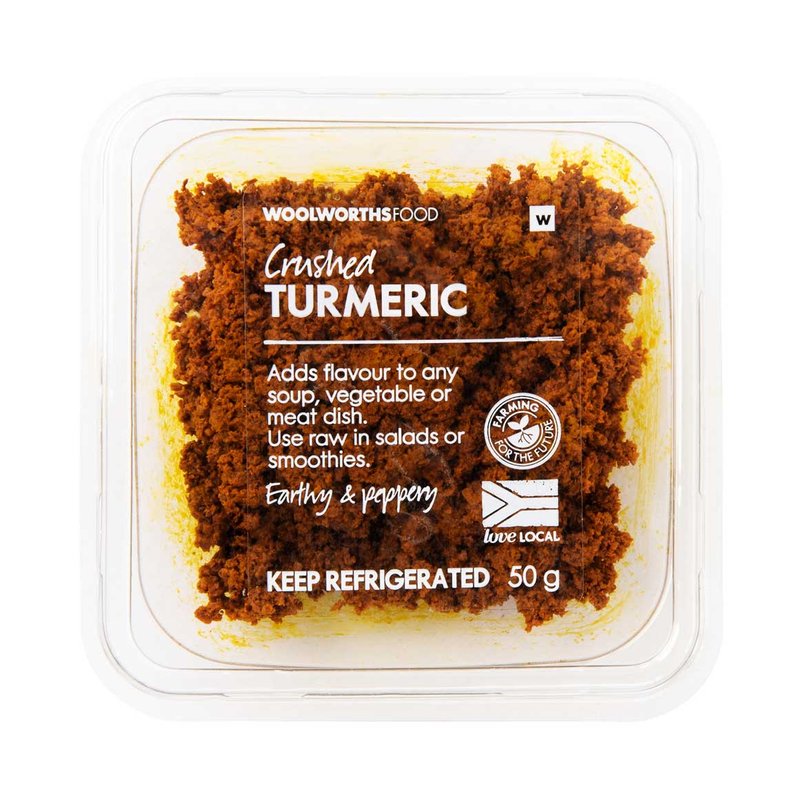
Woolworths Crushed Turmeric
- Whole food
- Checked
- Grade C
Crushed Turmeric by Woolworths has 4 kcal, 0.7 g carbs, 0.1 g protein and 0 g fat per serving (Per 5 g serving).
Woolworths Crushed Turmeric is a versatile spice known for its anti-inflammatory properties, primarily due to its active compound, curcumin. While it adds flavor to various dishes, its potential benefits for endurance athletes lie in its ability to aid recovery. Consuming turmeric post-exercise may help reduce muscle soreness and inflammation, potentially improving recovery times. However, its low carbohydrate content means it should not be relied upon for energy during training or racing. Instead, it serves as a supplementary aid in recovery protocols, especially after intense sessions. Its minimal calorie and macronutrient profile make it a non-burdening addition to a balanced diet.
- Anti-inflammatory properties
- Supports post-exercise recovery
- Low-calorie addition
On the label per serving, Per 5 g serving
| Energy | 15 kJ |
|---|---|
| Calories | 4 kcal |
| Carbs | 0.7 g |
| Fibre | 0.2 g |
| Protein | 0.1 g |
| Fat | 0.0 g |
| Sodium | 1 mg |
The numbers that matter on a training day
For endurance who it suits
Woolworths Crushed Turmeric is not a primary fuel source for endurance activities but can be a valuable component of a recovery strategy due to its anti-inflammatory properties. It should be used in conjunction with other recovery foods that provide carbohydrates and protein.
Endurance athletes seeking to enhance their recovery process may benefit from incorporating turmeric into their diet. It's particularly suitable for those experiencing frequent muscle soreness post-training. However, athletes should not rely on it as a primary energy source during training or competition.
Ideal for post-training recovery, especially after long runs or intense interval sessions. It can be incorporated into meals or smoothies to support muscle recovery.
- Anti-inflammatory benefits for recovery
- Low-calorie, non-burdening addition
- Versatile culinary uses
- Vegan and allergen-free
- Negligible carbohydrate content
- Not suitable for energy provision
- Minimal protein contribution
- Potential for gastrointestinal discomfort if unaccustomed
- May interfere with muscle growth if overused
Fuelling science in short
No, not recommended during workouts due to negligible carbohydrate content and lack of immediate energy provision.
With only 1 g of carbohydrates per serving (50 g), turmeric has a negligible impact on blood sugar levels and does not provide significant energy for endurance activities.
Contains 1 mg of sodium per serving (50 g), which is insignificant compared to the 300-600 mg/hr sweat losses typical in endurance athletes.
- Total carbs
- 1 g
- Hourly capacity
- 0
Race day before, during and after
- BeforeDO NOT USE
- DuringDO NOT USE
- AfterUSE
- Carb loadDO NOT USE
- Every dayUSE
Turmeric is unsuitable for pre-race and during-race use due to its lack of carbohydrates and energy. It is beneficial for recovery, aiding in reducing inflammation and muscle soreness. It should be incorporated into everyday training as a recovery aid but not relied upon for carb loading.
NOT RECOMMENDED for pre-race use because it offers negligible carbohydrates and energy, which are essential for pre-race fueling.
NOT RECOMMENDED during racing because it does not provide fast-acting carbohydrates or significant energy.
USE in recovery meals to support anti-inflammatory processes. Pair with protein and carbohydrates for optimal recovery.
- Pair with protein-rich foods for recovery
- Combine with carbohydrates for balanced meals
- Use in smoothies with fruits for nutrient diversity
For practitioners the evidence
Evidence grade: B — Supported by multiple studies showing anti-inflammatory benefits, but limited direct evidence for endurance performance enhancement.
Crushed turmeric has a low carbohydrate density of 14 g per 100 g, making it unsuitable for carb loading. A 50 g serving contributes only 1 g of carbs, which is negligible toward the 600-840 g/day target for a 70 kg athlete. The athlete would need an impractical number of servings to meet carb loading needs.
Turmeric is primarily digested in the small intestine, with curcumin absorbed via passive diffusion. Its low carbohydrate content means it does not significantly impact blood glucose levels or insulin response. The negligible fat content allows for relatively fast gastric emptying, but its anti-inflammatory properties are the primary benefit.
Turmeric aids recovery by reducing inflammation and muscle soreness, primarily through curcumin's action. It does not contribute significantly to glycogen resynthesis due to low carbohydrate content. It should be paired with protein for muscle protein synthesis and carbohydrates for glycogen replenishment.
High doses of turmeric may cause gastrointestinal discomfort in some individuals. It may also interfere with muscle growth if overused, as reducing inflammation can dampen hypertrophy signals. It provides negligible energy, so it cannot replace carbohydrate-rich recovery foods.
- Do not use as a primary energy source during endurance events.
- Do not rely on turmeric alone for recovery; pair with protein and carbs.
- Do not consume in excessive amounts if prone to gastrointestinal distress.
- High doses may cause gastrointestinal discomfort.
- Excessive anti-inflammatory use may dampen muscle growth signals.
- Negligible sodium content does not support electrolyte replenishment.
- Low carbohydrate content provides insufficient energy for endurance activities.
Questions about Crushed Turmeric
How many carbs are in Crushed Turmeric by Woolworths?
0.7 g of carbs per serving (Per 5 g serving), with 4 kcal and 0.1 g protein.
When should I consume turmeric for recovery?
Turmeric can be consumed post-exercise to aid in reducing inflammation and muscle soreness.
How much turmeric should I use?
Typical servings range from 5-10 g, but consult with a dietitian for personalized advice.
Can turmeric cause gastrointestinal issues?
Some individuals may experience discomfort if not accustomed to turmeric; start with small amounts.
Are there alternatives to turmeric for recovery?
Other anti-inflammatory foods include ginger and omega-3 rich foods like fish oil.
Is turmeric suitable for hot weather training?
Yes, but ensure adequate hydration as turmeric does not contribute to electrolyte balance.
Does turmeric aid in muscle growth?
While it helps reduce inflammation, excessive use may interfere with muscle growth due to dampening inflammation.
Eating this today? Log it in one tap.
Say "Crushed Turmeric" and it lands in your diary, counted against today's carbs and protein.