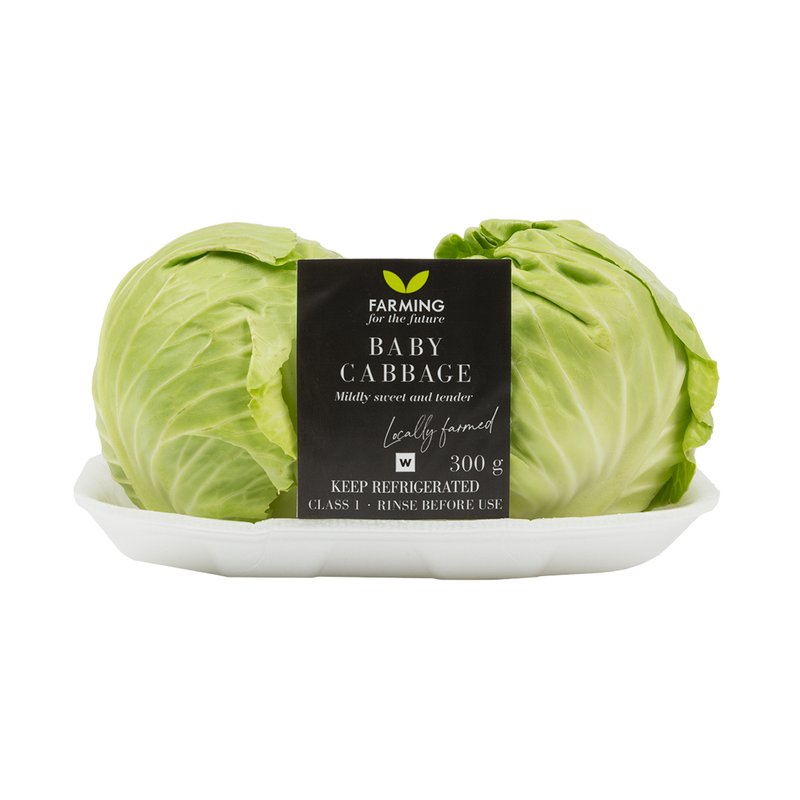
Woolworths Baby Cabbage 2 pk
- Whole food
- Checked
- Grade C
Baby Cabbage 2 pk by Woolworths has 33 kcal, 4 g carbs, 1.5 g protein and 0.1 g fat per serving (100g).
Woolworths Baby Cabbage offers a low-calorie, high-fiber option for endurance athletes seeking to enhance their diet with nutrient-dense vegetables. With only 26 kcal per serving (100g), it provides 3g of carbohydrates and 1.6g of fiber, making it suitable for athletes looking to increase fiber intake without a significant calorie load. It's ideal for pre-race meals when combined with other carb sources to avoid gastrointestinal distress. The mild, sweet flavor and tender texture make it versatile for salads or cooked dishes, providing a refreshing option to diversify nutrient intake.
- Low-calorie, high-fiber option
- Versatile for raw and cooked dishes
- Supports digestive health
On the label per serving, 100g
| Energy | 136 kJ |
|---|---|
| Calories | 33 kcal |
| Carbs | 4.0 g |
| Sugar | 0.0 g |
| Fibre | 2.0 g |
| Protein | 1.5 g |
| Fat | 0.1 g |
| Saturated fat | 0.0 g |
| Cholesterol | 0 mg |
| Sodium | 29 mg |
The numbers that matter on a training day
For endurance who it suits
For endurance athletes, baby cabbage is a nutrient-dense, low-calorie vegetable that can be included in meals for fiber and micronutrient intake. However, it lacks the carbohydrate density needed for pre-race or intra-race fueling. Use it as part of a balanced diet to support overall health and digestion.
Endurance athletes who need to manage calorie intake while ensuring adequate fiber consumption will find baby cabbage beneficial. It's particularly suitable for those preparing for races and looking to maintain gut health without adding excessive calories. Athletes with a focus on nutrient density and dietary variety will appreciate its inclusion in meal plans.
Best suited for recovery meals or as a light meal component on rest days. Not ideal for high-intensity sessions due to low carb content.
- Low in calories, suitable for weight management
- High fiber content supports digestion
- Mild flavor complements various dishes
- Locally farmed, potentially fresher produce
- Low carbohydrate content unsuitable for carb loading
- Minimal sodium content for electrolyte replenishment
- Not practical for mid-race consumption
- Potential for gastrointestinal distress if consumed in large quantities pre-race
- Low sodium content may not support electrolyte needs
Fuelling science in short
No, baby cabbage is not practical during workouts due to its solid form and low carbohydrate content.
With 3g of carbs per serving, baby cabbage has a negligible impact on blood sugar levels, making it a low-GI food. Its fiber content may slow gastric emptying slightly.
Contains 23mg of sodium per serving, which is minimal compared to the 300-600mg/hr loss during exercise. Potassium content is unspecified but typically low.
- Total carbs
- 3 g
- Hourly capacity
- 60-90
Race day before, during and after
- BeforeDO NOT USE
- DuringDO NOT USE
- AfterDO NOT USE
- Carb loadDO NOT USE
- Every dayUSE
The low carbohydrate content and high fiber make baby cabbage unsuitable for pre-race, during-race, and recovery contexts. Its role in carb loading is minimal due to low carb density. However, it can be used in everyday training meals for fiber and micronutrient intake without the pressure of immediate energy needs.
NOT RECOMMENDED for pre-race use because the low carbohydrate density and high fiber content may lead to gastrointestinal distress and inadequate glycogen stores.
NOT RECOMMENDED during racing because it provides negligible carbohydrates and is a solid food, making it impractical for quick energy.
NOT RECOMMENDED for recovery because it lacks sufficient carbohydrates and protein to meet post-exercise recovery needs.
- Pair with lean proteins for a balanced meal
- Combine with high-carb foods for pre-race meals
- Use in salads with healthy fats like olive oil for satiety
For practitioners the evidence
Evidence grade: C — The analysis is based on general nutritional principles and mechanistic understanding rather than direct RCT evidence.
Baby cabbage, with a carbohydrate density of 4g per 100g, is low in carb density. A 100g serving provides only 3g of carbohydrates, contributing minimally to a carb-loading target of 600-840g/day for a 70kg athlete. The athlete would need to consume an impractical volume of cabbage to meet carb-loading needs, making it unsuitable for this purpose.
Baby cabbage is digested primarily in the small intestine, where its carbohydrates are broken down and absorbed. The fiber content may slow gastric emptying, leading to a gradual release of glucose into the bloodstream. The absence of significant sugars means it does not heavily rely on SGLT1 or GLUT5 transporters. Unabsorbed fiber may undergo fermentation in the colon, potentially causing gas.
Baby cabbage provides minimal carbohydrates (3g per serving) and negligible protein (1.2g per serving), failing to meet the glycogen resynthesis and muscle protein synthesis needs post-exercise. It lacks sufficient sodium for rehydration and does not provide significant anti-inflammatory or antioxidant compounds, making it inadequate for recovery.
High fiber content may cause gastrointestinal discomfort if consumed in large quantities before or during exercise. Low sodium content is insufficient for electrolyte replenishment. The low carbohydrate content may lead to inadequate energy availability if relied upon for pre-race or intra-race fueling.
- Do not use within 90 minutes of race start due to high fiber content and potential for GI distress.
- Do not rely on for carb loading due to low carbohydrate content.
- Do not use as a primary recovery food due to inadequate protein and carbs.
- High fiber content may cause bloating or gas if consumed in large quantities pre-exercise.
- Low sodium content may not meet electrolyte needs during prolonged exercise.
- Negligible carbohydrate content may lead to energy deficits if used as a primary fuel source.
- Potential for gastrointestinal discomfort if not accustomed to high fiber intake.
Questions about Baby Cabbage 2 pk
How many carbs are in Baby Cabbage 2 pk by Woolworths?
4 g of carbs per serving (100g), with 33 kcal and 1.5 g protein.
Can baby cabbage be used for carb loading?
No, baby cabbage is not suitable for carb loading due to its low carbohydrate content and high fiber, which may cause gastrointestinal discomfort.
Is baby cabbage suitable for pre-race meals?
No, due to its low carbohydrate density and potential for gastrointestinal distress, it's not recommended for pre-race meals.
How should baby cabbage be stored?
Store baby cabbage in the crisper drawer of the refrigerator, loosely wrapped in plastic, to maintain freshness for 1-2 weeks.
Can baby cabbage be consumed during a race?
No, baby cabbage is not practical during races as it is a solid food with negligible carbohydrates, unsuitable for quick energy.
What are the benefits of baby cabbage for endurance athletes?
Baby cabbage provides fiber and micronutrients, supporting digestive health and dietary variety, but not suitable for immediate energy needs.
Is baby cabbage high in sodium?
No, baby cabbage contains minimal sodium (23mg per serving), insufficient for electrolyte replenishment during endurance activities.
Eating this today? Log it in one tap.
Say "Baby Cabbage 2 pk" and it lands in your diary, counted against today's carbs and protein.