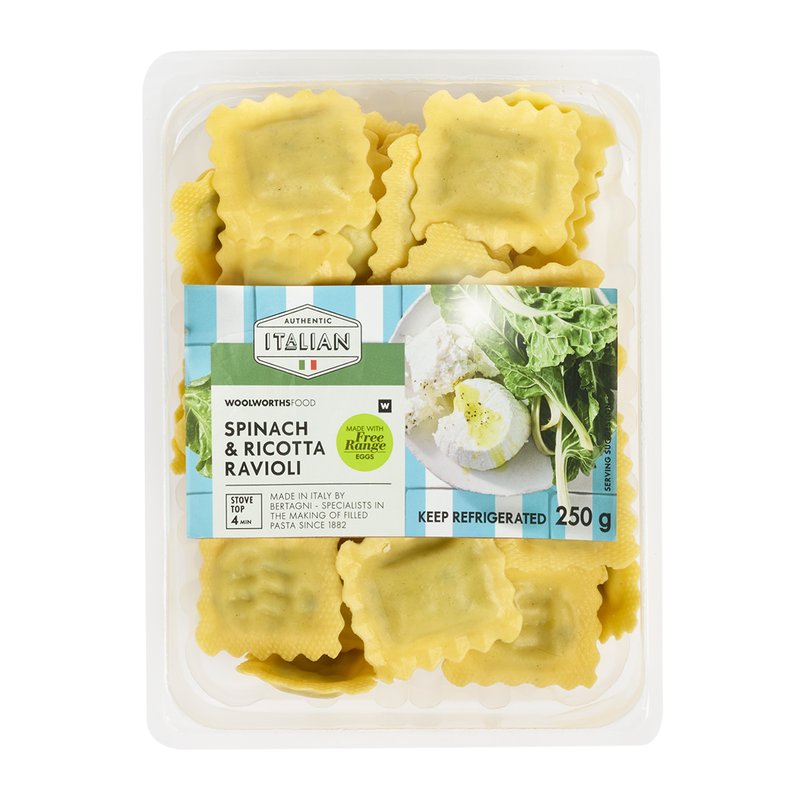
Woolworths Spinach & Ricotta Ravioli
- Meal
- Checked
- Grade C
Spinach & Ricotta Ravioli by Woolworths has 338 kcal, 39 g carbs, 13.4 g protein and 13.5 g fat per serving (1 serving (125g)).
Woolworths Spinach & Ricotta Ravioli, crafted by Bertagni in Italy, is a filled pasta featuring spinach and ricotta cheese. It offers a moderate carbohydrate content of 39 g per serving (125 g), making it a potential option for athletes seeking a carbohydrate source. However, its high fat content (13.5 g per serving) could slow gastric emptying, making it less ideal for pre-race or during-race consumption. The protein content of 13.4 g per serving provides some muscle repair benefits, but the lack of significant fast-acting carbohydrates limits its utility as an immediate energy source during high-intensity sessions. Best consumed post-training when the body can utilize the protein for recovery, it should be paired with additional carbohydrates to meet glycogen resynthesis needs.
- Moderate carbohydrate content
- Contains protein for muscle repair
- Rich in sodium for electrolyte replenishment
On the label per serving, 1 serving (125g)
| Energy | 1414 kJ |
|---|---|
| Calories | 338 kcal |
| Carbs | 39.0 g |
| Sugar | 3.3 g |
| Fibre | 3.5 g |
| Protein | 13.4 g |
| Fat | 13.5 g |
| Saturated fat | 9.4 g |
| Cholesterol | 84 mg |
| Sodium | 550 mg |
The numbers that matter on a training day
For endurance who it suits
While the ravioli offers a moderate carbohydrate source and some protein, its high fat content makes it less suitable for pre-race or during-race consumption. It can be a part of a recovery meal when paired with additional carbohydrates to enhance glycogen resynthesis.
This product is suitable for endurance athletes who are in the recovery phase post-training, where a moderate intake of carbohydrates and protein is beneficial. It is also appropriate for athletes who are not in immediate need of rapid energy replenishment and can afford a slower gastric emptying rate due to its higher fat content.
Best suited for post-training recovery sessions or low-intensity training days where immediate energy replenishment is not critical.
- Moderate carbohydrate content per serving
- Contains protein for muscle repair
- Sodium content aids in electrolyte balance
- Authentic Italian preparation
- High fat content slows gastric emptying
- Not suitable for immediate energy needs
- Limited fast-acting carbohydrates
- Unspecified potassium content
- High fat may cause GI distress if consumed pre-race
- Potential for dental erosion due to carbohydrate content
Fuelling science in short
Not recommended during workouts due to high fat content, which can slow gastric emptying and impede quick energy availability.
The moderate carbohydrate content suggests a moderate glycemic impact, but the high fat content may slow gastric emptying, leading to a more gradual blood sugar response.
Contains 550 mg of sodium per serving, which is beneficial for replenishing sodium lost during endurance activities. Potassium content is unspecified.
- Total carbs
- 39 g
- Hourly capacity
- 60-90 g/h with mixed carb sources
Race day before, during and after
- BeforeDO NOT USE
- DuringDO NOT USE
- AfterUSE
- Carb loadCAUTION
- Every dayUSE
The high fat content of the ravioli makes it unsuitable for pre-race and during-race consumption due to potential for delayed gastric emptying and GI distress. However, it can be used effectively in recovery when combined with additional carbs and protein to support glycogen resynthesis and muscle repair.
NOT RECOMMENDED for pre-race use because the high fat content can slow gastric emptying, potentially causing GI distress and delaying energy availability.
NOT RECOMMENDED during racing because the high fat content and solid form can impede quick energy absorption and cause gastrointestinal discomfort.
USE for recovery when paired with additional carbohydrates and protein to meet glycogen resynthesis and muscle repair needs.
- Pair with a low-fat, high-carb source for recovery
- Combine with a protein shake for balanced recovery
- Add vegetables for a nutrient-dense meal
For practitioners the evidence
Evidence grade: C — The analysis is based on nutritional data and general digestive physiology, with limited direct sports-specific studies.
With 31 g of carbs per 100 g, this ravioli has a moderate carb density. However, the high fat content (10.8 g per 100 g) and satiety factor make it less efficient for carb loading, as athletes would need to consume multiple servings to meet the 600-840 g/day target. A 125 g serving provides 39 g of carbs, contributing ~6.5% towards a 600 g daily target for a 70 kg athlete. The high fat and protein content may lead to early satiety, making it impractical for large-scale loading.
The ravioli's carbohydrate content is primarily absorbed in the small intestine via SGLT1 transporters for glucose. The high fat content slows gastric emptying, leading to delayed nutrient absorption. Protein is broken down by brush-border peptidases into amino acids. The presence of dietary fiber (2.8 g per 100 g) may contribute to a slower digestion rate, potentially causing discomfort if consumed too close to exercise.
The ravioli provides carbohydrates necessary for glycogen resynthesis, albeit at a slower rate due to its fat content. The protein content supports muscle repair, but the absence of a significant leucine spike may limit muscle protein synthesis. To optimize recovery, it should be paired with additional carbs and a high-leucine protein source.
High fat content can cause GI distress if consumed pre-exercise. The carbohydrate content, while moderate, may lead to dental erosion if consumed frequently without oral hygiene. Blood-glucose volatility is less of a concern due to the slower digestion rate. Sodium content is beneficial for electrolyte balance, but potassium levels are unspecified.
- Do not use within 90 minutes of race start due to high fat content.
- Do not use if lactose intolerant due to dairy ingredients.
- Do not use for rapid energy needs during high-intensity sessions.
- High fat content may slow gastric emptying and cause GI distress during exercise.
- Frequent consumption may contribute to dental erosion due to carbohydrate content.
- High sodium content could be problematic for those on sodium-restricted diets.
- Potential allergen risk for individuals sensitive to wheat, egg, or dairy.
Questions about Spinach & Ricotta Ravioli
How many carbs are in Spinach & Ricotta Ravioli by Woolworths?
39 g of carbs per serving (1 serving (125g)), with 338 kcal and 13.4 g protein.
Is this suitable for pre-race fueling?
No, the high fat content can slow gastric emptying, making it unsuitable for pre-race fueling.
Can this be used during a race?
No, it is not recommended due to its solid form and high fat content, which can cause GI distress.
How should this be consumed for recovery?
Pair with additional carbohydrates and a protein source to enhance glycogen resynthesis and muscle repair.
What are the allergen concerns?
Contains wheat, egg, and dairy, which can be allergens for some individuals.
Is this product suitable for hot weather?
Not ideal for hot weather as it requires cooking and may not be refreshing post-training.
What are the alternatives for during-race fueling?
Opt for gels or drinks with high glucose content for quick energy during races.


Eating this today? Log it in one tap.
Say "Spinach & Ricotta Ravioli" and it lands in your diary, counted against today's carbs and protein.