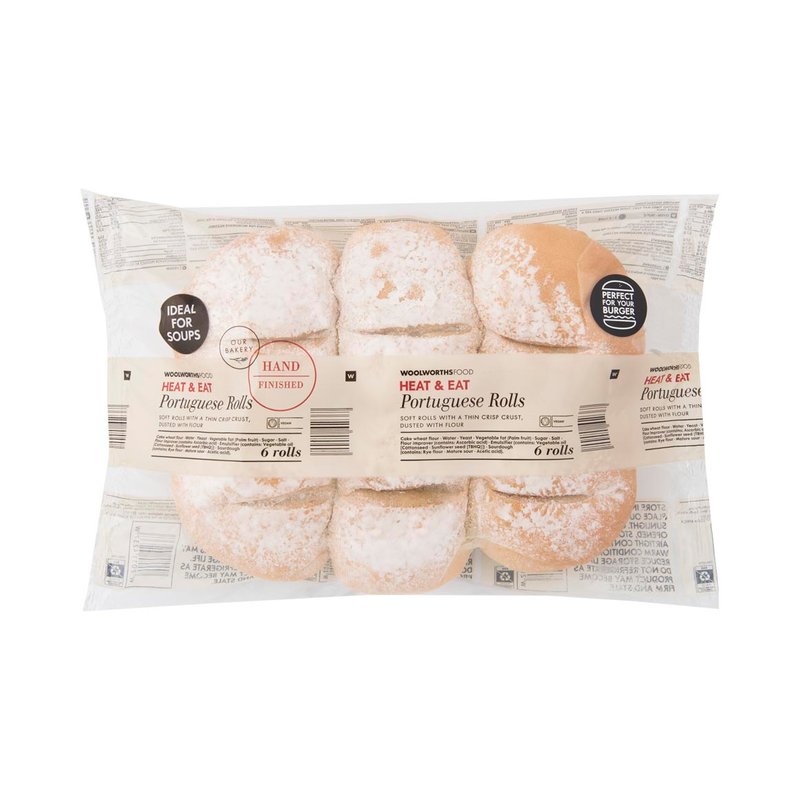
Woolworths Heat & Eat Portuguese Rolls
- Meal
- Checked
- Grade C
Heat & Eat Portuguese Rolls by Woolworths has 180 kcal, 34 g carbs, 5.7 g protein and 1.6 g fat per serving (1 roll (approx. 70g)).
Woolworths Heat & Eat Portuguese Rolls are soft rolls with a thin, crisp crust, ideal for pairing with burgers or soups. Each roll weighs approximately 70g, offering 34g of carbohydrates per serving. This makes them a moderate carbohydrate option for endurance athletes seeking a quick energy source. The rolls contain 5.7g of protein and 1.6g of fat per serving, with a sodium content of 202mg. These rolls are best suited for athletes who need a moderate carb intake pre- or post-training, but their low fiber and fat content means they won't overly slow gastric emptying, making them digestible. However, they lack significant protein, which limits their use as a standalone recovery food. They can be part of a balanced meal when paired with protein-rich foods to support muscle recovery.
- Moderate carb content for energy
- Low fat for faster digestion
- Convenient and easy to prepare
On the label per serving, 1 roll (approx. 70g)
| Energy | 754 kJ |
|---|---|
| Calories | 180 kcal |
| Carbs | 34.0 g |
| Sugar | 4.2 g |
| Fibre | 1.9 g |
| Protein | 5.7 g |
| Fat | 1.6 g |
| Saturated fat | 0.7 g |
| Sodium | 202 mg |
The numbers that matter on a training day
For endurance who it suits
While the Woolworths Heat & Eat Portuguese Rolls provide a convenient source of carbohydrates, their utility in endurance sports is limited due to low protein content and lack of complex carbs. They are best used as part of a meal rather than a standalone option for fueling or recovery. Pairing with protein-rich foods can enhance their recovery potential.
These rolls are suitable for endurance athletes who require a moderate carbohydrate intake to support energy needs. They are particularly useful for those engaging in moderate-intensity workouts or as a quick carb source post-training. Athletes who are not overly concerned about protein intake or those who plan to pair the rolls with protein-rich foods will find them beneficial.
Ideal for moderate-intensity workouts where a quick carbohydrate source is needed. Not suitable for high-intensity sessions requiring rapid digestion or for long endurance events due to lack of complex carbs and protein.
- Moderate carbohydrate content for quick energy
- Low fat content aids faster digestion
- Convenient, minimal preparation required
- Versatile for various meal pairings
- Low protein content limits recovery use
- Not suitable for during-race consumption
- Limited electrolytes for endurance events
- Potential for blood sugar spikes due to high GI
- Insufficient protein for standalone recovery
Fuelling science in short
Not recommended during workouts due to solid form and potential for delayed gastric emptying. Best consumed pre- or post-exercise.
With 34g of carbs per serving, these rolls likely have a moderate to high glycemic index, leading to a quick increase in blood sugar levels. This can be beneficial for immediate energy needs but may not sustain long-duration activities.
Contains 202mg of sodium per serving, which is below the recommended 300-600mg/hr for sweat losses in endurance events. Potassium and magnesium content is unspecified.
- Total carbs
- 34 g
- Hourly capacity
- 60
Race day before, during and after
- BeforeDO NOT USE
- DuringDO NOT USE
- AfterCAUTION
- Carb loadCAUTION
- Every dayUSE
Pre-race and during-race use is not recommended due to the solid form and potential for delayed gastric emptying. Recovery use is limited without additional protein. Everyday training use is suitable when paired with other nutrient sources.
NOT RECOMMENDED for pre-race use because the rolls are solid and may slow gastric emptying, potentially causing discomfort. Opt for liquid or gel-based carbohydrates instead.
NOT RECOMMENDED during racing because solid forms can delay gastric emptying and are not practical for mid-race consumption.
CAUTION for recovery use due to low protein content. Pair with a protein source to aid muscle recovery post-exercise.
- Pair with lean meats for protein boost
- Combine with a sports drink for electrolyte balance
- Serve with a salad for added fiber and nutrients
For practitioners the evidence
Evidence grade: C — The analysis is based on general nutritional principles and the known composition of the food, but lacks direct experimental data on endurance performance.
The rolls provide 34g of carbs per serving (70g), translating to a carb density of 49g per 100g. This is a moderate carb density. For a 70kg athlete targeting 600-840g per day, one roll contributes approximately 5.7% of the daily target. However, the solid form and lack of complex carbs make them less ideal for large-volume carb loading, as they may lead to early satiety and do not provide sustained energy release.
The rolls are primarily composed of white wheat flour, leading to rapid digestion and absorption. The low fat content facilitates faster gastric emptying. Carbohydrates are broken down into glucose, absorbed via SGLT1 transporters in the small intestine. The low fiber content minimizes colonic fermentation, reducing the risk of GI distress. However, the high glycemic index may cause rapid blood sugar spikes.
The rolls provide carbohydrates necessary for glycogen resynthesis post-exercise but lack adequate protein to support muscle protein synthesis. To meet the 1.0-1.2 g/kg/h carbohydrate target, additional carb sources would be needed. Pairing with a protein-rich food is essential to meet the leucine threshold for optimal muscle recovery.
The high glycemic index may lead to blood glucose volatility, potentially causing rebound hypoglycemia if consumed pre-exercise. The solid form is not ideal for during-exercise consumption due to potential gastric emptying delays. The low sodium content may not sufficiently replace sweat losses in endurance events.
- Do not use within 90 minutes of race start if the athlete has not gut-trained with high-fiber solids — high risk of GI distress.
- Do not rely on these rolls for recovery without additional protein intake.
- Do not use as a primary carb-loading food due to moderate density and lack of complex carbs.
- High glycemic index may cause rapid blood sugar spikes, unsuitable for diabetics without careful monitoring.
- Low fiber content may not support gut health if relied upon as a primary carb source.
- Insufficient sodium to replace losses in high-sweat endurance events.
- Potential for delayed gastric emptying if consumed in large quantities before exercise.
Questions about Heat & Eat Portuguese Rolls
How many carbs are in Heat & Eat Portuguese Rolls by Woolworths?
34 g of carbs per serving (1 roll (approx. 70g)), with 180 kcal and 5.7 g protein.
Can these rolls be used during a race?
No, due to their solid form and potential to slow gastric emptying, they are not suitable for mid-race consumption.
Are these rolls a good option for recovery?
They provide carbohydrates but lack sufficient protein. Pair with a protein source for effective recovery.
How should I store these rolls?
Store in a cool, dry place. Once opened, consume within a few days or freeze for longer storage.
Are there any allergens in these rolls?
The rolls contain wheat flour, which may be a concern for those with gluten sensitivities.
What is the best way to prepare these rolls?
Heat in an oven for a few minutes to achieve a crisp crust, but avoid overcooking to maintain softness.
Are these rolls suitable for carb loading?
They can contribute to carb intake but should be part of a varied diet due to their moderate carb density and low protein.


Eating this today? Log it in one tap.
Say "Heat & Eat Portuguese Rolls" and it lands in your diary, counted against today's carbs and protein.
