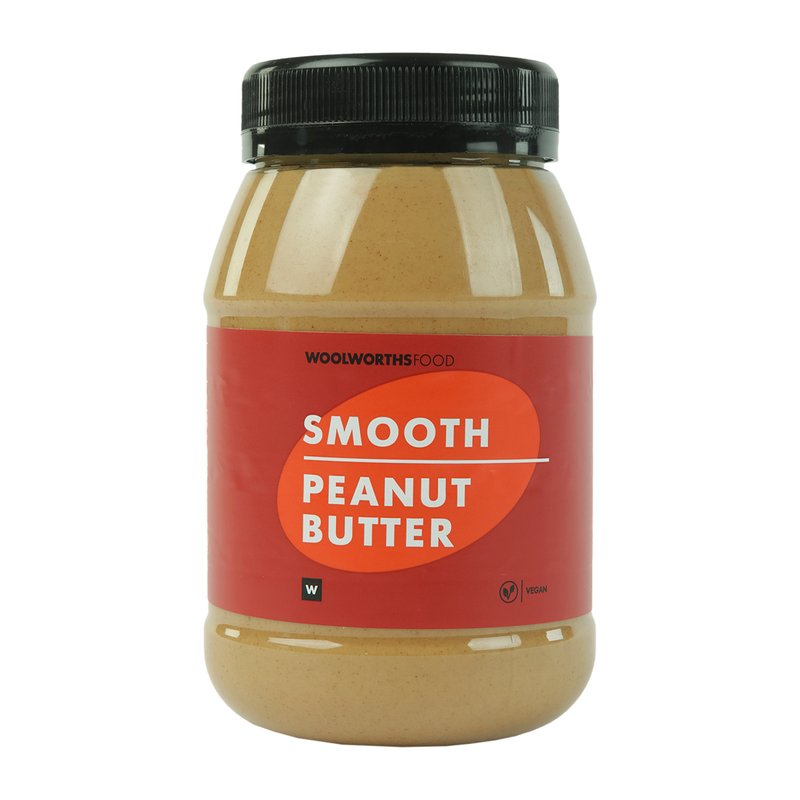
Woolworths Smooth Peanut Butter
- Other
- Checked
- Grade B
Smooth Peanut Butter by Woolworths has 120 kcal, 3 g carbs, 4.8 g protein and 9.4 g fat per serving (per 20g serving).
Smooth Peanut Butter made with carefully selected peanuts, roasted to perfection and ground into a creamy texture. Perfect for spreads or adding to smoothies.
On the label per serving, per 20g serving
| Energy | 500 kJ |
|---|---|
| Calories | 120 kcal |
| Carbs | 3.0 g |
| Sugar | 2.5 g |
| Fibre | 1.7 g |
| Protein | 4.8 g |
| Fat | 9.4 g |
| Saturated fat | 1.1 g |
| Cholesterol | 0 mg |
| Sodium | 48 mg |
The numbers that matter on a training day
For endurance who it suits
Woolworths Smooth Peanut Butter is a calorie-dense option that provides sustained energy through its high-fat content. It's best suited for long-duration, low-intensity activities or as a recovery component when paired with carbohydrates. Its high fat content makes it unsuitable for immediate pre-race or during-race consumption due to potential gastric distress.
This peanut butter is suitable for endurance athletes seeking a calorie-dense, fat-rich food to support energy needs during prolonged training sessions or as part of recovery nutrition. It's particularly beneficial for those engaging in low to moderate-intensity activities where rapid carbohydrate availability is less critical.
Ideal for long rides or hikes where energy needs are high but immediate digestion speed is less critical. Avoid during high-intensity intervals or races.
- High in monounsaturated fats for heart health
- Provides moderate protein per serving
- Versatile and easy to incorporate into meals
- Sustained energy release suitable for long-duration activities
- High fat content may slow gastric emptying
- Low carbohydrate content for immediate energy
- Not suitable for during-race consumption
- Potential gastrointestinal distress if consumed close to exercise
- High calorie density could lead to weight gain if not managed
Fuelling science in short
Not recommended during workouts due to high fat content, which can slow gastric emptying and lead to gastrointestinal discomfort.
Peanut butter has a low glycemic index due to its high fat content, leading to a slower, more sustained release of energy.
Contains 8.25 mg of sodium per serving, which is negligible compared to the 300-600 mg/hr sweat loss typical for endurance athletes.
- Total carbs
- 2.55 g
- Hourly capacity
- N/A
Race day before, during and after
- BeforeDO NOT USE
- DuringDO NOT USE
- AfterUSE
- Carb loadDO NOT USE
- Every dayUSE
The high-fat content of Woolworths Smooth Peanut Butter makes it unsuitable for pre-race and during-race consumption due to potential delays in gastric emptying and lack of immediate carbohydrate availability. However, it can be beneficial during recovery when paired with carbohydrates to support glycogen replenishment and muscle repair. For everyday training, it provides a sustained energy source when consumed well in advance of exercise.
NOT RECOMMENDED for pre-race use because its high-fat content can slow gastric emptying, leading to potential gastrointestinal discomfort and delayed energy release.
NOT RECOMMENDED during racing because the high fat content can slow gastric emptying and does not provide quick-access carbohydrates.
USE during recovery when paired with a carbohydrate source to aid glycogen replenishment and provide protein for muscle repair.
- Whole grain bread for balanced macronutrient intake
- Banana for added carbohydrates and potassium
- Greek yogurt for additional protein and probiotics
For practitioners the evidence
Evidence grade: C — Lacks direct RCTs supporting endurance-specific claims; mechanistic reasoning based on macronutrient content.
Woolworths Smooth Peanut Butter has a carbohydrate density of 17 g per 100 g, which is considered low. A 15 g serving provides only 2.55 g of carbohydrates, making it unsuitable for effective carb loading where a high carbohydrate intake is necessary. The high fat content also contributes to satiety, reducing the ability to consume large quantities needed for carb loading. Thus, it contributes minimally towards a 600 g daily target for a 70 kg athlete, requiring impractical servings.
Peanut butter's high-fat content slows gastric emptying, delaying nutrient absorption. Digestion begins in the mouth with mechanical breakdown, followed by slow gastric processing. In the small intestine, fats are emulsified by bile, and proteins are broken down by peptidases. The high fat content can delay carbohydrate absorption, and the low carbohydrate content limits glucose availability, impacting rapid energy needs during exercise.
While peanut butter provides fats and moderate protein, it lacks sufficient carbohydrates to meet the 1.0-1.2 g/kg/h glycogen resynthesis target post-exercise. It can contribute to muscle protein synthesis when combined with a carbohydrate-rich food, but alone, it is inadequate for optimal recovery. Its fats can provide sustained energy, but pairing with a carbohydrate source is necessary for effective glycogen replenishment.
High fat content can cause gastrointestinal distress if consumed close to exercise. The low carbohydrate content limits rapid energy availability. Peanut butter's stickiness and sugar content pose a dental erosion risk if consumed frequently without proper oral hygiene. Its energy density may lead to unintended weight gain if portion sizes are not managed.
- Do not use within 90 minutes of race start due to high fat content and potential GI distress.
- Do not use during high-intensity workouts as it lacks quick-access carbohydrates.
- Do not use if allergic to peanuts, as it contains peanuts.
- High fat content may slow gastric emptying and cause GI distress if consumed pre-exercise.
- Low carbohydrate availability limits its use for immediate energy needs during exercise.
- Potential for weight gain if consumed in excess due to high calorie density.
- Dental erosion risk due to sugar content and stickiness if consumed frequently without oral care.
Questions about Smooth Peanut Butter
How many carbs are in Smooth Peanut Butter by Woolworths?
3 g of carbs per serving (per 20g serving), with 120 kcal and 4.8 g protein.
When should I consume peanut butter for training?
Consume peanut butter well before training sessions to allow adequate time for digestion, especially before long-duration, low-intensity activities.
Can I use peanut butter during a race?
No, due to its high fat content which can slow digestion and cause gastrointestinal discomfort during intense exercise.
Is peanut butter suitable for recovery?
Yes, when paired with carbohydrates, it can aid in recovery by providing protein for muscle repair and fats for sustained energy.
Are there any allergens in peanut butter?
Yes, peanut butter contains peanuts, which are a common allergen and should be avoided by those with peanut allergies.
How does peanut butter behave in hot weather?
In hot weather, peanut butter may become more liquid due to oil separation; stirring can help recombine the oils.
What are alternatives to peanut butter for quick energy?
For quick energy, consider gels or chews that provide fast-digesting carbohydrates without the high fat content.



Eating this today? Log it in one tap.
Say "Smooth Peanut Butter" and it lands in your diary, counted against today's carbs and protein.
