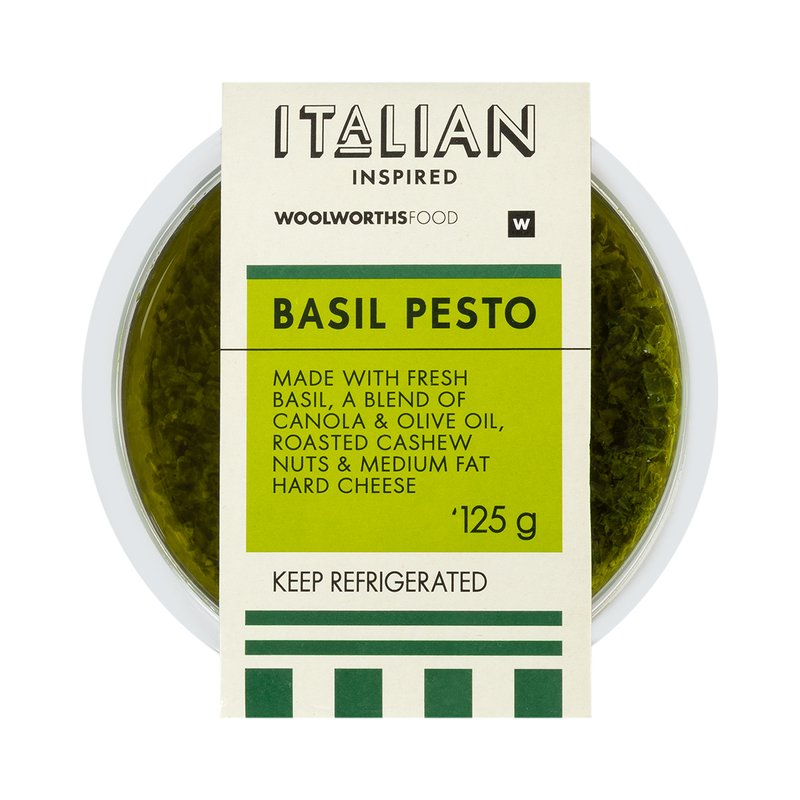
Woolworths Basil Pesto
- Other
- Checked
- Grade D
Basil Pesto by Woolworths has 67 kcal, 0 g carbs, 0.6 g protein and 7 g fat per serving (1 tablespoon (15g)).
Woolworths Basil Pesto is a condiment made with fresh basil, canola and olive oil, roasted cashew nuts, and medium fat hard cheese. It's typically used to enhance the flavor of salads, meats, fish, or as a spread. For endurance athletes, however, its high fat content (7 g per serving of 15 g) and negligible carbohydrates (0 g per serving) make it unsuitable as a primary energy source during or before intense training sessions. The pesto's low carbohydrate profile means it won't contribute significantly to glycogen stores, which are crucial for sustained endurance performance. While it can add flavor to meals, its role in athletic nutrition is limited, especially in contexts requiring quick energy or recovery.
- Rich in healthy fats
- Enhances meal flavor
- Contains antioxidants
On the label per serving, 1 tablespoon (15g)
| Energy | 279 kJ |
|---|---|
| Calories | 67 kcal |
| Carbs | 0.0 g |
| Sugar | 0.2 g |
| Fibre | 0.5 g |
| Protein | 0.6 g |
| Fat | 7.0 g |
| Saturated fat | 0.5 g |
| Sodium | 73 mg |
The numbers that matter on a training day
For endurance who it suits
Woolworths Basil Pesto is not a suitable choice for endurance athletes looking for immediate energy or recovery benefits. It's primarily a flavor enhancer with high fat content and negligible carbohydrates. While it can be part of a balanced diet, it should not be relied upon for glycogen replenishment or hydration needs during or after endurance events.
This pesto is best suited for athletes looking to enhance the taste of their meals without relying on it for energy. It's ideal for those in maintenance phases or during low-intensity periods where immediate carbohydrate intake isn't critical. Athletes with a preference for high-fat diets might find it a palatable addition, but it should not replace carb-dense foods in energy-demanding scenarios.
Best suited for light training days or as part of a meal in recovery phases when immediate carbohydrate replenishment isn't a priority.
- Rich in monounsaturated fats from olive oil
- Contains basil, a source of antioxidants
- Low sugar content
- Enhances meal palatability
- Negligible carbohydrate content
- High fat content may slow gastric emptying
- Minimal sodium content for sweat replacement
- High fat content may cause GI distress if consumed in large amounts pre-exercise
- Potential allergen risk from cashew nuts and milk
Fuelling science in short
Not recommended during workouts due to high fat content and lack of quick-digesting carbohydrates.
With 0 g of carbohydrates per serving, it has no significant impact on blood sugar levels or gastric emptying speed.
Contains 73 mg of sodium per serving, which is minimal compared to the 300-600 mg/hr loss through sweat during endurance activities.
- Total carbs
- 0 g
- Hourly capacity
- 0
Race day before, during and after
- BeforeDO NOT USE
- DuringDO NOT USE
- AfterDO NOT USE
- Carb loadDO NOT USE
- Every dayCAUTION
The pesto's high fat and low carbohydrate content make it unsuitable for pre-race, during race, and recovery contexts, where rapid energy and glycogen replenishment are critical. Its use is limited to flavor enhancement in meals on non-intensive training days.
NOT RECOMMENDED for pre-race use because it contains high fat content, which can slow gastric emptying and provide negligible carbohydrates, failing to support glycogen loading.
NOT RECOMMENDED during racing because it lacks fast-acting carbohydrates and may cause GI distress due to its high fat content.
NOT RECOMMENDED for recovery because it provides inadequate carbohydrates for glycogen resynthesis and negligible protein for muscle repair.
- Whole grain pasta for a balanced meal
- Grilled chicken for added protein
- Roasted vegetables for fiber and nutrients
For practitioners the evidence
Evidence grade: C — The analysis is based on general nutritional principles and ingredient composition rather than direct studies on endurance performance.
Woolworths Basil Pesto is not suitable for carb loading due to its negligible carbohydrate content (0 g per serving of 15 g and 2 g per 100 g). The pesto's high fat content (46.7 g per 100 g) and low carbohydrate density make it impractical for achieving the target 600-840 g/day for a 70 kg athlete. Consuming this pesto would not contribute meaningfully to glycogen stores, and its high fat content could lead to satiety and gastrointestinal discomfort if consumed in large amounts.
The high fat content in Woolworths Basil Pesto slows gastric emptying, which can delay nutrient absorption. The oils present are absorbed in the small intestine, primarily through passive diffusion. The minimal carbohydrate content means it does not significantly engage SGLT1 or GLUT5 transporters. The protein content is negligible, and the pesto does not provide sufficient leucine to stimulate muscle protein synthesis. Any unabsorbed fat could lead to gastrointestinal distress if consumed in large amounts.
Woolworths Basil Pesto fails to meet the nutritional needs for post-exercise recovery. It lacks adequate carbohydrates to replenish glycogen stores at the recommended rate of 1.0-1.2 g/kg/h. The protein content is insufficient to stimulate muscle protein synthesis, lacking the leucine threshold necessary for optimal recovery. Additionally, the pesto does not provide significant electrolytes for rehydration, nor does it contain anti-inflammatory or antioxidant micronutrients in meaningful amounts.
The high fat content can slow gastric emptying, making it unsuitable for pre-exercise consumption. The presence of allergens like cashew nuts and milk poses a risk for sensitive individuals. Its low carbohydrate content fails to support blood glucose stability during exercise, and the high sodium content could contribute to excessive sodium intake if not monitored. The pesto's acidity and oil content may also pose a risk for dental erosion if consumed frequently.
- Do not use within 90 minutes of race start due to high fat content and risk of GI distress.
- Avoid during high-intensity sessions requiring quick energy due to negligible carbohydrates.
- Not suitable for individuals with nut allergies due to cashew content.
- High fat content slows gastric emptying, potentially causing GI distress during exercise.
- Negligible carbohydrate content fails to support glycogen replenishment post-exercise.
- Cashew nuts and milk pose allergen risks for sensitive individuals.
- High sodium content could contribute to excessive intake if not balanced with other dietary sources.
- Jeukendrup 2010, Sports Medicine — discusses the role of carbohydrates in endurance performance.
- Burke 2015, Journal of Sports Sciences — highlights the importance of glycogen replenishment post-exercise.
- Maughan 2018, Journal of Sports Nutrition — reviews the impact of dietary fats on exercise performance.
Questions about Basil Pesto
How many carbs are in Basil Pesto by Woolworths?
0 g of carbs per serving (1 tablespoon (15g)), with 67 kcal and 0.6 g protein.
Can I use this pesto before a race?
No, it's high in fat and low in carbs, which can slow digestion and provide insufficient energy.
Is this pesto suitable during long runs?
No, it lacks the quick-digesting carbohydrates needed for sustained energy during endurance activities.
How should I incorporate this into my diet?
Use it as a flavor enhancer on low-intensity training days or in meals where immediate energy isn't required.
Are there allergen concerns?
Yes, it contains cashew nuts and milk, which are common allergens.
Can this be used for recovery?
No, it lacks sufficient carbohydrates and protein necessary for effective recovery.
How does it behave in hot weather?
Store it in a cool place to prevent spoilage; high temperatures can affect its texture and flavor.


Eating this today? Log it in one tap.
Say "Basil Pesto" and it lands in your diary, counted against today's carbs and protein.
