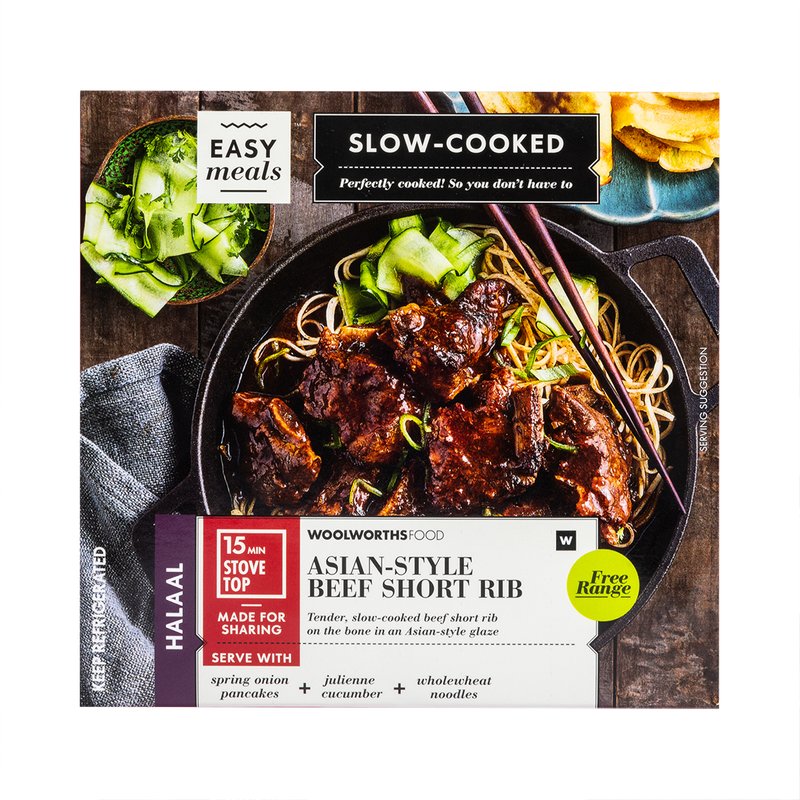
Woolworths Halaal Free Range Asian Style Beef Short Rib
- Meal
- Checked
- Grade C
Halaal Free Range Asian Style Beef Short Rib by Woolworths has 607 kcal, 13 g carbs, 35 g protein and 46.5 g fat per serving (Per 265 g serving).
Woolworths Halaal Free Range Asian Style Beef Short Rib is a slow-cooked beef dish with an Asian-style glaze. Each 265 g serving provides 607 kcal, 35 g of protein, and 46.5 g of fat, making it a rich source of energy and protein. However, its high fat content may slow gastric emptying, which can be problematic for athletes needing quick energy. The sodium content is substantial at 1200 mg per serving, which can aid in replenishing sodium lost through sweat, but it may be excessive for some athletes. This dish is best suited for post-training recovery due to its high protein content, aiding muscle repair. However, it is not ideal for pre-race or during-race consumption due to its high fat and sodium levels, which can delay digestion and increase the risk of gastrointestinal distress.
- High protein for muscle repair
- Rich in sodium for sweat replacement
- Energy-dense for post-training recovery
On the label per serving, Per 265 g serving
| Energy | 2539 kJ |
|---|---|
| Calories | 607 kcal |
| Carbs | 13.0 g |
| Sugar | 9.8 g |
| Protein | 35.0 g |
| Fat | 46.5 g |
| Saturated fat | 25.7 g |
| Cholesterol | 164 mg |
| Sodium | 1200 mg |
The numbers that matter on a training day
For endurance who it suits
While the Woolworths Asian Style Beef Short Rib provides substantial protein and sodium, its high fat content makes it unsuitable for pre-race or during-race fueling. It is best utilized as a post-exercise recovery meal, supporting muscle repair and electrolyte replenishment. Athletes should be cautious of the high sodium content, particularly if they are sensitive to salt.
This dish is suitable for endurance athletes looking to replenish protein and sodium after intense training sessions. It is particularly beneficial for those who have completed long-duration activities and need to repair muscle tissue and restore electrolyte balance. However, athletes with dietary restrictions on fat or sodium should be cautious.
Ideal for post-long ride or run recovery sessions where muscle repair and sodium replenishment are priorities. Not recommended for pre-race or during-race due to high fat content.
- High protein content supports muscle repair
- Rich in sodium for electrolyte replenishment
- Energy-dense for post-exercise recovery
- Convenient pre-cooked option
- High fat content slows gastric emptying
- Excessive sodium for some athletes
- Low carbohydrate content for endurance fueling
- Potential GI distress due to high fat content
- Excessive sodium intake for salt-sensitive athletes
Fuelling science in short
Not recommended during workouts due to high fat content, which can slow digestion and cause GI distress.
The low carbohydrate content (13 g per serving) suggests a minimal impact on blood sugar levels, with a slow gastric emptying rate due to high fat content.
Contains 1200 mg sodium per serving, exceeding typical hourly sweat loss replacement needs. Potassium content is unspecified.
- Total carbs
- 13 g
- Hourly capacity
- 60 g/h with glucose-only; limited by low carb content here
Race day before, during and after
- BeforeDO NOT USE
- DuringDO NOT USE
- AfterUSE
- Carb loadDO NOT USE
- Every dayCAUTION
The Woolworths Asian Style Beef Short Rib is not suitable for pre-race or during-race consumption due to its high fat content, which can slow gastric emptying and cause GI distress. It is beneficial for recovery, providing protein for muscle repair. However, its low carbohydrate content limits its use for carb-loading, and the high sodium level warrants caution for daily training.
NOT RECOMMENDED for pre-race use because the high fat content slows gastric emptying, potentially leading to GI distress and delayed energy availability.
NOT RECOMMENDED during racing because the high fat and sodium content can cause gastrointestinal distress and dehydration.
USE for recovery due to its high protein content, which supports muscle repair. Pair with a carbohydrate source to aid glycogen replenishment.
- Pair with a carbohydrate-rich side for balanced recovery
- Combine with a low-fat protein source to reduce fat intake
- Serve with vegetables for added micronutrients
For practitioners the evidence
Evidence grade: C — The analysis is based on nutritional content and known physiological impacts, with limited direct research on this specific product.
With a carbohydrate density of 5 g per 100 g, this product is low in carbs, making it unsuitable for carb-loading. A single 265 g serving provides only 13 g of carbohydrates, contributing minimally toward the 600-840 g/day target for a 70 kg athlete. The high fat content further limits its utility for carb-loading due to potential satiety and digestive issues, making it impractical for achieving the necessary carbohydrate intake.
The high fat content of 46.5 g per serving significantly slows gastric emptying, delaying nutrient absorption. Protein digestion begins in the stomach, with further breakdown in the small intestine. The sodium content is rapidly absorbed, aiding in fluid retention, but the high fat may lead to delayed gastric emptying and potential GI distress during exercise. This product lacks significant carbohydrate content, limiting its immediate energy availability.
The product provides 35 g of protein per serving, supporting muscle protein synthesis post-exercise. However, it lacks sufficient carbohydrates for optimal glycogen resynthesis, which is crucial in the first 4 hours post-exercise. The high sodium content can aid in rehydration, but the absence of carbohydrates limits its efficacy as a standalone recovery food. Pairing with a carbohydrate-rich food is recommended for comprehensive recovery.
The high fat content can cause gastrointestinal distress if consumed pre-exercise. The sodium level, while beneficial for some, may pose a risk of excessive intake, particularly for athletes with hypertension or salt sensitivity. The low carbohydrate content limits its use as an immediate energy source. Additionally, the high fat content may contribute to delayed gastric emptying, impacting performance and recovery.
- Do not use within 90 minutes of race start due to high fat content.
- Avoid if on a low-sodium diet due to high sodium content.
- Not suitable for carb-loading due to low carbohydrate density.
- High fat content slows gastric emptying, potentially causing GI distress during exercise.
- Excessive sodium intake may lead to hypertension or electrolyte imbalance.
- Low carbohydrate content limits immediate energy availability for endurance events.
- High saturated fat intake may contribute to cardiovascular risk over time.
Questions about Halaal Free Range Asian Style Beef Short Rib
How many carbs are in Halaal Free Range Asian Style Beef Short Rib by Woolworths?
13 g of carbs per serving (Per 265 g serving), with 607 kcal and 35 g protein.
Can I eat this before a race?
No, the high fat content can slow digestion and lead to gastrointestinal distress.
Is this suitable for recovery?
Yes, it provides protein for muscle repair, but pair with carbs for glycogen replenishment.
How does it affect hydration?
High sodium content aids in electrolyte replenishment but may be excessive for some athletes.
Are there alternatives for lower sodium?
Consider lean meats or plant-based proteins with lower sodium content.
How should I prepare it?
Simply reheat as per packaging instructions, but avoid additional salt.
Can it be used in hot weather?
Caution is advised due to high sodium, which may increase dehydration risk.


Eating this today? Log it in one tap.
Say "Halaal Free Range Asian Style Beef Short Rib" and it lands in your diary, counted against today's carbs and protein.
