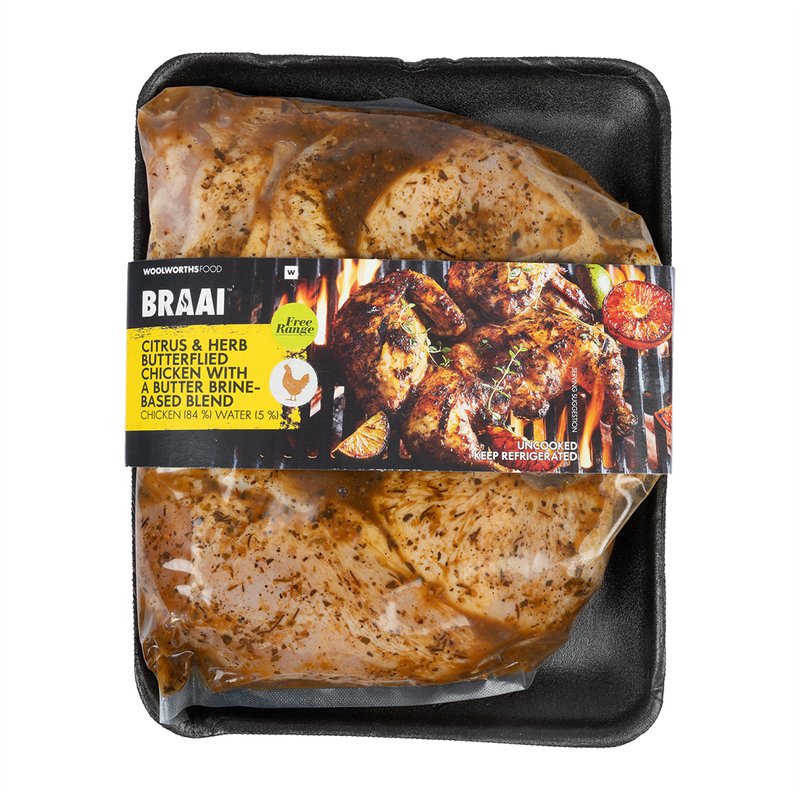
Woolworths Free Range Citrus & Herb Butterflied Chicken
- Meal
- Checked
- Grade B
Free Range Citrus & Herb Butterflied Chicken by Woolworths has 137 kcal, 3 g carbs, 20.9 g protein and 5.1 g fat per serving (Per 125 g serving).
Woolworths Free Range Citrus & Herb Butterflied Chicken is a marinated chicken product designed to deliver a flavorful experience. It is particularly suitable for endurance athletes seeking a high-protein option to support muscle repair and recovery post-exercise. Each 125 g serving provides 20.9 g of protein, making it a substantial source of this essential macronutrient. The product's sodium content, at 686 mg per serving, can assist in replenishing electrolytes lost through sweat during prolonged physical activity. However, its carbohydrate content is minimal at 3 g per serving, suggesting it is not suitable as a primary energy source during endurance events. Ideally consumed post-workout, this chicken can be paired with carbohydrate-rich foods to optimize glycogen resynthesis.
- High protein for muscle recovery
- Moderate sodium aids electrolyte balance
- Convenient post-workout meal
On the label per serving, Per 125 g serving
| Energy | 573 kJ |
|---|---|
| Calories | 137 kcal |
| Carbs | 3.0 g |
| Sugar | 0.6 g |
| Fibre | 0.6 g |
| Protein | 20.9 g |
| Fat | 5.1 g |
| Saturated fat | 1.5 g |
| Cholesterol | 84 mg |
| Sodium | 686 mg |
The numbers that matter on a training day
For endurance who it suits
Woolworths Citrus & Herb Butterflied Chicken is a solid post-exercise protein source for endurance athletes. Its high protein content supports muscle repair, while the sodium content aids in electrolyte replenishment. However, its low carbohydrate profile makes it unsuitable as a primary energy source during endurance events. Pairing with carbohydrate-rich foods is recommended for optimal recovery.
This product is ideal for endurance athletes who require a high-protein intake to support muscle repair after training sessions. It is particularly beneficial for those participating in activities like long-distance running, cycling, or triathlons, where muscle recovery is crucial. Athletes who are monitoring their sodium intake for electrolyte balance will also find this product useful.
Best consumed post-exercise, especially after long runs or rides where muscle recovery is a priority. It pairs well with carbohydrate-rich sides for glycogen replenishment.
- High protein content supports muscle recovery
- Moderate sodium aids in rehydration
- Convenient and easy to prepare
- Flavorful option for post-workout meals
- Low carbohydrate content limits energy provision
- High sodium may not suit all dietary needs
- Not suitable for mid-race consumption
- High sodium content may not suit low-sodium diets
- Potential for gastrointestinal discomfort if consumed too close to exercise
Fuelling science in short
Not recommended during workouts due to its low carbohydrate content and solid form, which may not be practical for consumption mid-exercise.
With only 3 g of carbohydrates per serving, its impact on blood sugar levels is minimal. The low carbohydrate content suggests a negligible effect on glycemic response.
Contains 686 mg of sodium per serving, which can help replenish sodium lost through sweat. This is beneficial for maintaining fluid balance during recovery.
- Total carbs
- 3 g
- Hourly capacity
- Not applicable due to low carbohydrate content
Race day before, during and after
- BeforeDO NOT USE
- DuringDO NOT USE
- AfterUSE
- Carb loadDO NOT USE
- Every dayUSE
The product's high protein and sodium content make it suitable for recovery, aiding muscle repair and electrolyte replenishment. However, its low carbohydrate content and solid form render it unsuitable for pre-race or during-race consumption, where quick energy and easy digestion are critical.
NOT RECOMMENDED for pre-race use because the high protein and sodium content can slow gastric emptying and potentially lead to gastrointestinal discomfort.
NOT RECOMMENDED during racing because it lacks fast-acting carbohydrates and is a solid food, making it impractical for mid-race consumption.
USE within the first 30-60 minutes post-race for muscle repair. Pair with carbohydrates for optimal glycogen resynthesis.
- Pair with rice for glycogen replenishment
- Combine with a vegetable salad for added micronutrients
- Serve with a carbohydrate-rich smoothie post-exercise
For practitioners the evidence
Evidence grade: B — The product's benefits for recovery are supported by general protein and sodium replenishment principles, but specific studies on this product are lacking.
The Citrus & Herb Butterflied Chicken is not suitable for carbohydrate loading due to its low carbohydrate density of 3 g per 100 g. For effective carb loading, athletes typically aim for 8-12 g/kg/day, which this product cannot support due to its minimal carbohydrate content. A single 125 g serving provides only 3 g of carbohydrates, contributing insignificantly to a 600 g daily target for a 70 kg athlete. The athlete would require an impractical number of servings to meet their carbohydrate needs, making this product unsuitable for carb loading.
The primary macronutrient in this chicken is protein, which begins digestion in the stomach with pepsin and hydrochloric acid. The gastric emptying rate may be slower due to the protein and fat content, affecting overall digestion speed. In the small intestine, pancreatic enzymes further break down proteins, while fats are emulsified by bile salts. The presence of sodium may facilitate water absorption but does not significantly impact the digestion of macronutrients. The low carbohydrate content means minimal impact on blood glucose levels, with little reliance on SGLT1 or GLUT5 transporters.
This chicken is beneficial in the recovery window due to its high protein content, which supports muscle protein synthesis. The protein content per serving (20.9 g) helps meet the ~0.3-0.4 g/kg protein target per meal for a 70 kg athlete. The sodium content aids in rehydration by promoting fluid retention. However, the product lacks sufficient carbohydrates to meet the glycogen resynthesis rate of 1.0-1.2 g/kg/h, making it necessary to pair with carbohydrate-rich foods for optimal recovery.
The high sodium content (686 mg per serving) may pose a risk for individuals on low-sodium diets or with hypertension. The solid form and protein content can slow gastric emptying, potentially causing gastrointestinal discomfort if consumed too close to exercise. The low carbohydrate content limits its utility as an energy source during endurance activities. Additionally, the presence of butter may not suit lactose-intolerant individuals.
- Do not use within 90 minutes of race start due to potential GI distress from slow gastric emptying.
- Do not use during races as it lacks quick-digesting carbohydrates necessary for sustained energy.
- Do not use for carb loading due to insufficient carbohydrate content.
- High sodium content may exacerbate hypertension or fluid retention issues.
- Low carbohydrate content fails to provide sufficient energy for endurance events.
- Solid form and protein content may slow gastric emptying, causing GI distress.
- Butter content may cause issues for lactose-intolerant athletes.
Questions about Free Range Citrus & Herb Butterflied Chicken
How many carbs are in Free Range Citrus & Herb Butterflied Chicken by Woolworths?
3 g of carbs per serving (Per 125 g serving), with 137 kcal and 20.9 g protein.
When should I consume this chicken?
Best consumed post-exercise to aid muscle recovery. Pair with carbohydrates for glycogen replenishment.
Is this suitable for pre-race consumption?
No, due to its high protein and sodium content, which can slow digestion and cause discomfort.
Can I eat this during a race?
Not recommended due to its low carbohydrate content and solid form, which are not ideal for mid-race fueling.
How does this product support recovery?
Provides high protein for muscle repair and moderate sodium for electrolyte balance post-exercise.
Are there any allergens in this product?
Yes, it contains milk (butter), which may be a concern for those with dairy allergies.
How should I store this product?
Keep refrigerated and consume by the use-by date for best quality and safety.


Eating this today? Log it in one tap.
Say "Free Range Citrus & Herb Butterflied Chicken" and it lands in your diary, counted against today's carbs and protein.
