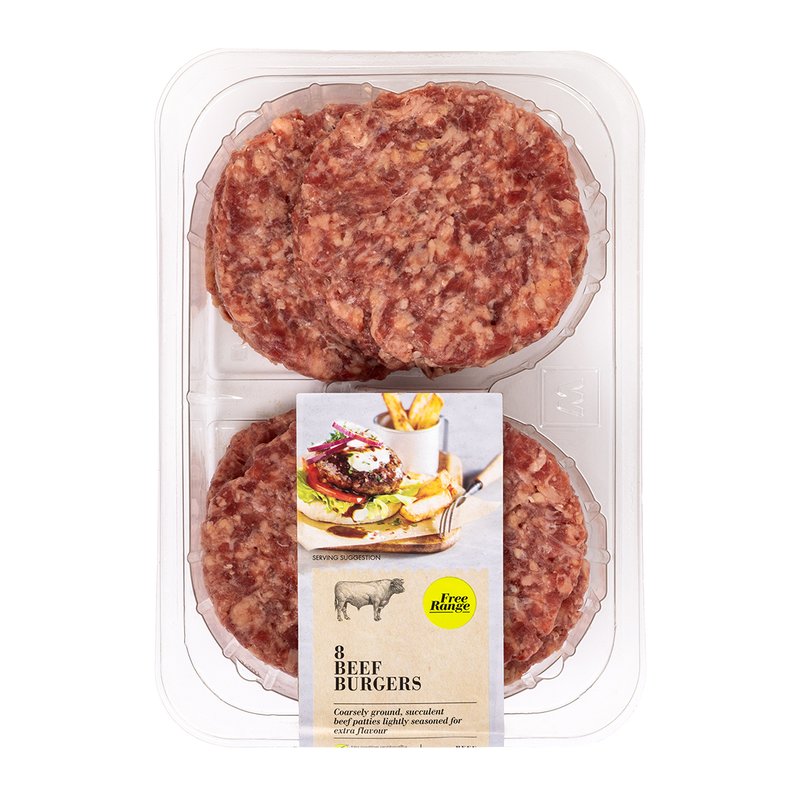
Woolworths Free Range Beef Burgers
- Meal
- Checked
- Grade C
Free Range Beef Burgers by Woolworths has 217 kcal, 3 g carbs, 14.6 g protein and 16.3 g fat per serving (1 burger (approx. 100g)).
Woolworths Free Range Beef Burgers are pre-made patties made from 80% free-range beef, designed for convenience and ethical sourcing. With 216.5 kcal per serving (100 g), they provide 14.6 g of protein and 16.3 g of fat, making them a protein-dense option for athletes seeking muscle repair. However, the carbohydrate content is minimal at 3 g per serving, limiting their use as a primary energy source during endurance activities. These burgers are best consumed post-training to support muscle recovery, particularly when paired with a carbohydrate source to replenish glycogen stores. The high sodium content (610 mg per serving) can help replace sweat losses, but caution is advised for those with hypertension. Overall, these burgers are more suited for recovery meals rather than pre-race or during-race fueling.
- High protein for muscle repair
- Ethically sourced free-range beef
- Convenient pre-made option
- Supports post-exercise recovery
On the label per serving, 1 burger (approx. 100g)
| Energy | 906 kJ |
|---|---|
| Calories | 217 kcal |
| Carbs | 3.0 g |
| Fibre | 0.8 g |
| Protein | 14.6 g |
| Fat | 16.3 g |
| Saturated fat | 8.9 g |
| Cholesterol | 61 mg |
| Sodium | 610 mg |
The numbers that matter on a training day
For endurance who it suits
For endurance athletes, Woolworths Free Range Beef Burgers are best utilized as a recovery food due to their high protein content. They are not suitable as a primary energy source during endurance events due to their low carbohydrate content. The high sodium content can be beneficial post-exercise, but athletes should pair these burgers with carbohydrate-rich foods to optimize glycogen replenishment.
These burgers are ideal for endurance athletes looking to increase their protein intake post-training. They suit those who prioritize ethical sourcing and convenience. Athletes focusing on muscle recovery and those who need a sodium boost post-exercise will benefit. However, they are not suitable for those seeking high carbohydrate intake for energy during endurance events.
Best suited for post-training recovery meals, particularly after strength sessions or moderate endurance workouts. Not ideal for pre-race or during-race consumption due to low carbohydrate content.
- High protein content aids muscle recovery
- Ethically sourced free-range beef
- Convenient pre-made option for quick meals
- Significant sodium content aids electrolyte replenishment
- Low carbohydrate content limits energy provision
- High fat content may slow gastric emptying
- Not suitable for pre-race or during-race consumption
- High sodium content may not suit hypertensive athletes
- Low carbohydrate content may not meet energy needs
Fuelling science in short
Not recommended during workouts due to low carbohydrate content and high fat, which can slow gastric emptying and provide insufficient quick energy.
With only 3 g of carbs per serving, these burgers have a negligible impact on blood sugar levels. The low glycemic load makes them unsuitable for immediate energy needs during endurance events.
Each serving contains 610 mg of sodium, which is significant compared to the 300-600 mg/hr sweat loss range. Potassium and magnesium contents are unspecified, but sodium is the primary electrolyte present.
- Total carbs
- 3 g
- Hourly capacity
- estimated max grams/hr the gut can absorb at this G:F mix
Race day before, during and after
- BeforeDO NOT USE
- DuringDO NOT USE
- AfterUSE
- Carb loadDO NOT USE
- Every dayCAUTION
Pre-race and during-race use is unsuitable due to the low carbohydrate content and high fat, which can slow gastric emptying and fail to meet energy demands. For recovery, the high protein content supports muscle repair, but pairing with carbohydrates is necessary for effective glycogen replenishment. Not ideal for carb-loading due to low carb density and high fat content.
NOT RECOMMENDED for pre-race use because of low carbohydrate content and high fat, which can slow gastric emptying and fail to provide quick energy.
NOT RECOMMENDED during racing because they provide insufficient carbohydrates and high fat content, which can slow digestion.
USE post-race for muscle recovery due to high protein content. Pair with a carbohydrate source to replenish glycogen stores effectively.
- Pair with whole grain bun for added carbs
- Add a side of sweet potatoes for glycogen replenishment
- Include a leafy green salad for added micronutrients
For practitioners the evidence
Evidence grade: C — The analysis is based on general nutritional principles and macronutrient content, without specific endurance-focused studies.
With only 3 g of carbohydrates per 100 g, Woolworths Free Range Beef Burgers are not suitable for carb-loading. The low carb density and high fat content make it impractical to meet the 600-840 g/day carb target without excessive fat intake. A 100 g serving contributes only 3 g toward the daily target, requiring an impractical number of servings. The high fat content also poses a risk of gastric distress if consumed in large quantities.
The digestion of Woolworths Free Range Beef Burgers involves a slow gastric emptying rate due to high fat content, which increases the meal's osmolality. Protein is broken down by gastric pepsin and pancreatic proteases into amino acids and small peptides, absorbed in the small intestine via brush-border peptidases. The low carbohydrate content limits glucose availability, and the presence of wheat and cereal may pose a FODMAP risk for sensitive individuals. The high sodium content aids in fluid retention post-exercise.
These burgers provide 14.6 g of protein per 100 g serving, contributing to muscle protein synthesis post-exercise. However, with only 3 g of carbohydrates, they fall short of the 1.0-1.2 g/kg/h carb target for optimal glycogen resynthesis. Pairing with a carbohydrate source is necessary for effective recovery. The high sodium content can assist in rehydration by promoting fluid retention.
The high fat content may slow gastric emptying, making the burgers unsuitable for pre-race or during-race consumption. The low carbohydrate content limits their utility as a quick energy source. High sodium levels could pose a risk for hypertensive individuals. The presence of wheat and cereal may trigger gastrointestinal distress in FODMAP-sensitive athletes.
- Do not use within 90 minutes of race start due to high fat content, which can slow digestion.
- Do not rely on these burgers for carb-loading; low carb density limits efficacy.
- Do not use if allergic to wheat or cereal components.
- High sodium content may exacerbate hypertension in sensitive individuals.
- Low carbohydrate content fails to meet energy needs during endurance activities.
- High fat content may slow gastric emptying, causing gastrointestinal discomfort.
- Wheat and cereal components may cause distress in FODMAP-sensitive athletes.
Questions about Free Range Beef Burgers
How many carbs are in Free Range Beef Burgers by Woolworths?
3 g of carbs per serving (1 burger (approx. 100g)), with 217 kcal and 14.6 g protein.
Can I eat these burgers before a race?
No, they are not recommended before a race due to low carbohydrate content and high fat, which can slow digestion.
Are these burgers suitable for recovery meals?
Yes, they provide high protein content for muscle repair. Pair with carbs to replenish glycogen.
What is the sodium content per serving?
Each serving contains 610 mg of sodium, which can help replenish electrolytes post-exercise.
Can these burgers be part of a carb-loading strategy?
No, they are not suitable for carb-loading due to their low carbohydrate density and high fat content.
Are there any allergens in these burgers?
Yes, they contain wheat and cereal allergens, which should be considered by those with sensitivities.
How should I store these burgers?
Store in the refrigerator and consume by the use-by date. They can also be frozen for longer storage.


Eating this today? Log it in one tap.
Say "Free Range Beef Burgers" and it lands in your diary, counted against today's carbs and protein.
