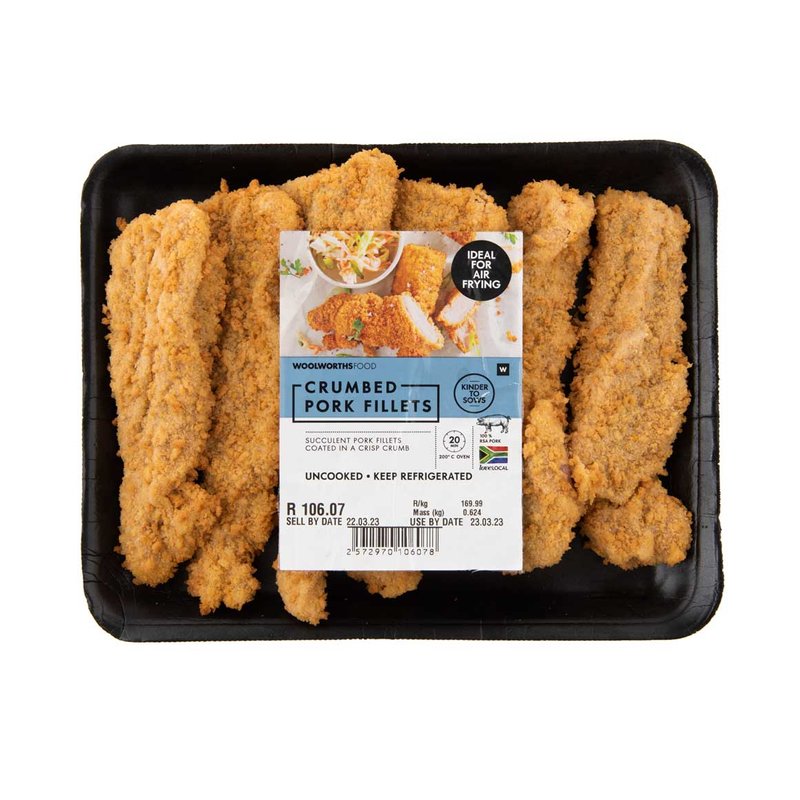
Woolworths Crumbed Pork Fillets Avg 650 g
- Meal
- Checked
- Grade C
Crumbed Pork Fillets Avg 650 g by Woolworths has 217 kcal, 12 g carbs, 21.1 g protein and 8.7 g fat per serving (1 fillet (average weight varies)).
Woolworths Crumbed Pork Fillets are a convenient, protein-rich option featuring succulent pork coated in a crispy crumb. Each serving (120 g) provides 21.1 g of protein, making it suitable for athletes needing muscle repair post-exercise. With 12 g of carbohydrates per serving, it offers moderate energy replenishment, though not optimal for high-intensity endurance activities requiring rapid glycogen replenishment. The sodium content (300 mg per serving) can aid in replacing sweat losses during prolonged exercise. However, the fat content (8.7 g per serving) may slow gastric emptying, making it less ideal for pre-race or during-race consumption. Best suited for post-exercise recovery or as part of a balanced meal during less intense training days.
- High protein for muscle repair
- Moderate carbs for energy
- Sodium aids sweat replacement
On the label per serving, 1 fillet (average weight varies)
| Energy | 907 kJ |
|---|---|
| Calories | 217 kcal |
| Carbs | 12.0 g |
| Sugar | 1.6 g |
| Fibre | 3.8 g |
| Protein | 21.1 g |
| Fat | 8.7 g |
| Saturated fat | 4.0 g |
| Cholesterol | 35 mg |
| Sodium | 300 mg |
The numbers that matter on a training day
For endurance who it suits
Woolworths Crumbed Pork Fillets provide a substantial protein source, beneficial post-exercise for muscle repair. However, its moderate carbohydrate content and higher fat levels make it unsuitable for immediate pre-race or during-race consumption. Ideal for recovery meals where protein is prioritized.
This product is ideal for endurance athletes seeking a protein-rich meal option post-exercise, particularly those involved in moderate-intensity training sessions. It suits athletes who need to maintain muscle mass and support recovery without the immediate need for rapid carbohydrate replenishment. However, it's less suitable for athletes requiring quick energy sources during high-intensity or long-duration events.
Best consumed after moderate training sessions or on rest days when protein intake is prioritized over immediate carbohydrate replenishment. Not recommended for high-intensity or endurance events due to its slower digestion rate.
- High protein content supports muscle repair
- Moderate carbs provide some energy
- Convenient and easy to prepare
- Contains sodium for sweat loss replacement
- High fat content slows gastric emptying
- Not suitable for pre-race or during-race
- Moderate carbs insufficient for glycogen loading
- Potential GI distress due to fat during exercise
- High sodium may not suit low-sodium diets
Fuelling science in short
Not recommended during workouts due to high fat content, which can slow gastric emptying and may cause gastrointestinal distress.
With 12 g of carbs per serving, the glycemic impact is moderate. The presence of protein and fat may lower the glycemic index, leading to a slower blood sugar response.
Contains 300 mg of sodium per serving, contributing to sweat loss replacement. Potassium and magnesium content is unspecified, limiting full electrolyte replenishment.
- Total carbs
- 12 g
- Hourly capacity
- 60
Race day before, during and after
- BeforeDO NOT USE
- DuringDO NOT USE
- AfterUSE
- Carb loadDO NOT USE
- Every dayUSE
The high fat content makes it unsuitable for pre-race and during-race consumption due to potential GI distress and slow energy release. For recovery, the protein content is beneficial for muscle repair, but additional carbs are needed for optimal glycogen replenishment. Not suitable for carb-loading due to insufficient carbohydrate density.
NOT RECOMMENDED for pre-race use because the high fat content can slow gastric emptying, potentially leading to gastrointestinal distress and delayed energy availability.
NOT RECOMMENDED during racing because the solid form and fat content can cause gastrointestinal issues and do not provide fast-acting carbohydrates needed for endurance.
USE: Provides protein for muscle repair post-exercise. Pair with high-carb foods to aid glycogen resynthesis and include fluids for rehydration.
- Pair with a high-carb side for glycogen replenishment
- Combine with vegetables for added fiber and micronutrients
- Serve with a low-fat protein source to balance fat intake
For practitioners the evidence
Evidence grade: B — Supported by sports nutrition principles and general dietary guidelines, but lacks specific RCTs on this product.
The crumbed pork fillets have a carbohydrate density of 10 g per 100 g, which is considered low. A single serving (120 g) provides only 12 g of carbohydrates, contributing minimally to a daily target of 600-840 g for carb-loading. The high fat content and moderate protein make it unsuitable for carb-loading as they can induce satiety and slow gastric emptying, hindering the efficient intake of necessary carbohydrates. An athlete would need to consume an impractical number of servings to meet carb-loading targets, making this product unsuitable for this purpose.
The digestion of crumbed pork fillets begins with mastication, breaking down the solid structure. The high fat content (8.7 g per serving) can slow gastric emptying, delaying nutrient absorption. Proteins are digested into amino acids in the stomach and small intestine, absorbed via brush-border peptidases. Carbohydrates are broken down to glucose, absorbed through SGLT1 transporters. The presence of fat may delay the time-to-bloodstream, impacting immediate energy availability. Unabsorbed residues may undergo fermentation in the colon, posing a risk for GI discomfort if consumed in excess.
The crumbed pork fillets contribute to recovery primarily through their protein content (21.1 g per serving), which supports muscle protein synthesis post-exercise. However, the lack of significant carbohydrates limits glycogen resynthesis, which is crucial in the first 4 hours post-exercise. For optimal recovery, these fillets should be paired with a carbohydrate-rich food to meet the 1.0-1.2 g/kg/h glycogen resynthesis target. The sodium content aids in rehydration, though additional fluids are recommended.
The high fat content can slow gastric emptying, leading to delayed nutrient absorption and potential GI distress during exercise. The crumb coating contains wheat, posing a risk for those with gluten sensitivity. The sodium content may be excessive for individuals on low-sodium diets. Additionally, the product's moderate carbohydrate content may not sufficiently support glycogen replenishment post-exercise unless paired with additional carb sources.
- Do not use within 90 minutes of race start due to high fat content.
- Avoid during high-intensity sessions needing rapid carb access.
- Not suitable for gluten-sensitive individuals due to wheat content.
- High fat content can slow gastric emptying, leading to GI distress if consumed pre-exercise.
- Sodium content may be excessive for those with hypertension or on sodium-restricted diets.
- Contains gluten, posing a risk for individuals with celiac disease.
- Moderate carbs may not support rapid glycogen replenishment post-exercise.
- Jeukendrup A, 2010, Sports Medicine — Multi-transportable carbohydrates can enhance performance.
- Burke LM, 2015, Journal of Sports Sciences — Protein intake post-exercise supports muscle repair.
- Stellingwerff T, 2011, International Journal of Sport Nutrition and Exercise Metabolism — High-fat foods can slow gastric emptying.
Questions about Crumbed Pork Fillets Avg 650 g
How many carbs are in Crumbed Pork Fillets Avg 650 g by Woolworths?
12 g of carbs per serving (1 fillet (average weight varies)), with 217 kcal and 21.1 g protein.
When should I consume these fillets?
Best consumed post-exercise for muscle repair or on rest days. Not ideal for pre-race or during race due to fat content.
How does the fat content affect performance?
High fat content can slow gastric emptying, leading to delayed energy release and potential GI distress during exercise.
Are there alternatives for race day?
Opt for low-fat, high-carb options like energy gels or bars for rapid energy during races.
Is this product suitable for recovery?
Yes, it provides protein for muscle repair. Pair with carbs and fluids for comprehensive recovery.
What allergens are present?
Contains wheat due to the crumb coating. Check for gluten sensitivity.
How should I store these fillets?
Keep refrigerated and consume by the use-by date to ensure quality and safety.


Eating this today? Log it in one tap.
Say "Crumbed Pork Fillets Avg 650 g" and it lands in your diary, counted against today's carbs and protein.
