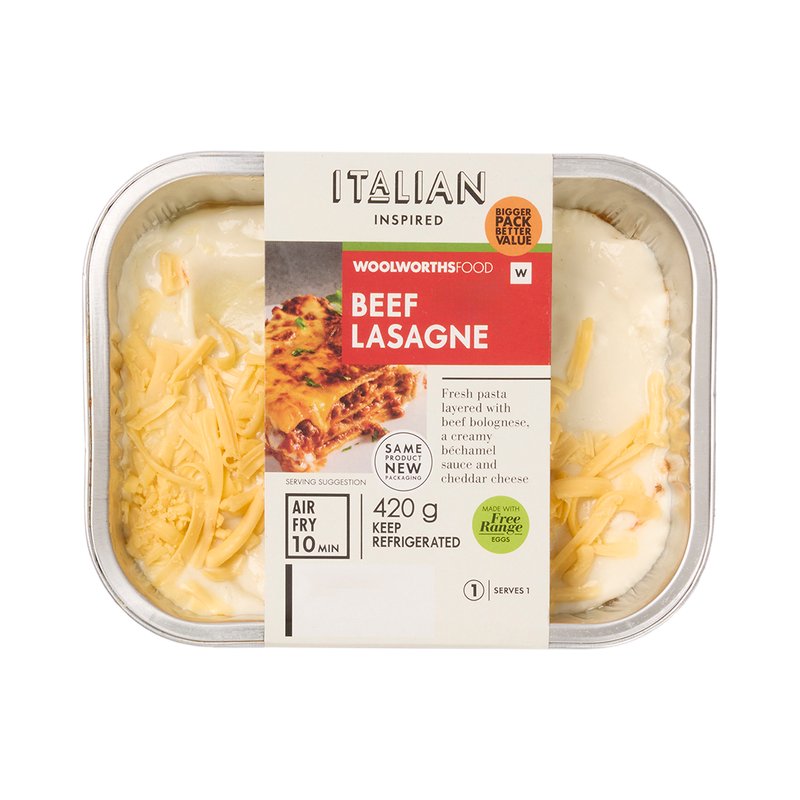
Woolworths Beef Lasagne
- Meal
- Checked
- Grade C
Beef Lasagne by Woolworths has 626 kcal, 38 g carbs, 24.8 g protein and 43.3 g fat per serving (1 pack (420g)).
Woolworths Beef Lasagne is a ready-to-eat meal featuring layers of fresh pasta, beef bolognese, creamy béchamel sauce, and cheddar cheese. It provides 625.7 kcal per serving (420g), with 38g of carbohydrates, 24.8g of protein, and 43.3g of fat. This product is suitable for endurance athletes seeking a convenient, calorie-dense meal post-exercise. Its high protein content supports muscle repair, while the fat content aids in satiety. However, due to its high fat and sodium content, it is not ideal for pre-race or during-race consumption. The carbohydrate content is moderate, making it less effective for carb-loading compared to more carb-dense foods.
- High protein for muscle repair
- Calorie-dense for energy replenishment
- Convenient ready-to-eat format
On the label per serving, 1 pack (420g)
| Energy | 2617 kJ |
|---|---|
| Calories | 626 kcal |
| Carbs | 38.0 g |
| Fibre | 8.4 g |
| Protein | 24.8 g |
| Fat | 43.3 g |
| Saturated fat | 18.9 g |
| Cholesterol | 99 mg |
| Sodium | 832 mg |
The numbers that matter on a training day
For endurance who it suits
Woolworths Beef Lasagne is a convenient, high-calorie meal option for post-exercise recovery, offering substantial protein and fat. However, its high fat content and moderate carbohydrate levels make it unsuitable for pre-race or during-race fueling. It should be consumed after endurance sessions to aid recovery and replenish energy stores.
This meal is ideal for endurance athletes who require a high-calorie, protein-rich option post-training. It's particularly suitable for those who have completed a long run or ride and need to replenish energy and support muscle recovery. Athletes with high energy demands will benefit from its macronutrient profile.
Best consumed after long endurance sessions such as a marathon training run or a long cycling ride. Not suitable for consumption during high-intensity or short-duration workouts.
- High protein content supports muscle repair
- Convenient for post-exercise recovery
- Calorie-dense for energy replenishment
- Ready-to-eat, minimal preparation required
- High fat content slows gastric emptying
- Not suitable for pre-race or during-race
- Moderate carbohydrate content limits carb-loading utility
- High fat content may cause GI distress if consumed pre-exercise
- Sodium content could be excessive for those with hypertension
Fuelling science in short
No, due to its high fat content and solid form, it is impractical and likely to cause gastrointestinal distress during exercise.
The moderate carbohydrate content and presence of fats suggest a slower gastric emptying rate, leading to a moderate glycemic response. This is not ideal for rapid energy needs during exercise.
Contains 832 mg of sodium per serving, which is significant compared to the 300-600 mg/hr sweat losses typical in endurance athletes. Potassium content is unspecified.
- Total carbs
- 38 g
- Hourly capacity
- 60
Race day before, during and after
- BeforeDO NOT USE
- DuringDO NOT USE
- AfterUSE
- Carb loadDO NOT USE
- Every dayUSE
The high fat content and moderate carbohydrate levels make Woolworths Beef Lasagne unsuitable for pre-race or during-race consumption, as these conditions require quick energy release and minimal gastrointestinal load. However, its high protein and calorie content make it a viable option for post-exercise recovery, aiding in muscle repair and energy replenishment. For carb-loading, the moderate carbohydrate content limits its effectiveness in contributing significantly to glycogen stores.
NOT RECOMMENDED for pre-race use because its high fat content can slow gastric emptying and potentially cause gastrointestinal distress.
NOT RECOMMENDED during racing because it is a solid meal with high fat content, unsuitable for quick digestion and energy release.
USE post-race as it provides ample protein for muscle repair and calories for energy replenishment. Pair with a carbohydrate-rich food to optimize glycogen resynthesis.
- Pair with a green salad for fiber and micronutrients
- Combine with a low-fat yogurt for additional protein
- Serve with a fruit smoothie to boost carbohydrate intake
For practitioners the evidence
Evidence grade: C — The analysis is based on nutritional content and general physiological principles rather than specific endurance studies.
Woolworths Beef Lasagne has a carbohydrate density of 9g per 100g, which is low for carb-loading purposes. A single serving provides 38g of carbohydrates, contributing minimally to the 600-840g daily target for a 70kg athlete. The athlete would need to consume over ten servings daily to meet carb-loading needs, which is impractical due to the high fat content and satiety factor. Therefore, it is not suitable for carb-loading.
The digestion of Woolworths Beef Lasagne involves initial breakdown in the oral phase, followed by slower gastric emptying due to its high fat content. Carbohydrates are absorbed in the small intestine via SGLT1 transporters for glucose and GLUT5 for any fructose present. The protein content is digested by brush-border peptidases. The high fat content can slow the rate of gastric emptying, delaying nutrient absorption and energy availability.
Woolworths Beef Lasagne provides 24.8g of protein per serving, supporting muscle protein synthesis post-exercise. However, it lacks sufficient carbohydrates to meet the 1.0-1.2 g/kg/h target for glycogen resynthesis. Its high calorie content aids in energy replenishment, but pairing with additional carbohydrates is recommended to optimize recovery.
The high fat content of Woolworths Beef Lasagne may cause gastrointestinal distress if consumed close to exercise. It may also contribute to dental erosion due to its carbohydrate content. The sodium level is high, which could be a concern for athletes with hypertension. The moderate glycemic index may not provide rapid energy release, making it unsuitable for pre-race or during-race consumption.
- Do not use within 90 minutes of race start due to high fat content.
- Do not use during exercise as it may cause GI distress.
- Do not rely on it for carb-loading due to low carbohydrate density.
- High fat content may slow gastric emptying, causing GI distress if consumed pre-exercise.
- Sodium content is high, posing a risk for athletes with hypertension.
- Moderate carbohydrate content may not provide adequate glycogen replenishment post-exercise.
- Potential for dental erosion due to carbohydrate content and acidity.
Questions about Beef Lasagne
How many carbs are in Beef Lasagne by Woolworths?
38 g of carbs per serving (1 pack (420g)), with 626 kcal and 24.8 g protein.
Can I eat this before a race?
No, the high fat content may slow digestion and cause gastrointestinal distress if consumed before a race.
Is this suitable for carb-loading?
No, the moderate carbohydrate content limits its utility for effective carb-loading.
Can it be used during a workout?
No, its solid form and high fat content make it impractical for consumption during exercise.
What are the allergens?
Contains gluten, milk, and eggs. Check for individual sensitivity.
How does it aid recovery?
Provides high protein for muscle repair and calories for energy replenishment post-exercise.
How should it be stored?
Store in the refrigerator and consume by the use-by date. Not suitable for freezing.


Eating this today? Log it in one tap.
Say "Beef Lasagne" and it lands in your diary, counted against today's carbs and protein.
