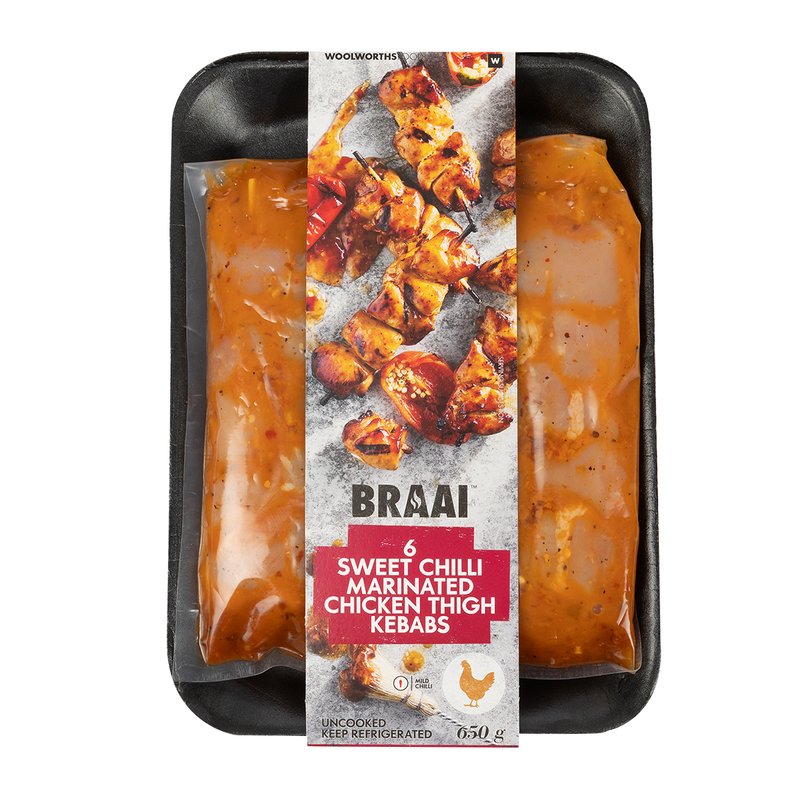
Woolworths 6 Sweet Chilli Marinated Chicken Thigh Kebabs
- Meal
- Checked
- Grade B
6 Sweet Chilli Marinated Chicken Thigh Kebabs by Woolworths has 103 kcal, 3 g carbs, 16.2 g protein and 3.5 g fat per serving (Per 95 g serving).
Woolworths Sweet Chilli Marinated Chicken Thigh Kebabs offer a flavorful protein source, suitable for athletes seeking recovery nutrition. Each 95 g serving provides 16.2 g of protein and 3 g of carbohydrates, making it a protein-dense option for post-exercise muscle repair. The sweet chilli marinade adds a touch of flavor without excessive sugar, with only 3.3 g per serving. These kebabs are best consumed post-training due to their protein content, aiding in muscle protein synthesis during the recovery window. While not ideal for immediate pre-race or during-race consumption due to their solid form and low carbohydrate content, they are a convenient, tasty option for replenishing protein stores after endurance sessions.
- High protein for muscle repair
- Moderate sodium for rehydration
- Low carbohydrate impact
- Flavorful post-exercise option
On the label per serving, Per 95 g serving
| Energy | 431 kJ |
|---|---|
| Calories | 103 kcal |
| Carbs | 3.0 g |
| Sugar | 3.3 g |
| Protein | 16.2 g |
| Fat | 3.5 g |
| Saturated fat | 0.9 g |
| Cholesterol | 60 mg |
| Sodium | 238 mg |
The numbers that matter on a training day
For endurance who it suits
As a post-exercise protein source, Woolworths Sweet Chilli Chicken Kebabs excel in providing necessary protein for muscle repair. However, they lack the carbohydrate content needed for energy during or before endurance events. Their solid form and low carb density make them unsuitable for pre-race or during-race consumption. Ideal for recovery meals where protein intake is prioritized.
These kebabs are ideal for endurance athletes who need a convenient protein source post-training. They suit those focusing on muscle repair and recovery, particularly after long or intense sessions. Athletes who enjoy flavorful meals without high carbohydrate content will find these kebabs beneficial. However, they are not suitable for those seeking quick energy during exercise.
Best consumed after long runs, rides, or intense interval sessions where muscle repair is a priority. Not suitable for use during exercise due to low carbohydrate content and solid form.
- High protein content aids muscle repair
- Moderate sodium supports rehydration
- Flavorful and convenient post-exercise
- Low sugar content minimizes blood sugar spikes
- Low carbohydrate content limits energy provision
- Solid form unsuitable for during-race consumption
- Not ideal for pre-race energy needs
- Potential for GI distress if consumed during exercise
- Low carbohydrate content may not meet energy needs
Fuelling science in short
No, not recommended during workouts due to low carbohydrate content and solid form, which may hinder digestion and quick energy availability.
These kebabs have a low glycemic impact due to minimal carbohydrates (3 g per serving). They won't cause significant blood sugar spikes, making them unsuitable for quick energy needs.
With 238 mg of sodium per serving, these kebabs contribute to sodium replenishment post-exercise, aiding in rehydration. However, they fall short of the 300-600 mg/hr sweat loss rate.
- Total carbs
- 3 g
- Hourly capacity
- Low due to minimal carbohydrate content
Race day before, during and after
- BeforeDO NOT USE
- DuringDO NOT USE
- AfterUSE
- Carb loadDO NOT USE
- Every dayCAUTION
The kebabs are not suitable for pre-race or during-race contexts due to their low carbohydrate content and solid form, which can hinder quick energy provision and gastric emptying. For recovery, they provide a good source of protein to aid muscle repair, but should be paired with carbohydrates to optimize glycogen resynthesis. They are not ideal for carb-loading due to low carb density and may be used cautiously in everyday training for protein intake.
NOT RECOMMENDED for pre-race use because the solid form and low carbohydrate content can slow gastric emptying and fail to provide immediate energy.
NOT RECOMMENDED during racing because the solid form and low carbohydrate content do not provide quick energy or hydration.
USE post-race to provide protein for muscle repair. Pair with a carbohydrate source to aid glycogen resynthesis.
- Pair with a carbohydrate-rich food post-exercise for glycogen replenishment
- Combine with a hydration drink to meet sodium losses
- Serve with vegetables for added micronutrients
For practitioners the evidence
Evidence grade: C — The analysis is based on nutritional content and mechanistic understanding rather than direct endurance studies.
These kebabs have a low carbohydrate density of 4 g per 100 g, making them unsuitable for carbohydrate loading. A 95 g serving contributes only 3 g of carbohydrates, which is insufficient for meeting the high carbohydrate demands of endurance athletes aiming for 600-840 g/day. The low carb density and high protein content mean they are better suited for protein intake rather than carb loading.
The digestion of these kebabs begins with mastication, facilitating enzymatic action on proteins. The solid form slows gastric emptying, especially due to moderate fat content (3.5 g per serving). Proteins are broken down by peptidases in the stomach and small intestine, while the limited carbohydrates are absorbed via SGLT1 transporters. The low carbohydrate content results in minimal insulin response, and the primary focus is on protein digestion and absorption.
The high protein content (16.2 g per serving) supports muscle protein synthesis, crucial for recovery post-exercise. However, the negligible carbohydrate content fails to meet the 1.0-1.2 g/kg/h carb target for glycogen resynthesis. Pairing with a carbohydrate source is necessary for optimal recovery. The sodium content aids rehydration but is below the optimal range for significant electrolyte replacement.
The solid form and low carbohydrate content make these kebabs unsuitable for pre-race or during-race consumption. High protein with low carbs can delay gastric emptying and may cause GI distress if consumed during exercise. The low sodium content means additional electrolyte sources are needed for significant sweat loss replacement.
- Do not use within 90 minutes of race start due to slow gastric emptying.
- Do not rely on these for carbohydrate loading; insufficient carb density.
- Avoid during races; solid form and low carbs hinder quick energy availability.
- High protein with low carbs may delay gastric emptying during exercise.
- Low carbohydrate content fails to provide necessary energy during races.
- Potential GI distress if consumed during high-intensity exercise.
- Insufficient sodium for significant electrolyte replacement in heavy sweaters.
Questions about 6 Sweet Chilli Marinated Chicken Thigh Kebabs
How many carbs are in 6 Sweet Chilli Marinated Chicken Thigh Kebabs by Woolworths?
3 g of carbs per serving (Per 95 g serving), with 103 kcal and 16.2 g protein.
When should I eat these kebabs?
These kebabs are best consumed post-exercise to aid muscle repair due to their high protein content.
Are these suitable for pre-race fueling?
No, they are not suitable for pre-race fueling due to their low carbohydrate content and potential to slow gastric emptying.
Can I eat these during a workout?
No, the solid form and low carbohydrate content make them unsuitable for during-workout consumption.
What can I pair them with for recovery?
Pair with a carbohydrate-rich food to aid glycogen resynthesis and a hydration drink to meet sodium losses.
Are there any allergens?
No specific allergens are listed, but always check for cross-contamination risks if you have allergies.
How do these behave in hot weather?
Ensure proper refrigeration to prevent spoilage. They are less practical for hot weather due to spoilage risk if not kept cool.


Eating this today? Log it in one tap.
Say "6 Sweet Chilli Marinated Chicken Thigh Kebabs" and it lands in your diary, counted against today's carbs and protein.
