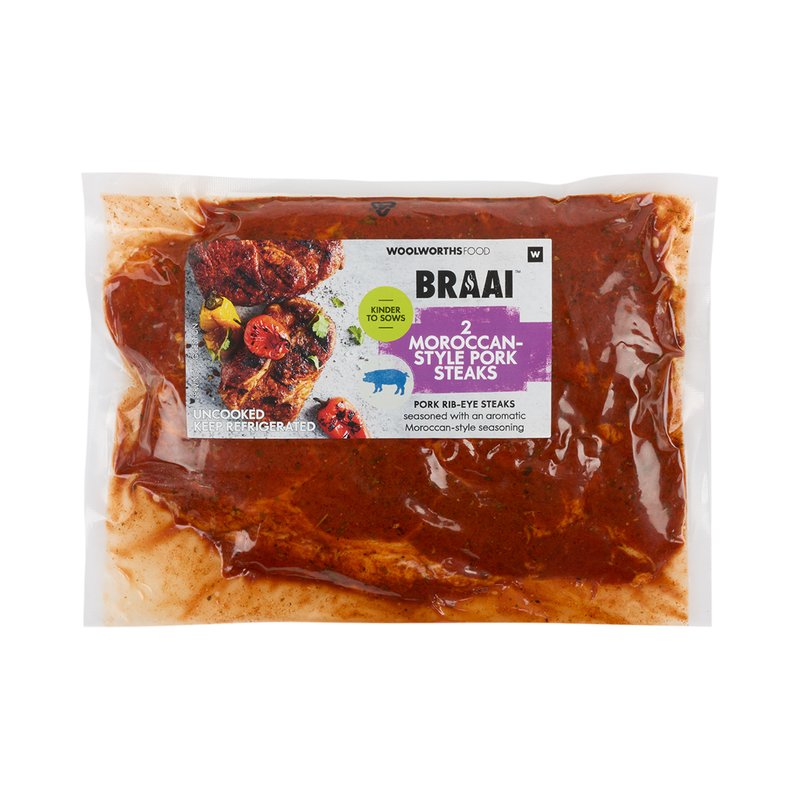
Woolworths 2 Moroccan Style Pork Rib Eye Steaks
- Meal
- Checked
- Grade C
2 Moroccan Style Pork Rib Eye Steaks by Woolworths has 673 kcal, 3.5 g carbs, 66.8 g protein and 43.4 g fat per serving (1 steak (average 350g)).
Woolworths Moroccan Style Pork Rib Eye Steaks are seasoned with aromatic spices, offering a flavorful option for those seeking a protein-rich meal. Each steak, weighing approximately 350g, provides 19.9g of protein per serving, making it suitable for post-exercise recovery. The fat content, at 12.9g per serving, is moderate, which could slow gastric emptying if consumed too close to intense exercise. With only 1g of carbohydrates per serving, these steaks are not suitable for carb-loading or mid-race fueling. The sodium content of 286mg per serving is relatively low compared to typical electrolyte losses during endurance activities, suggesting a need for additional sodium sources during prolonged exercise. Best consumed post-training, these steaks can aid in muscle repair due to their protein content, but should be paired with carbohydrate-rich foods for optimal glycogen replenishment.
- High protein for muscle repair
- Moderate fat for satiety
- Low carbohydrate content
- Aromatic seasoning for flavor
On the label per serving, 1 steak (average 350g)
| Energy | 2818 kJ |
|---|---|
| Calories | 673 kcal |
| Carbs | 3.5 g |
| Protein | 66.8 g |
| Fat | 43.4 g |
| Saturated fat | 17.1 g |
| Cholesterol | 189 mg |
| Sodium | 963 mg |
The numbers that matter on a training day
For endurance who it suits
While the Woolworths Moroccan Style Pork Rib Eye Steaks offer a solid protein source for recovery, their low carbohydrate and moderate fat content make them unsuitable for pre-race fueling or during-race consumption. Athletes should pair these steaks with carbohydrate-rich foods post-exercise to ensure comprehensive recovery.
These steaks are ideal for endurance athletes seeking a protein-rich meal post-training. They are particularly suited for those who prefer whole-food protein sources and enjoy flavorful, seasoned meats. However, athletes focusing on carbohydrate loading or requiring quick energy sources during training or racing should look elsewhere.
Best suited for post-training recovery meals, especially after strength sessions or moderate endurance workouts where protein intake is prioritized over immediate carbohydrate replenishment.
- High protein content aids muscle repair
- Moderate fat provides satiety post-exercise
- Aromatic seasoning enhances palatability
- Low sodium content reduces dehydration risk
- Low carbohydrate content unsuitable for fueling
- Moderate fat may slow gastric emptying
- Not suitable for pre-race or during-race use
- Potential for delayed gastric emptying due to fat
- Insufficient carbohydrates for glycogen replenishment
Fuelling science in short
Not recommended during workouts due to high fat content and low carbohydrate availability, which do not support quick energy needs.
With only 1g of carbohydrates per serving, these steaks have negligible impact on blood sugar levels and are not suitable for glycogen replenishment during or immediately after endurance events.
Contains 286mg sodium per serving, insufficient for replenishing typical endurance sweat losses of 300-600mg/hr. Potassium content is unspecified.
- Total carbs
- 1 g
- Hourly capacity
- 0
Race day before, during and after
- BeforeDO NOT USE
- DuringDO NOT USE
- AfterUSE
- Carb loadDO NOT USE
- Every dayCAUTION
The steaks are not suitable for pre-race or during-race consumption due to low carbohydrate content and moderate fat, which can slow digestion and do not provide immediate energy. They are beneficial post-exercise for protein intake but require carbohydrate pairing for effective recovery. Not ideal for carb-loading due to low carb density.
NOT RECOMMENDED for pre-race use because of low carbohydrate content and moderate fat, which can slow gastric emptying and does not provide quick energy.
NOT RECOMMENDED during racing because it lacks fast-acting carbohydrates and contains moderate fat, which can hinder performance.
USE in recovery as a protein source, but pair with carbohydrates like rice or potatoes to aid in glycogen replenishment.
- Pair with brown rice for carbohydrate replenishment
- Serve with a side of roasted vegetables for fiber
- Include a sports drink for additional electrolytes
For practitioners the evidence
Evidence grade: C — Limited direct evidence for endurance context; nutritional analysis based on known macronutrient roles.
These steaks have a carb density of 1g per 100g, classifying them as low-density. A 350g serving contributes only 1g toward a 600g daily carb target for a 70kg athlete. An athlete would need to consume an impractical number of servings to meet carb-loading needs, making these steaks unsuitable for this purpose. The low carbohydrate yield per serving and high satiety from protein and fat further limit their utility in carb-loading strategies.
The digestion of these steaks involves initial mechanical breakdown in the mouth followed by gastric processing. The moderate fat content can slow gastric emptying, delaying nutrient absorption. Protein is broken down by peptidases in the small intestine, with amino acids absorbed via active transport. The low carbohydrate content means minimal glucose absorption, and the lack of significant fructose or fiber reduces fermentation risk in the colon. The fat content may delay the time-to-bloodstream for amino acids, impacting immediate post-exercise recovery.
These steaks provide 19.9g of protein per serving, contributing to muscle protein synthesis post-exercise. However, they lack sufficient carbohydrates to meet the recommended 1.0-1.2g/kg/h for glycogen resynthesis. The moderate fat content provides energy but does not support rapid glycogen replenishment. For optimal recovery, these steaks should be combined with carbohydrate-rich foods to enhance glycogen stores and support muscle repair.
The moderate fat content may slow gastric emptying, impacting pre-race or during-race consumption. Low carbohydrate content limits glycogen replenishment, making them unsuitable for immediate post-exercise recovery without additional carbs. The seasoning may cause GI distress in sensitive individuals. While not high in sodium, they do not provide adequate electrolytes for significant sweat losses during endurance activities.
- Do not use pre-race due to low carbohydrate content.
- Do not consume during endurance events as it lacks quick energy sources.
- Avoid if sensitive to spices, as seasoning may cause GI distress.
- Moderate fat content can slow gastric emptying, affecting digestion timing.
- Low carbohydrate content fails to support glycogen replenishment needs.
- Spices in seasoning may cause GI issues in sensitive individuals.
- Insufficient sodium for electrolyte replenishment during high sweat losses.
Questions about 2 Moroccan Style Pork Rib Eye Steaks
How many carbs are in 2 Moroccan Style Pork Rib Eye Steaks by Woolworths?
3.5 g of carbs per serving (1 steak (average 350g)), with 673 kcal and 66.8 g protein.
When should I consume these steaks?
Best consumed post-exercise for protein intake. Pair with carbs for optimal recovery.
Are these steaks suitable for carb-loading?
No, they contain only 1g of carbs per serving, inadequate for carb-loading needs.
Can I eat these before a race?
Not recommended before a race due to low carbs and moderate fat, which can slow digestion.
How do I incorporate these into a recovery meal?
Pair with carbohydrate-rich foods like rice or potatoes to enhance glycogen replenishment.
Are there allergens in these steaks?
No specific allergens are stated, but check for potential cross-contamination.
How do these behave in hot weather?
The steaks should be stored properly to prevent spoilage. Consume promptly after cooking.



Eating this today? Log it in one tap.
Say "2 Moroccan Style Pork Rib Eye Steaks" and it lands in your diary, counted against today's carbs and protein.
