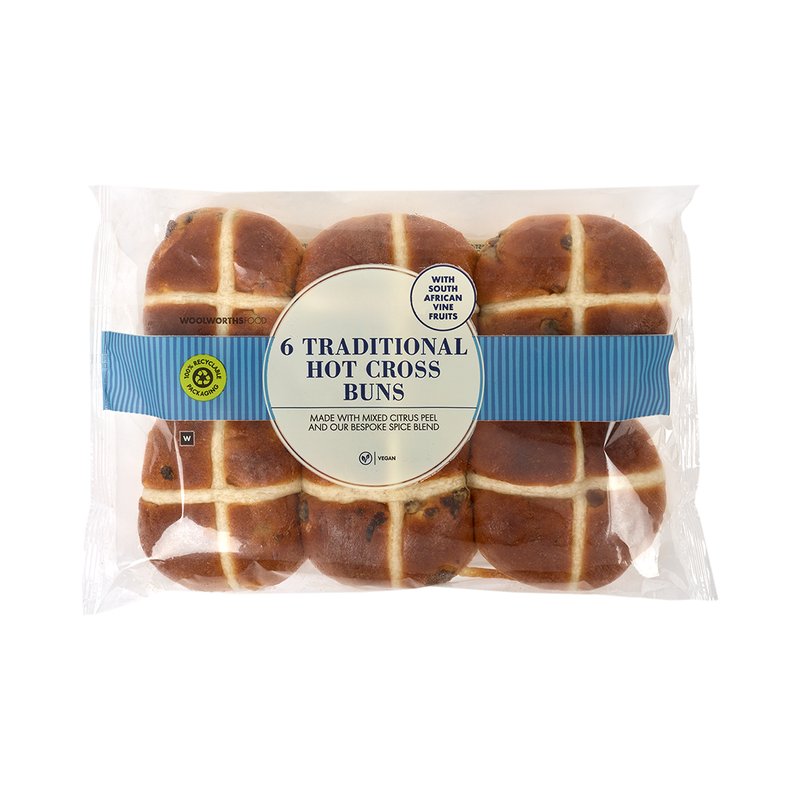
Woolworths Traditional Hot Cross Buns
- Snack
- Checked
- Grade C
Traditional Hot Cross Buns by Woolworths has 180 kcal, 32.9 g carbs, 6.8 g protein and 1.3 g fat per serving (1 bun (approx. 70g)).
Woolworths Traditional Hot Cross Buns are a seasonal bakery product, typically enjoyed during the Easter period. Each bun provides 25g of carbohydrates per serving (70g), with 10.7g of sugar, making it a moderate source of quick energy. The inclusion of mixed citrus peel and spices offers a unique flavor profile. This product is suitable for endurance athletes seeking a carbohydrate-rich snack to consume before or after moderate training sessions. However, due to its relatively high sugar content and low protein, it should not be relied upon as a primary source of energy for long-duration activities. The buns are best consumed before exercise for a quick energy boost or post-exercise when paired with a protein source to aid recovery.
- Moderate carbohydrate source
- Quick energy boost
- Convenient pre-training snack
On the label per serving, 1 bun (approx. 70g)
| Energy | 754 kJ |
|---|---|
| Calories | 180 kcal |
| Carbs | 32.9 g |
| Sugar | 14.1 g |
| Fibre | 4.1 g |
| Protein | 6.8 g |
| Fat | 1.3 g |
| Saturated fat | 0.6 g |
| Sodium | 179 mg |
The numbers that matter on a training day
For endurance who it suits
Woolworths Traditional Hot Cross Buns offer a moderate carbohydrate source suitable for pre-exercise consumption. The sugar content provides quick energy, but the low protein and fiber may not sustain long-duration activities. Best paired with a protein source post-exercise for recovery.
These buns are suitable for endurance athletes needing a quick carbohydrate source. Ideal for those engaging in moderate-intensity activities such as a 10km run or a short cycling session. Athletes who enjoy a sweet, spiced snack will find these buns appealing.
Best suited for moderate-intensity sessions like a 10km run or a 1-hour cycling workout where quick energy is needed.
- Moderate carbohydrate content per serving
- Convenient and portable snack
- Pleasant spiced flavor profile
- Vegan-friendly option
- Low protein content for recovery
- High sugar content may cause energy spikes
- Not suitable for intra-exercise consumption
- Potential for dental erosion due to high sugar
- Possible digestive discomfort if consumed during exercise
Fuelling science in short
Not recommended during workouts due to solid form and potential for digestive discomfort.
The buns have a moderate glycemic index due to the mix of sugars and fiber, providing a quick but sustained energy release.
Contains 136 mg of sodium per serving, which is below the 300-600 mg/hr sweat loss range, offering minimal electrolyte replenishment.
- Total carbs
- 25 g
- Hourly capacity
- 60
Race day before, during and after
- BeforeUSE
- DuringDO NOT USE
- AfterDO NOT USE
- Carb loadCAUTION
- Every dayUSE
Pre-race: Suitable due to moderate carbs. During race: Unsuitable due to solid form and sugar content. Recovery: Lacks protein. Carb loading: Limited by serving size and sugar content. Everyday training: Usable as a carb source.
Consume 1-2 buns 1-2 hours before the race to ensure adequate digestion and energy availability. Avoid consuming too close to the start to prevent gastrointestinal discomfort.
NOT RECOMMENDED during racing because the solid form and high sugar content may lead to digestive issues and do not provide immediate energy.
NOT RECOMMENDED for recovery because they lack sufficient protein to aid muscle repair and glycogen resynthesis.
- Pair with Greek yogurt for added protein
- Consume with a banana for extra potassium
- Enjoy with a protein shake post-exercise
For practitioners the evidence
Evidence grade: C — The analysis is based on general nutritional principles and ingredient content, lacking specific endurance-focused studies.
The buns have a carb density of 47g per 100g, which is considered moderate. A 70g serving provides 25g of carbohydrates, contributing to daily carb-loading targets. However, the high sugar content and low complex carb presence may not sustain prolonged energy levels. An athlete aiming for 600g of carbs per day would need to consume 24 buns, which is impractical due to volume and sugar content.
Upon consumption, the buns undergo mechanical digestion in the mouth. The moderate sugar content leads to a relatively fast gastric emptying rate. Carbohydrates are primarily absorbed in the small intestine via SGLT1 transporters for glucose and GLUT5 for fructose. The presence of fiber may slow absorption slightly, but the sugar content ensures a quick insulin response. Unabsorbed sugars may undergo fermentation in the colon, potentially causing bloating if consumed in excess.
The buns provide carbohydrates necessary for glycogen replenishment but lack adequate protein to stimulate muscle protein synthesis. For effective recovery, they should be paired with a protein source to meet the leucine threshold and total protein requirements. The sodium content is insufficient for significant rehydration or electrolyte replenishment post-exercise.
The high sugar content poses a risk for dental erosion and may cause blood-glucose volatility, especially if consumed in large quantities. The solid form and fiber content may lead to gastrointestinal discomfort if consumed during exercise. Athletes with gluten intolerance or celiac disease should avoid these buns due to gluten content.
- Do not use during high-intensity races due to potential for GI distress.
- Avoid if gluten intolerant or have celiac disease.
- Do not rely solely on these for recovery due to low protein.
- High sugar content may lead to dental erosion if consumed frequently.
- Potential for rebound hypoglycemia if consumed pre-exercise without adequate timing.
- Fructose content may exceed absorption capacity if consumed in large quantities.
- Low sodium content may not adequately replace sweat losses during prolonged exercise.
Questions about Traditional Hot Cross Buns
How many carbs are in Traditional Hot Cross Buns by Woolworths?
32.9 g of carbs per serving (1 bun (approx. 70g)), with 180 kcal and 6.8 g protein.
When should I eat these buns for best performance?
Consume 1-2 hours before exercise for optimal energy availability. Avoid during races due to solid form.
Are these buns suitable for recovery?
Not ideal alone for recovery due to low protein. Pair with a protein source for better recovery support.
How do these buns perform in hot weather?
Heat may affect freshness and texture. Store in a cool place and consume promptly.
Can I use these buns for carb loading?
Use with caution due to high sugar content and moderate carb density. Complement with other carb sources.
What are the allergen concerns?
Contains gluten and wheat. May not be suitable for those with celiac disease or gluten intolerance.
Do I need to gut-train with these buns?
Yes, practice consuming them pre-exercise to ensure they do not cause digestive discomfort.


Eating this today? Log it in one tap.
Say "Traditional Hot Cross Buns" and it lands in your diary, counted against today's carbs and protein.
