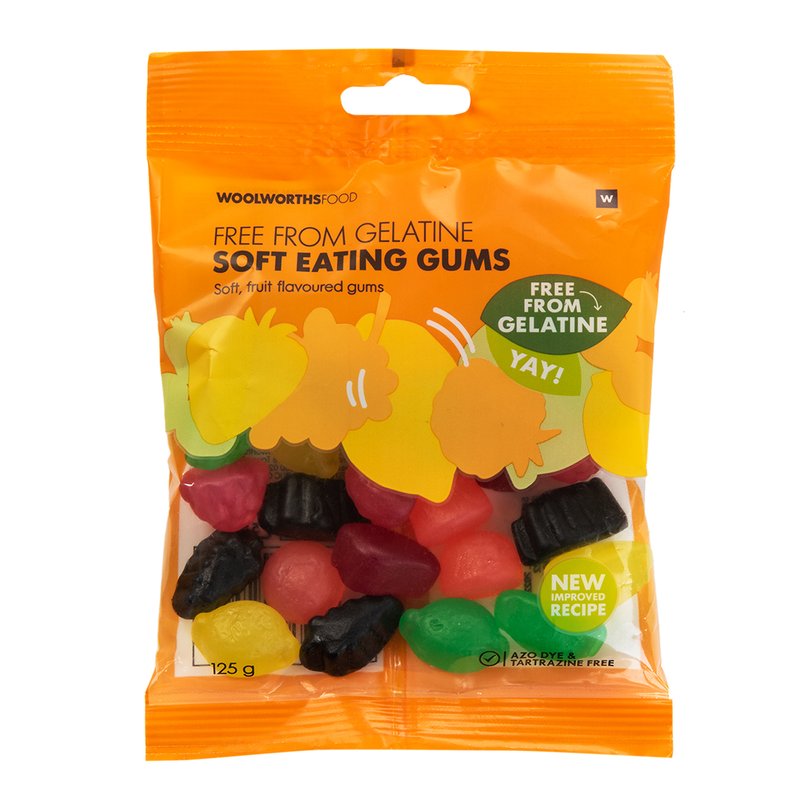
Woolworths Soft Eating Gelatine Free Gums
- Snack
- Checked
- Grade B
Soft Eating Gelatine Free Gums by Woolworths has 74 kcal, 18 g carbs, 0.1 g protein and 0.1 g fat per serving (Per 25 g serving).
Woolworths Soft Eating Gelatine Free Gums are a vegan-friendly, chewy candy option that delivers a quick carbohydrate source, primarily for endurance athletes seeking a simple sugar boost. Each 25 g serving provides 18 g of carbohydrates, with 13.9 g of those being sugars. These gums are free from gelatine and artificial azo dyes, making them suitable for those with dietary restrictions. Best consumed during exercise, they provide a rapid energy source due to their high sugar content, which can be quickly absorbed. The low sodium content (23 mg per serving) suggests limited electrolyte support, so pairing with a sodium-rich drink is advisable for longer sessions. These gums are ideal for athletes needing a compact, easy-to-carry energy source during long runs or rides.
- Quick energy source
- Vegan-friendly
- Compact and portable
- No artificial dyes
On the label per serving, Per 25 g serving
| Energy | 308 kJ |
|---|---|
| Calories | 74 kcal |
| Carbs | 18.0 g |
| Sugar | 13.9 g |
| Fibre | 0.2 g |
| Protein | 0.1 g |
| Fat | 0.1 g |
| Sodium | 23 mg |
The numbers that matter on a training day
For endurance who it suits
Woolworths Soft Eating Gums offer a quick carbohydrate boost suitable for endurance athletes needing rapid energy. Their portability and vegan-friendly formulation make them a convenient choice during long sessions. However, they lack sufficient electrolytes, so additional sodium intake is necessary for longer events. Consider them a supplementary energy source rather than a primary electrolyte provider.
These gums are ideal for endurance athletes such as marathon runners, cyclists, and triathletes who require a quick and portable source of carbohydrates during training or competition. They are also suitable for vegan athletes and those avoiding artificial dyes. However, they are not recommended for those needing substantial electrolyte replenishment or those sensitive to high sugar intake.
Ideal for long-distance training sessions like marathons or cycling events where quick energy is needed. Not suitable for short, high-intensity intervals due to low sodium content.
- High carbohydrate content for quick energy
- Vegan and gelatine-free, suitable for diverse diets
- Compact and easy to carry during exercise
- No artificial azo dyes or tartrazine
- Low sodium content, inadequate for electrolyte replacement
- High sugar content may not suit all athletes
- Limited nutritional diversity, primarily simple sugars
- Potential for dental erosion due to high sugar content
- May cause GI distress if not accustomed to high sugar intake
Fuelling science in short
Yes, consume one serving every 30-45 minutes during endurance activities for quick energy. They are non-messy and easy to carry.
High glycemic index due to sugar content, promoting rapid blood sugar spikes and quick energy availability. Fast gastric emptying expected.
Low sodium at 23 mg per serving compared to the 300-600 mg/hr sweat loss typical in endurance sports. Minimal potassium and magnesium content.
- Total carbs
- 18 g
- Hourly capacity
- 60
Race day before, during and after
- BeforeDO NOT USE
- DuringUSE
- AfterDO NOT USE
- Carb loadCAUTION
- Every dayUSE
Pre-race: Avoid due to potential for rapid blood sugar changes and lack of complex carbs. During race: Suitable for quick energy, but pair with electrolytes. Recovery: Lacks protein and complex carbs, not suitable. Carb loading: Use caution due to high sugar and low satiety. Everyday training: Useful for quick energy in long sessions.
NOT RECOMMENDED for pre-race use because of high sugar content leading to potential blood sugar volatility and lack of complex carbohydrates for sustained energy.
USE during race for quick energy boosts, especially in the latter stages when glycogen stores are depleted. Pair with electrolyte sources.
NOT RECOMMENDED for recovery because they provide inadequate protein and complex carbohydrates needed for effective recovery.
- Electrolyte drink for sodium replenishment
- Protein bar post-exercise for recovery
- Complex carb snack pre-exercise for sustained energy
For practitioners the evidence
Evidence grade: C — The analysis is based on known carbohydrate absorption pathways and general sports nutrition principles rather than direct studies on this specific product.
With a carbohydrate density of 72 g per 100 g, these gums are high in carbs per mass. However, the small serving size (25 g) limits their contribution to carb loading, offering only 18 g per serving. For a 70 kg athlete aiming for 600 g of carbs per day, they would need over 33 servings, which is impractical due to high sugar content and potential dental risks. While dense, the lack of complex carbohydrates and high sugar content make them less ideal for carb loading compared to other options like pasta or rice.
These gums are primarily composed of simple sugars, likely glucose and fructose, absorbed in the small intestine via SGLT1 and GLUT5 transporters. The high sugar content facilitates rapid gastric emptying and quick absorption, leading to fast energy availability. The lack of fiber and protein minimizes digestive delays, making them suitable for quick energy boosts but potentially leading to rapid blood sugar spikes. Unabsorbed sugars could lead to fermentation in the colon, causing GI distress if consumed in excess.
These gums provide a quick carbohydrate source but lack protein, making them inadequate for recovery. Effective recovery requires 1.0-1.2 g/kg/h of carbs and 0.3-0.4 g/kg of protein post-exercise. These gums fall short on both fronts, offering negligible protein and insufficient carbs per serving. Their role in recovery is limited to supplementing carb intake when paired with protein-rich foods.
High sugar content increases the risk of dental erosion, particularly if consumed frequently during exercise. Rapid blood sugar spikes could lead to rebound hypoglycemia if consumed pre-exercise without additional complex carbs. The lack of sodium makes them unsuitable for electrolyte replenishment. Athletes with fructose malabsorption or IBS may experience GI distress due to unabsorbed sugars.
- Do not use pre-race if sensitive to rapid blood sugar changes due to high sugar content.
- Do not rely on these for electrolyte replacement during long events due to low sodium content.
- Do not use as a primary recovery food due to inadequate protein and complex carbohydrates.
- High sugar content can lead to dental erosion with frequent use.
- Rapid blood sugar spikes may cause rebound hypoglycemia if not paired with complex carbs.
- Low sodium content is insufficient for electrolyte replenishment during endurance events.
- Potential for GI distress in athletes with fructose malabsorption or IBS.
Questions about Soft Eating Gelatine Free Gums
How many carbs are in Soft Eating Gelatine Free Gums by Woolworths?
18 g of carbs per serving (Per 25 g serving), with 74 kcal and 0.1 g protein.
When should I consume these gums during exercise?
Consume one serving every 30-45 minutes during endurance activities for a quick energy boost.
Are these gums suitable for pre-race consumption?
No, they are not recommended pre-race due to high sugar content and potential blood sugar volatility.
Can these gums replace my electrolyte needs?
No, they have low sodium content. Pair with an electrolyte drink for sodium replenishment.
Are these gums vegan-friendly?
Yes, they are vegan and gelatine-free, suitable for those following a plant-based diet.
How do these gums behave in hot weather?
They may become sticky in high temperatures, so store them in a cool place if possible.
Can I use these gums for recovery?
No, they lack the protein and complex carbohydrates necessary for effective recovery.


Eating this today? Log it in one tap.
Say "Soft Eating Gelatine Free Gums" and it lands in your diary, counted against today's carbs and protein.
