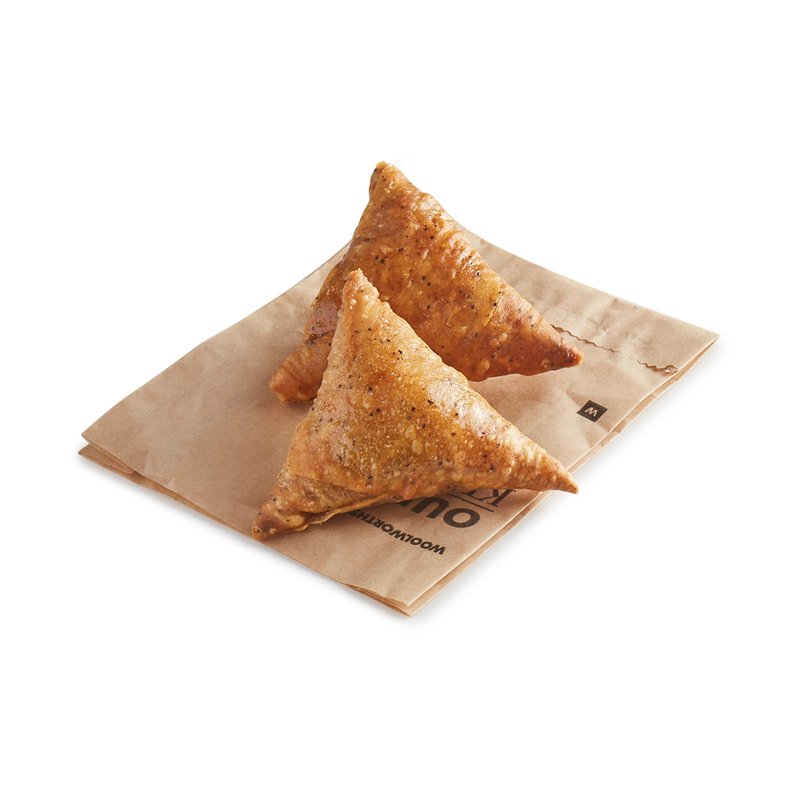
Woolworths Chicken Samoosa
- Snack
- Checked
- Grade C
Chicken Samoosa by Woolworths has 217 kcal, 15 g carbs, 7.1 g protein and 14.6 g fat per serving (1 samoosa (average mass)).
Woolworths Chicken Samoosa is a ready-to-eat snack, combining a spiced chicken filling with a crispy pastry shell. Each samoosa provides 217.2 kcal per serving, with 15 g of carbohydrates, 7.1 g of protein, and 14.6 g of fat. This high-fat content may slow gastric emptying, making it less ideal for pre-race or during-race fueling. However, it can serve as a convenient post-training snack for athletes who need a quick calorie boost. The sodium content of 232 mg per serving is moderate, aiding in electrolyte replenishment. While not a primary carb source, it can be a part of a balanced diet for endurance athletes.
- Convenient calorie source
- Moderate sodium content
- Contains protein for recovery
On the label per serving, 1 samoosa (average mass)
| Energy | 909 kJ |
|---|---|
| Calories | 217 kcal |
| Carbs | 15.0 g |
| Fibre | 3.8 g |
| Protein | 7.1 g |
| Fat | 14.6 g |
| Saturated fat | 2.1 g |
| Cholesterol | 8 mg |
| Sodium | 232 mg |
The numbers that matter on a training day
For endurance who it suits
Woolworths Chicken Samoosa is not ideal for pre-race or during-race consumption due to its fat content, which may slow gastric emptying and energy release. It is better suited as a post-training snack or on low-intensity days when a convenient calorie source is needed.
This product is suitable for endurance athletes seeking a quick snack post-training. It's best for those who need a calorie-dense option with moderate protein content. However, due to its high fat content, it is not ideal for athletes looking for rapid energy release before or during intense exercise.
Best suited for post-training or low-intensity days when immediate energy is not critical. Avoid consuming before high-intensity sessions due to potential digestive delays.
- Convenient and ready-to-eat snack
- Moderate protein content aids recovery
- Contains some sodium for electrolyte balance
- Calorie-dense for energy replenishment
- High fat content slows digestion
- Not suitable for pre-race or during-race
- Low carbohydrate content for endurance needs
- High fat may cause GI distress if consumed pre-exercise
- Potential for dental erosion due to pastry
Fuelling science in short
Not recommended during workouts due to high fat content, which can slow digestion and cause GI discomfort.
The carbohydrate content is moderate, with a likely low to moderate glycemic impact due to the fat content slowing carbohydrate absorption.
Contains 232 mg of sodium per serving, which helps with electrolyte balance but is below the 300-600 mg/hr loss during intense exercise.
- Total carbs
- 15 g
- Hourly capacity
- 60-90
Race day before, during and after
- BeforeDO NOT USE
- DuringDO NOT USE
- AfterUSE
- Carb loadDO NOT USE
- Every dayUSE
The high fat content makes it unsuitable for pre-race and during-race scenarios due to delayed gastric emptying and potential GI distress. It can be used for recovery when paired with additional carbohydrates, as it provides some protein and calories. Not suitable for carb loading due to low carbohydrate density.
NOT RECOMMENDED for pre-race use because the high fat content can slow gastric emptying and delay energy availability.
NOT RECOMMENDED during racing because the high fat content may exceed gut transporter capacity and delay energy release.
USE for recovery as it provides calories and protein, but pair with additional carbohydrates for optimal glycogen replenishment.
- Pair with a banana for added carbohydrates
- Combine with a protein shake for recovery
- Serve with a low-fat yogurt for balanced nutrition
For practitioners the evidence
Evidence grade: C — Limited direct evidence supports its use in endurance contexts, with extrapolation based on macronutrient content.
With 15 g of carbs per serving, the carb density is low, at approximately 21 g per 100 g. This makes it unsuitable for carb loading, as it would require impractically large quantities to meet a 600-840 g/day target. Its high fat content further detracts from its use in carb loading by slowing gastric emptying and reducing the efficiency of carbohydrate uptake.
The high fat content slows gastric emptying, delaying carbohydrate absorption. Carbohydrates are absorbed in the small intestine, primarily via SGLT1 transporters. The presence of fat and protein can slow this process, leading to a delayed insulin response. The fibre content may contribute to slower digestion and potential fermentation in the colon, posing a risk for GI distress if consumed pre-exercise.
Provides some protein (7.1 g per serving) which can aid muscle protein synthesis post-exercise. However, the low carbohydrate content is insufficient for optimal glycogen resynthesis, which requires 1.0-1.2 g/kg/h of carbs. Additional carbohydrate sources are necessary for effective recovery.
High fat content can lead to delayed gastric emptying and potential GI distress if consumed before or during exercise. The pastry may pose a dental erosion risk due to its carbohydrate content and stickiness. The low carbohydrate content limits its utility in pre-exercise fueling and rapid recovery.
- Do not use within 90 minutes of race start due to high fat content.
- Avoid during high-intensity sessions due to potential GI distress.
- Not suitable for carb loading due to low carbohydrate density.
- High fat content may cause GI distress if consumed pre-exercise.
- Low carbohydrate content limits glycogen replenishment post-exercise.
- Potential for dental erosion due to sticky pastry.
- Not suitable for those with gluten intolerance.
Questions about Chicken Samoosa
How many carbs are in Chicken Samoosa by Woolworths?
15 g of carbs per serving (1 samoosa (average mass)), with 217 kcal and 7.1 g protein.
Is it suitable for pre-race consumption?
No, the high fat content can slow digestion and delay energy release, making it unsuitable for pre-race.
Can it be eaten during a race?
No, it's not recommended due to potential GI distress from high fat content during exercise.
What is the best time to consume it?
Best consumed post-training or on low-intensity days when immediate energy is not critical.
Are there any allergens?
Yes, it contains wheat (gluten).
How does it aid recovery?
Provides calories and moderate protein, aiding in post-exercise recovery when paired with additional carbohydrates.
How should it be stored?
Store in a cool, dry place and consume within a few days once opened.


Eating this today? Log it in one tap.
Say "Chicken Samoosa" and it lands in your diary, counted against today's carbs and protein.