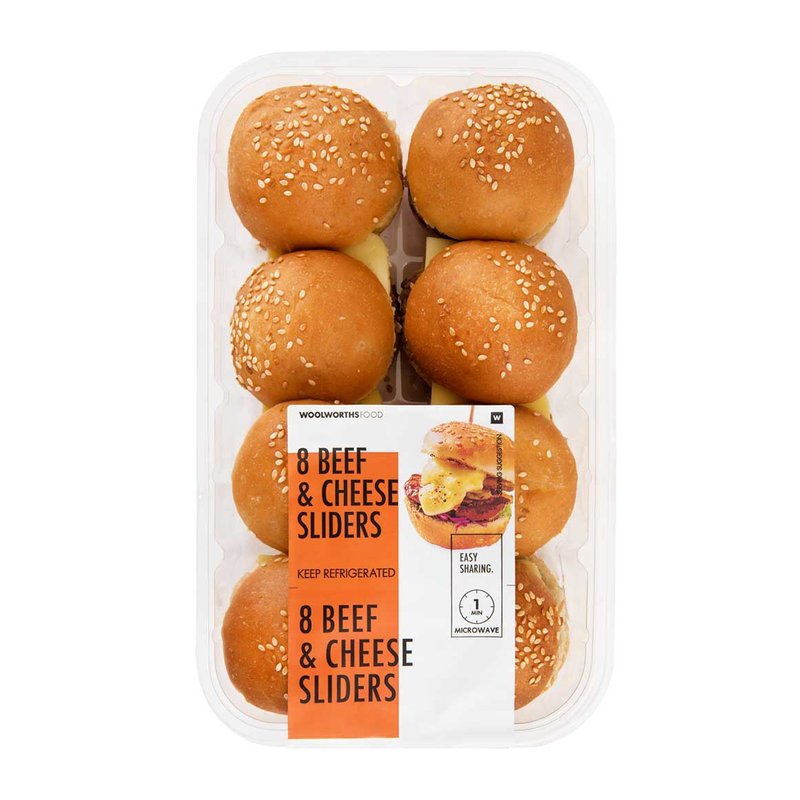
Woolworths Beef & Cheese Sliders
- Snack
- Checked
- Grade C
Beef & Cheese Sliders by Woolworths has 143 kcal, 13 g carbs, 7.6 g protein and 6.4 g fat per serving (1 slider (approx. 50g)).
Woolworths Beef & Cheese Sliders are a convenient, ready-to-eat option featuring mini burger patties and cheddar cheese. Each 50g slider provides 143.2 kcal, 13g of carbohydrates, and 7.6g of protein, making it a compact energy source. With 282mg of sodium per serving, it partially addresses sodium replenishment needs during extended activities. However, its high fat content (6.4g per serving) may slow gastric emptying, making it less suitable for pre-race consumption. Endurance athletes might find these sliders useful for a quick protein boost post-training, but should be cautious of their high saturated fat content.
- Convenient protein source
- Moderate carbohydrate content
- High sodium for sweat losses
On the label per serving, 1 slider (approx. 50g)
| Energy | 599 kJ |
|---|---|
| Calories | 143 kcal |
| Carbs | 13.0 g |
| Sugar | 2.9 g |
| Fibre | 1.8 g |
| Protein | 7.6 g |
| Fat | 6.4 g |
| Saturated fat | 3.1 g |
| Cholesterol | 13 mg |
| Sodium | 282 mg |
The numbers that matter on a training day
For endurance who it suits
Woolworths Beef & Cheese Sliders offer a convenient protein source but are not ideal for pre-race or during-race consumption due to high fat content affecting digestion. They may serve as a post-workout snack to aid protein intake but lack sufficient carbohydrates for optimal glycogen replenishment.
These sliders are suited for endurance athletes looking for a quick, convenient protein source post-workout. They may appeal to those engaging in moderate-intensity activities where rapid energy replenishment is not critical. However, athletes focusing on low-fat diets or those with sensitive stomachs may want to avoid these due to their fat content.
Best suited for post-workout recovery or moderate-intensity sessions where a quick protein intake is beneficial. Not ideal for high-intensity or pre-race consumption due to fat content.
- Convenient and portable snack option
- Provides moderate protein per serving
- Contains sodium for electrolyte balance
- Ready-to-eat, minimal preparation needed
- High in saturated fat, slowing digestion
- Low carbohydrate density for endurance needs
- Not suitable for pre-race or during-race use
- Potential for GI distress due to fat content
- High sodium may not suit all dietary needs
Fuelling science in short
Not recommended during workouts due to solid form and high fat content, which can impede digestion and performance.
With 13g of carbs per serving, the glycemic impact is moderate. However, the fat content may slow gastric emptying, leading to a slower blood sugar response.
Contains 282mg of sodium per serving, which is beneficial for sodium replenishment during endurance activities, though it falls short of the 300-600mg/hr sweat loss range.
- Total carbs
- 13 g
- Hourly capacity
- 60-90 g/h assuming mixed carb source
Race day before, during and after
- BeforeDO NOT USE
- DuringDO NOT USE
- AfterUSE
- Carb loadDO NOT USE
- Every dayCAUTION
Pre-race and during-race use is not advised due to high fat content slowing gastric emptying and digestion. For recovery, the sliders provide protein but lack adequate carbohydrates for glycogen replenishment. Everyday training use should be cautious due to potential GI distress from fat content.
NOT RECOMMENDED for pre-race use because high fat content slows gastric emptying, potentially causing GI distress and delayed energy release.
NOT RECOMMENDED during racing because solid form and high fat content impede quick digestion and energy availability.
USE with caution; provides protein but lacks sufficient carbs for optimal glycogen resynthesis. Pair with a carbohydrate source.
- Pair with a carbohydrate-rich drink for energy
- Combine with a salad for a balanced meal
- Add to a post-workout smoothie for protein boost
For practitioners the evidence
Evidence grade: C — Limited direct evidence supports their use in endurance contexts; nutritional analysis suggests limited suitability.
Beef & Cheese Sliders have a low carbohydrate density of 25g per 100g, making them unsuitable for carb loading. A single 50g serving provides only 13g of carbs, contributing minimally to a 600g daily target for a 70kg athlete. The high fat content increases satiety and slows digestion, further limiting their practicality for carb loading.
The high fat content in Beef & Cheese Sliders slows gastric emptying, delaying the digestion process. Carbohydrates are absorbed in the small intestine primarily through SGLT1 transporters for glucose. The protein content requires brush-border peptidases for breakdown. High fat may delay time-to-bloodstream, impacting insulin response and potentially causing GI distress if consumed close to exercise.
While these sliders provide 7.6g of protein per serving, which can aid muscle protein synthesis, they lack sufficient carbohydrates for effective glycogen resynthesis post-exercise. Ideally, recovery foods should provide 1.0-1.2g/kg/h of carbs, which these sliders do not meet. Pairing with a carbohydrate-rich food or drink is recommended for optimal recovery.
The high fat content may cause GI distress, especially during exercise. Saturated fats can slow gastric emptying, leading to delayed energy release. The sodium content, while beneficial for some, may be excessive for those on low-sodium diets. High sugar content can contribute to dental erosion if consumed frequently.
- Do not use within 90 minutes of race start due to high fat content slowing digestion.
- Do not use if following a low-sodium diet as each serving contains 282mg of sodium.
- Do not use if sensitive to high-fat foods, as they may cause GI distress.
- High saturated fat content can slow gastric emptying, impacting performance if consumed pre-race.
- Sodium content may pose a risk for individuals with hypertension or on sodium-restricted diets.
- Potential for GI distress during high-intensity exercise due to fat content.
- High sugar content can contribute to dental erosion over time.
Questions about Beef & Cheese Sliders
How many carbs are in Beef & Cheese Sliders by Woolworths?
13 g of carbs per serving (1 slider (approx. 50g)), with 143 kcal and 7.6 g protein.
When should I eat Beef & Cheese Sliders?
Best consumed post-workout for protein intake. Avoid pre-race or during-race due to high fat content.
How many sliders should I eat?
One to two sliders post-workout can provide a protein boost, but consider additional carbs for recovery.
Can these sliders cause stomach issues?
High fat content may slow digestion and cause GI distress, especially if consumed close to intense exercise.
Are there alternatives for lower fat options?
Consider lean protein sources like chicken breast or plant-based options for lower fat content.
Can I use these for carb loading?
No, they are not suitable for carb loading due to low carbohydrate density and high fat content.
How do they behave in hot weather?
High fat content may become greasy in hot weather, affecting palatability and digestion.


Eating this today? Log it in one tap.
Say "Beef & Cheese Sliders" and it lands in your diary, counted against today's carbs and protein.
