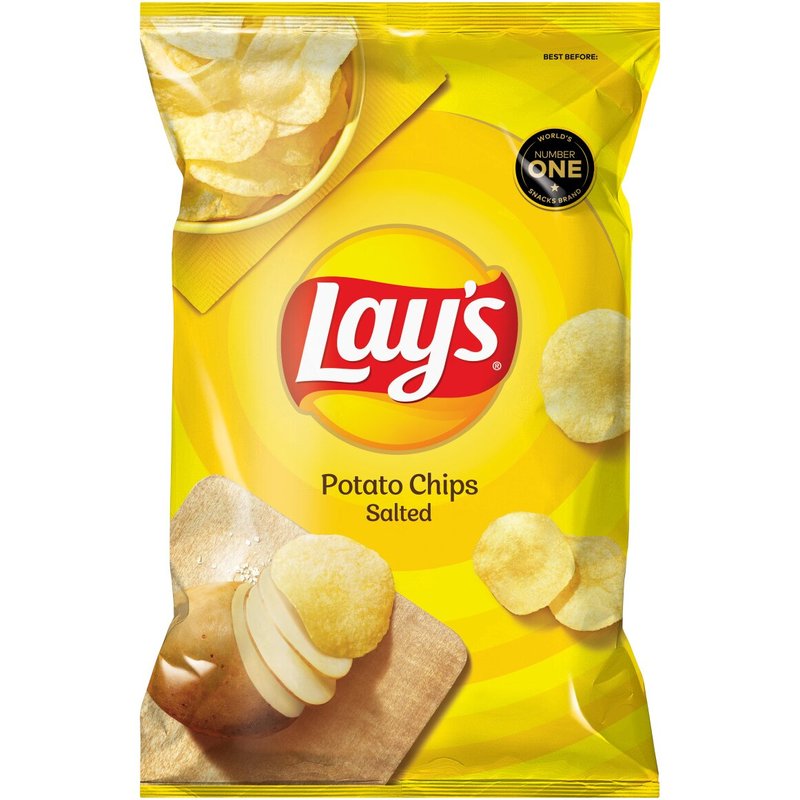
Lay's Lay's Salted Flavour Chips
- Snack
- Checked
- Grade C
Lay's Salted Flavour Chips by Lay's has 190 kcal, 16.6 g carbs, 2.7 g protein and 12.6 g fat per serving (1 portion (36 g)).
Lay's Salted Flavour Chips are a classic snack made from potatoes, quick-fried in vegetable oil, and seasoned with salt. Each 30g serving provides 189.5 kcal, making it a high-energy option for athletes needing a quick boost. With 17g of carbohydrates per serving, these chips can serve as a fast source of energy during long training sessions. However, with 12.6g of fat per serving, they may slow gastric emptying, making them less ideal for pre-race consumption. Best suited for casual snacking or as a quick energy top-up during low-intensity activities, these chips are not designed for optimal endurance performance due to their high fat content and low protein.
- Quick energy source
- Convenient and portable
- High sodium content for sweat replacement
On the label per serving, 1 portion (36 g)
| Energy | 793 kJ |
|---|---|
| Calories | 190 kcal |
| Carbs | 16.6 g |
| Sugar | 0.3 g |
| Fibre | 1.7 g |
| Protein | 2.7 g |
| Fat | 12.6 g |
| Saturated fat | 4.9 g |
| Cholesterol | 0 mg |
| Sodium | 190 mg |
The numbers that matter on a training day
For endurance who it suits
While Lay's Salted Chips offer a quick energy boost due to their carbohydrate content, their high fat content makes them less suitable for pre-race or during high-intensity endurance events. They can be used as a convenient snack during low-intensity activities or as a quick energy top-up.
Lay's Salted Chips are suitable for athletes seeking a quick energy boost during low-intensity or non-competitive activities. They are ideal for those who need a convenient snack that provides a moderate amount of carbohydrates and sodium. However, they are not recommended for athletes with specific dietary restrictions or those in need of high-protein recovery foods.
Best suited for low-intensity activities or as a quick snack during long training sessions where immediate energy is needed but not during high-intensity or competitive events.
- Convenient and portable snack option
- Provides quick energy from carbohydrates
- High sodium content aids in sweat replacement
- Widely available and familiar taste
- High fat content slows gastric emptying
- Low protein content, not ideal for recovery
- Not suitable for high-intensity endurance events
- High fat content may cause GI distress during intense exercise
- Low protein content limits recovery benefits
Fuelling science in short
Conditional. Suitable for low-intensity, long-duration sessions as a quick energy source. Not ideal for high-intensity due to high fat content.
With 17g of carbs per serving, these chips likely have a moderate glycemic impact, providing a quick spike in blood sugar. The high fat content may slow gastric emptying.
Provides 190mg of sodium per serving, contributing to sodium replenishment during sweat loss. Potassium content is unspecified.
- Total carbs
- 17 g
- Hourly capacity
- 60
Race day before, during and after
- BeforeDO NOT USE
- DuringDO NOT USE
- AfterDO NOT USE
- Carb loadCAUTION
- Every dayUSE
Lay's Salted Chips are not suitable for pre-race or during-race consumption due to their high fat content, which can slow gastric emptying and lead to GI distress. They also lack the necessary protein for effective recovery. While they can contribute to carbohydrate intake, their low carb density and high fat content make them less ideal for carb-loading. They are best used as a convenient snack during everyday training when immediate energy is needed without the demands of a race or intense session.
NOT RECOMMENDED for pre-race use because the high fat content can slow gastric emptying, potentially leading to GI distress.
NOT RECOMMENDED during racing because the high fat content and solid form are not ideal for quick digestion and energy release.
NOT RECOMMENDED for recovery because they lack sufficient protein and carbohydrates needed for optimal glycogen resynthesis and muscle repair.
- Pair with a protein shake for balanced recovery
- Combine with a fruit for added carbohydrates
- Use alongside electrolyte drink for hydration
For practitioners the evidence
Evidence grade: C — The analysis relies on general nutritional data and known physiological principles rather than specific studies on this product.
Lay's Salted Chips have a moderate carb density of 46g per 100g. However, a 30g serving provides only 17g of carbohydrates, contributing minimally to a 600g daily target. The high fat content and low volume of carbs per serving make them inefficient for carb-loading. An athlete would need to consume multiple servings, which is impractical due to the high fat content and potential for GI discomfort.
The chips undergo rapid digestion due to their high carbohydrate content, but the high fat content can slow gastric emptying. Carbohydrates are absorbed in the small intestine via SGLT1 transporters. The presence of fats may delay the time-to-bloodstream, reducing the immediate availability of glucose for energy. The low fiber content minimizes colonic fermentation risk.
Lay's Salted Chips provide carbohydrates but lack sufficient protein to stimulate muscle protein synthesis, which requires ~2.5-3g of leucine. The sodium content can aid in rehydration, but the chips are inadequate as a standalone recovery food due to insufficient carbs and protein for glycogen resynthesis and muscle repair.
The high fat content may cause GI distress if consumed before or during intense exercise. The low protein content limits recovery potential. High sodium levels may be unsuitable for athletes with hypertension. The chips can contribute to dental erosion due to their carbohydrate content and stickiness.
- Do not use before high-intensity exercise due to high fat content.
- Do not use as a primary recovery food due to low protein content.
- Do not rely on for carb-loading due to low carb density per serving.
- High fat content may slow gastric emptying, causing GI distress.
- Low protein content fails to support muscle protein synthesis post-exercise.
- High sodium content may not be suitable for athletes with hypertension.
- Carbohydrate stickiness can contribute to dental erosion.
Questions about Lay's Salted Flavour Chips
How many carbs are in Lay's Salted Flavour Chips by Lay's?
16.6 g of carbs per serving (1 portion (36 g)), with 190 kcal and 2.7 g protein.
Can I eat Lay's Salted Chips before a race?
Not recommended. The high fat content can slow gastric emptying and cause GI distress.
Are Lay's Salted Chips good for recovery?
No, they lack sufficient protein and carbohydrates needed for optimal recovery.
How should I incorporate Lay's Salted Chips into my training?
Use them as a quick energy source during low-intensity sessions or as a snack during everyday training.
What are the alternatives to Lay's Salted Chips for endurance athletes?
Consider energy gels, bars, or drinks that provide balanced macronutrients and are designed for endurance performance.
Do Lay's Salted Chips contain allergens?
No specific allergens are listed, but always check the packaging for any updates.
How do Lay's Salted Chips behave in hot weather?
They may become greasy or lose crispness in high temperatures, so store them in a cool place.


Eating this today? Log it in one tap.
Say "Lay's Salted Flavour Chips" and it lands in your diary, counted against today's carbs and protein.
