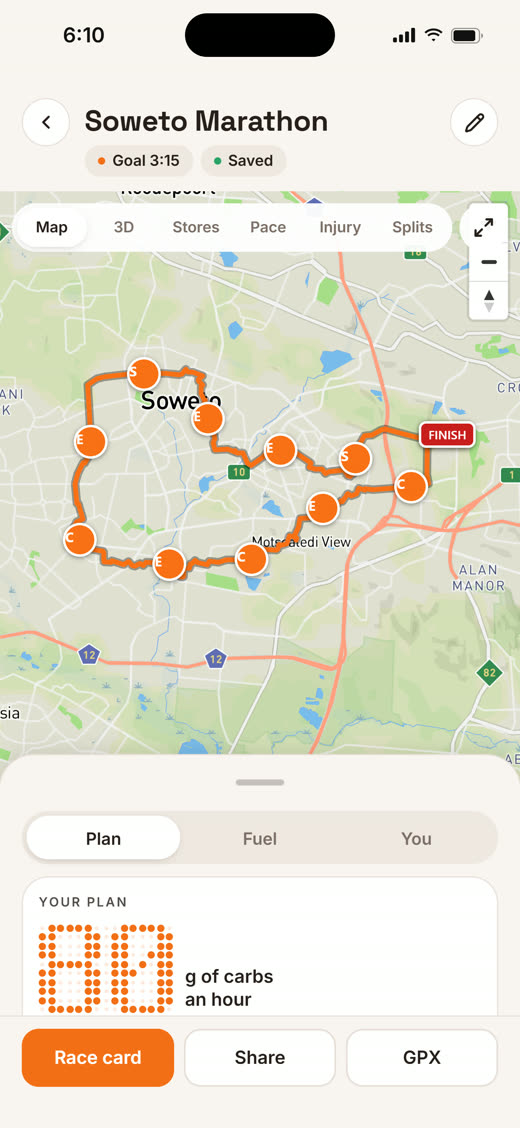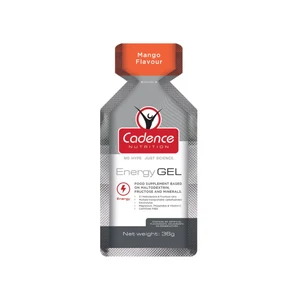
Cadence Mango Gel
- Gel
- 21.2 g carbs per serving
- From Cadence's label
Cadence Mango Gel has 21.2 g carbs, 86 mg sodium per serving, from R34.99 a serving at the cheapest size. Value score 6.6/10 (average).
Using an optimised 2:1 blend of maltodextrin and fructose, this scientifically validated formula maximises carbohydrate delivery and supports sustained performance. Added sodium and potassium replace key electrolytes lost through sweat, helping prevent hyponatraemia and reducing the risk of cramping.
- Rapid
- sustained energy
- Balanced electrolytes to reduce cramping
Decision helper the numbers athletes compare
| Cost score against the Endure average | 5.1/10 |
|---|---|
| 35 products in the category | +0.43σ |
| Multi-source carbs (glucose + fructose) | +1 |
| Electrolytes included (≥50 mg sodium) | +0.5 |
| High carb density without GI flag | +0.5 |
| Requires >2 servings/hr to hit 60 g | -0.5 |
| Value score | 6.6/10 |
On the label per serving, 36g
| Energy | 93 kcal |
|---|---|
| Carbs | 21.2 g |
| Sugar | 10.9 g |
| Protein | 0.3 g |
| Fat | 0 g |
| Sodium | 86 mg |
| Potassium | 101 mg |
| Carb type | Maltodextrin syrup |
| Glucose to fructose | 2:1 |
| Carb sources | Maltodextrin syrup, Fructose |
Who it suits and where it falls short
This product is ideal for endurance athletes who require rapid and sustained energy delivery during high-intensity training and racing. It's suitable for those who need a quick carbohydrate source with added electrolytes to prevent cramping.
High-intensity training, Long-distance running, Cycling races, Triathlons
- Multi-source carbohydrate blend
- Contains electrolytes to reduce cramping
- Convenient gel form
- Rapid energy delivery
- Relatively high cost per serving
- Low sodium content
- Requires multiple servings to meet high carb needs
How to use it, by distance
For a 5k race, one gel taken 15 minutes before the start can provide a quick energy boost. No additional gels are likely needed during the race.
Consume one gel 15 minutes before the race and consider another halfway through to maintain energy levels.
Take one gel 15 minutes before the start and one every 45 minutes during the race to sustain energy and prevent fatigue.
Start with one gel before the race and continue with one gel every 45 minutes to ensure consistent energy delivery and electrolyte replenishment.
The science in short
Rapid energy delivery for endurance events.
Isotonic — designed to be consumed without additional water, aiding in rapid absorption.Mango Gel offers a rapid and efficient energy source ideal for endurance athletes. Its dual-source carbohydrate blend enhances absorption, but the high cost and low sodium content are notable drawbacks. Suitable for high-intensity sessions, but additional sodium may be needed for prolonged efforts.
The product uses a dual-source carbohydrate matrix, combining maltodextrin and fructose. This allows for efficient carbohydrate absorption via both SGLT1 and GLUT5 transporters, optimizing energy delivery and reducing gastrointestinal distress.
The primary limitation is the cost per serving, which is relatively high, and the low sodium content that may require supplementation during longer events.
Each 36g serving provides 21.2g of carbohydrates, suitable for short to medium-length races but requires multiple servings for longer events.
0.59g carbs per gram — typical for energy gels, providing a concentrated source of carbohydrates.
Multi-source (2 carbs: Maltodextrin, Fructose). Uses both SGLT1 and GLUT5 transporters, supporting up to ~90 g/h absorption.
Maltodextrin — glucose pathway (SGLT1); Fructose — fructose pathway (GLUT5)
86mg sodium and 101mg potassium per serving. Below the recommended 300-600mg Na/hr, so additional sodium may be needed for longer durations.
2:1 — multi-source blend lifts the absorption ceiling beyond the SGLT1-only 60 g/h limit.
Approximately 2.8 servings per hour to reach 60g of carbs, considering the absorption ceiling.
- ⚡ High spike risk — best used mid-effort, not while stationary. Risk of rebound hypoglycemia.
- 🧂 Low sodium content — supplement with salt tabs for runs over 90 mins.
Sizes and where to buy
Questions about Mango Gel
How many carbs are in Cadence Mango Gel?
21.2 g of carbs per serving (36g), with 86 mg sodium, from Cadence's label.
What does Cadence Mango Gel cost per serving?
From R34.99 a serving at the cheapest size, which buys 6.1 g of carbs per R10.
Compare with gels close in carbs

Racing with Mango Gel? Put it in your plan.
Glyco places it on your race course by time, at the rate your gut can take, and tracks what you actually used.